

 Tiếng Việt
 ไทย
ไทยThai-style steamed squid is a dish deeply infused with the characteristic sour and spicy flavors of Thai cuisine, highlighted by the natural crispness and sweetness of fresh squid and an incredibly enticing, rich sauce. In this article, Ola Squid will guide you on how to select squid, prepare the sauce, steam it using the proper technique, and share essential tips to create an authentic Thai-style steamed squid dish right at home.
Preparing ingredients for rich Thai-style steamed squid
Required ingredients
For Thai-style steamed squid, the ingredients play a decisive role in the fresh flavor and the balance of the sauce. Every component directly affects the quality of the dish, so choose them carefully. A standard Thai dish must achieve a balance of flavors: sour, spicy, salty, and sweet; therefore, the sauce and accompanying ingredients must also be in the correct proportions.
Full list of ingredients:
- 500g fresh or high-quality frozen squid (tube squid, broad squid, or baby squid).
- 40g palm sugar dissolved in boiling water (to create a mild sweetness).
- 40g high-protein fish sauce for a richer sauce.
- 40ml lime juice (yellow lemon works, but the flavor is less intense).
- Green chili + red chili: 25g each, minced to create spice and color.
- 15g coarsely minced garlic to make the sauce fragrant and aromatic.
- 10g coriander + minced coriander roots – the “soul” ingredient of Thai sauce.
- Ginger, lemongrass (optional but helps remove fishiness).
- A little salt and water for the preparation process.
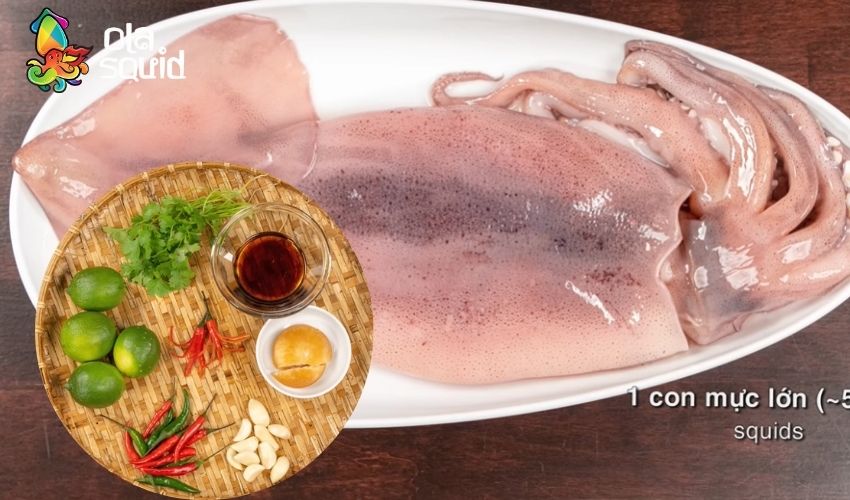
Every ingredient contributes to a harmonious overall flavor that spreads from the tip of the tongue to the aftertaste. Only when the components are fresh and in the right proportions will the Thai-style steamed squid retain its freshness, crunchiness, pungent aroma, and the irresistible sour and spicy flavor characteristic of Thai cuisine.
How to select fresh squid for steaming Thai-style
For the Thai-style steamed squid to be standard, the squid must be fresh to the point where you can “feel it”: when touched, it has elasticity and a light sea aroma. Fresh squid maintains a better meat structure than long-frozen squid, helping it stay firm and sweet after steaming.
Tips for selecting fresh squid from Ola Squid:
- Bright, shiny skin, no peeling. The outer membrane should be intact with a natural brown color.
- Clear eyes, not cloudy or milky white. This is a sign of long-stored or re-frozen squid.
- Firm meat that springs back immediately when pressed. If the surface is mushy, it is poorly preserved squid.
- No strange odors. A natural, mild fishy smell is normal, but if it has a strong or foul odor, do not choose it.
- Stiff, healthy tentacles with all suckers attached and none falling off.

Note: If you use frozen squid, prioritize Individually Quick Frozen (IQF) squid to maintain its structure. When thawed, the squid must be dry, not waterlogged.
See more: How to select fresh, delicious squid not everyone knows
Guide to making delicious, authentic Thai-style steamed squid at home
The Thai-style steamed squid dish seems easy but is not simple at all: you must know how to prepare it so the squid is white, crunchy, and not fishy, how to mix the sauce to balance sour, spicy, salty, and sweet, and how to time the steaming exactly to maintain the natural crunch.
Preparing the squid and other ingredients
Preparing the squid is an important prerequisite for the Thai-style steamed squid to achieve its “signature crunchiness and sweetness.” If done carelessly, the dish may be fishy or the squid may be chewy, affecting the entire flavor.
Detailed preparation steps:
Step 1: Clean the squid body.
Use your hand to gently pull the squid head to reveal all the internal organs. Remove the ink sac and black parts inside. Note: if you find white opaque squid eggs, keep them as they are very fatty and delicious when steamed.
Step 2: Remove the squid skin.
The brown skin membrane on the outside often makes the squid turn dark after steaming. Peeling off this membrane makes the squid white, beautiful, and attractive when presented.
Step 3: Remove the eyes and the hard part of the squid head.
These two parts become very chewy and unpleasant when steamed, so they need to be removed early.
Step 4: Wash the squid with salt and ginger.
This is a mandatory step to remove fishiness. Rub ginger lightly on the squid body, then rinse with cold water to make the meat firmer.
Step 5: Cut the squid to the appropriate size.
You can leave it whole or cut it into rings about one finger joint thick. Because the squid will shrink when steamed, cutting it thick helps maintain the crunch. For a nice presentation, score the squid body in a crosshatch pattern before steaming.
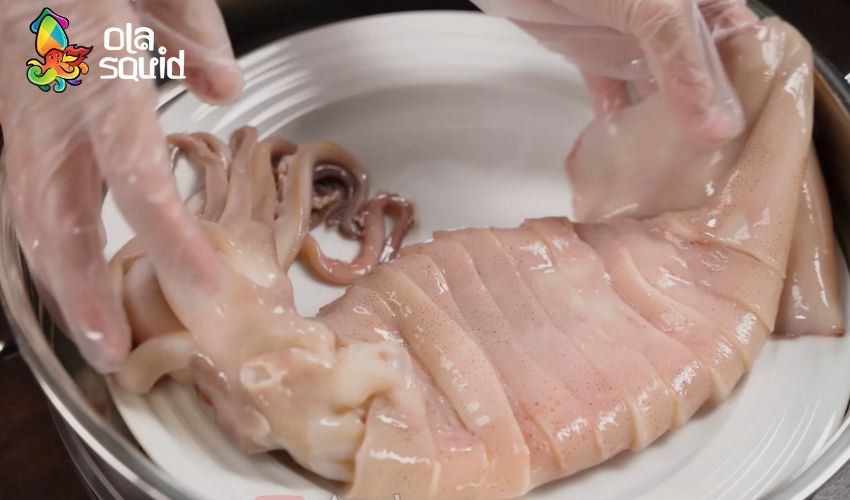
Other ingredients also need careful preparation:
- Garlic: mince coarsely to maintain crunch and help the sauce stay fragrant longer.
- Red & green chilies: mince finely to increase the natural spiciness and create harmonious color.
- Coriander roots: wash clean, chop small. This is the ingredient that creates the signature aroma of Thai sauce and cannot be skipped.
- Limes: squeeze to get the juice, filter out seeds so the sauce does not turn bitter.
A carefully prepared piece of squid will have a bright white surface, no odor, and slight elasticity when touched. This provides the “crispy” feeling when chewed, which is the most important criterion for steamed squid.
Preparing the unique Thai-style steamed squid dipping sauce
Thai sauce is the soul of the dish. The sauce must achieve the tangy sourness of lime, the fiery heat of chili, the pungent aroma of garlic and coriander, and the harmonious salty-sweet blend of fish sauce and palm sugar.
Golden Rule:
Thai sauce must have all four flavors: sour, spicy, salty, and sweet, but absolutely no flavor should overpower the others.
How to make authentic Thai sauce:
- 40g palm sugar dissolved in 30ml boiling water to create a mild, sweet mixture that isn’t harsh like white sugar.
- Add 40g high-protein fish sauce for a deep aftertaste and natural aroma.
- Add 40ml lime juice to the mixture for a gentle sourness that is not bitter.
- Mince 25g green chili + 25g red chili, mix them in to enhance flavor and color.
- Add 15g coarsely minced garlic to make the sauce more aromatic.
- Finally, add 10g chopped coriander + coriander roots to create the distinctive “Thai-style” aroma that is hard to replace.
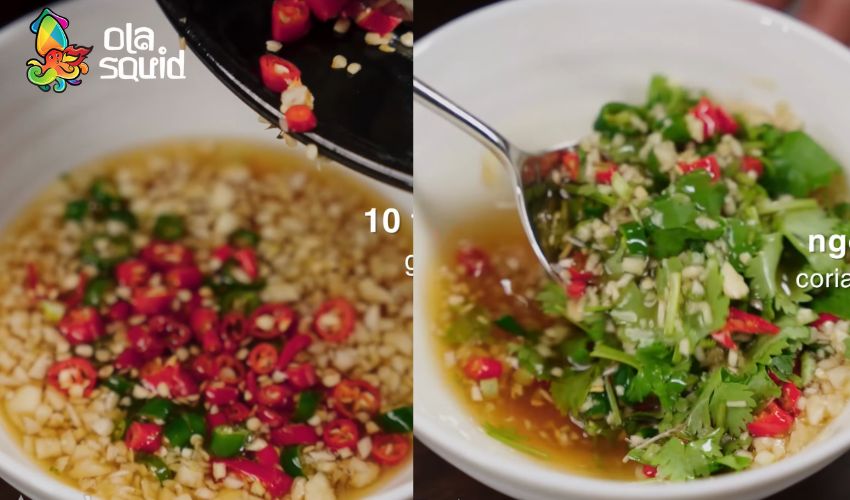
Once finished, the sauce must have:
- Light consistency (not too thin, not too thick).
- Beautiful golden-red color.
- Sour-sweet taste on the tongue, turning spicy later.
- The aroma of fish sauce blended with garlic and coriander.
Note: Do not cook the sauce because the heat will make the lime turn bitter. The sauce should only be prepared raw to keep it fresh.
Steaming squid properly to maintain crispness and sweetness
Steaming squid seems simple but actually requires following the “high heat, short time” principle so the squid is cooked through while still retaining its crunch.
Standard steaming steps:
- Boil water in the steamer until it is bubbling vigorously. This is a mandatory requirement.
- Place the squid in the steamer, do not pile them up too much.
- Steam for:
- 5 minutes for squid without eggs.
- 6 minutes if the squid has eggs (egg-filled squid needs extra time to cook evenly).
- Do not open the lid multiple times to avoid steam loss, which causes the squid to take longer to cook.
Why only steam for 5 minutes? Because squid cooks very quickly. If steamed longer, the protein shrinks significantly, making the squid chewy and losing its natural sweetness.
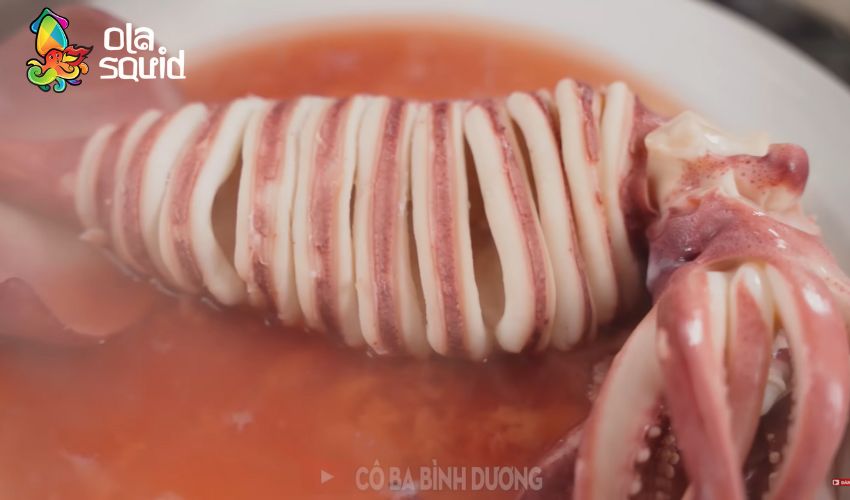
When cooked, the squid will:
- Be translucent white.
- Slightly puffed up.
- The squid body is curved but still retains elasticity.
This is the perfect time to pour the sauce over the squid.
Plating and enjoying
When finished, Thai-style steamed squid is not only delicious in flavor but also beautiful in presentation. The harmony between the white color of the squid, the red and green of the chilies, and the golden color of the sauce creates an eye-catching whole that stimulates the palate.
Restaurant-standard presentation:
- Place the steamed squid on a large plate or deep bowl.
- Use scissors to cut each piece of squid so it absorbs the sauce better.
- Evenly pour all the Thai sauce over the squid.
- Sprinkle with some coriander and a few chili slices for extra emphasis.

Enjoy: A crispy, sweet piece of squid combined with the sour and spicy sauce is truly an explosion of flavor. This dish is best eaten hot; when left for too long, the squid will cool down and become less crispy. Visit our dried squid snack collection if you enjoy squid flavors and are looking for quick, high-quality seafood treats!
Secrets for better Thai-style steamed squid and important notes
Although Thai-style steamed squid is relatively easy to make, achieving a culinary peak requires attention to every small detail: from the freshness of the squid, the steaming time, and the sauce preparation to the side dishes.
Each element contributes to a harmonious whole, both distinctly Thai and suitable for the Vietnamese palate. The tips below will help you upgrade your dish from “delicious” to “excellent.”
Small tips to keep squid from getting chewy and retain beautiful color
Crispness, sweetness, and beautiful white color are the key factors that make Thai-style steamed squid attractive. Just one or two wrong steps, and the squid can become chewy or discolored.
Important tips you must remember:
- Do not soak squid in water for too long: Soaking for too long makes the squid mushy and loses its natural sweetness. After washing clean, just letting it drain is enough.
- Use boiling water for steaming: Strong steam helps the squid cook quickly in a short time, retaining the protein structure and translucent white color. If the water is not hot enough, the squid will become chewy.
- Do not steam for more than 5–6 minutes: Protein in squid shrinks very quickly. Even 2 extra minutes can make the squid go from crispy to chewy immediately.
- Peel the squid skin before steaming: The brown skin layer on the outside can easily turn the squid dark when steamed. Peeling the skin helps the squid look white, beautiful, and eye-catching on the plate.
- Add a few ginger slices to the steaming water: Ginger helps the squid maintain a pleasant aroma, avoiding fishiness when steamed for a short time.
Thanks to these tips, your finished product will always retain its signature white, crispy, and sweet characteristics.
Suggestions for suitable dipping sauces
Although Thai-style steamed squid already has the sauce poured directly over it, many people still like to have an extra dipping sauce to increase the diversity of flavors. A good dipping sauce can make the dish even better. The three most suitable dipping sauces are:
Vietnamese-style ginger fish sauce:
- Salty, sweet, and spicy flavors blended together.
- Ginger helps warm the palate, suitable for those who don’t like very strong Thai-style spice.
- Very suitable when eating squid with eggs.

Green chili salt
- Slightly sour, spicy, and aromatic.
- Highlights the crunch and sweetness of the squid.
- Especially suitable when eaten with raw vegetables.
Diluted Thai sauce for dipping
You just need to add a little hot water and sugar to make the sauce less intense:
- Retains the Thai flavor.
- Provides a more balanced experience compared to the sauce poured directly over.
Each dipping sauce brings a different experience, making the meal rich and suitable for many tastes at a party.
Ideal side dishes
A delicious Thai-style steamed squid dish is even better if it has a suitable “companion.” It not only helps balance the sour and spicy taste of the sauce but also increases the enjoyment of the meal.
Suggestions for the most suitable side dishes:
- Fresh vermicelli or rice noodles: absorb the sauce very well, making the flavor spread evenly.
- Raw vegetables: lettuce, young greens, cilantro, basil… help reduce spiciness and cool the mouth.
- Steamed taro or sweet potato: the nutty starch balances the strong sour and spicy taste of Thai sauce.
- Hot white rice: suitable for family meals, especially when there are young children.
These side dishes help the overall meal be more harmonious, especially when you use spicy sauce. For those who prefer snacking, check out our online shop for more options.
How to store Thai-style steamed squid while keeping the flavor
If you want to store Thai-style steamed squid, you must follow the correct technique to avoid making the squid chewy or overly sour due to the sauce.
Proper storage method:
-
- Let the squid cool completely before putting it in a container: Heat creates moisture, which makes the squid mushy and gives it a strange odor.
- Separate the sauce and the squid: The sauce contains a lot of lime, garlic, and chili. If kept together for too long, the squid will “cook” further, lose its crunch, and become overly saturated with flavor.
- Store in the refrigerator for 12–24 hours: Do not store longer because the squid structure easily denatures and loses its freshness.
- Reheating properly:
-
- Do not steam again for too long.
- Steam for only 1–2 minutes or heat with light steam.
- Do not use a microwave because it makes the squid chewy.
- Pour the sauce back before eating: This helps the dish regain its original richness and aroma.
Thanks to the correct storage and reheating techniques, you can retain the full flavor without affecting the natural crunchy structure of the squid.
Other delicious fresh squid dishes to try
Besides Thai-style steamed squid, fresh squid can also be transformed into many other attractive dishes. Thanks to its crunchy texture, mild sweet taste, and ability to blend with many spices, squid always brings diversity to culinary techniques. The suggestions below will help you enrich your family menu, provide options for parties, gatherings, or simply change the flavor for your daily meals. For ingredients, you can explore our flattened dried squid or whole dried squid for other culinary inspirations.
- Spicy satay stir-fried squid
If you like “explosive” spice, satay stir-fried squid is an unmissable choice. Fresh squid is cut into bite-sized rings, stir-fried quickly over high heat with satay, onions, and some fried garlic. When seasoned evenly, the squid becomes rich and spicy but still retains its signature crunch.
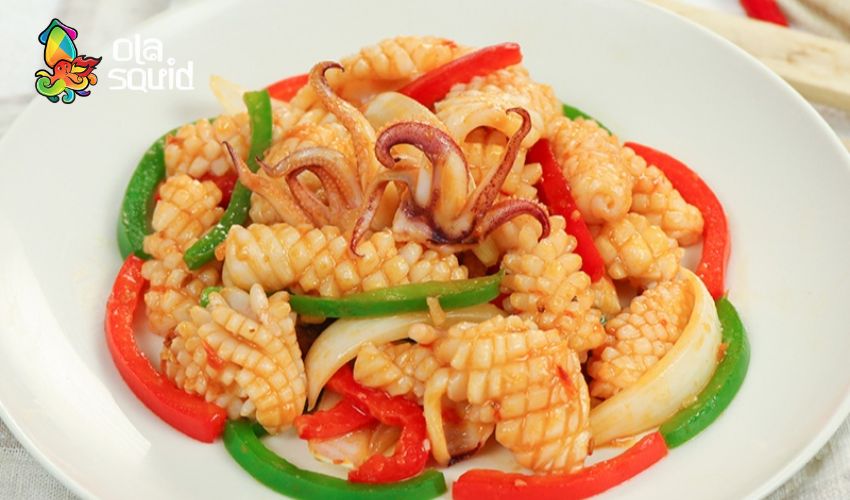
This dish is especially suitable for dinner or chilly days; eating it with hot rice is “addicting.”
- Mixed stir-fried squid
This is a dish with many colors and harmonious flavors. Squid is stir-fried with carrots, broccoli, celery, and onions, creating a stir-fry that is both crunchy, sweet, and extremely eye-catching.
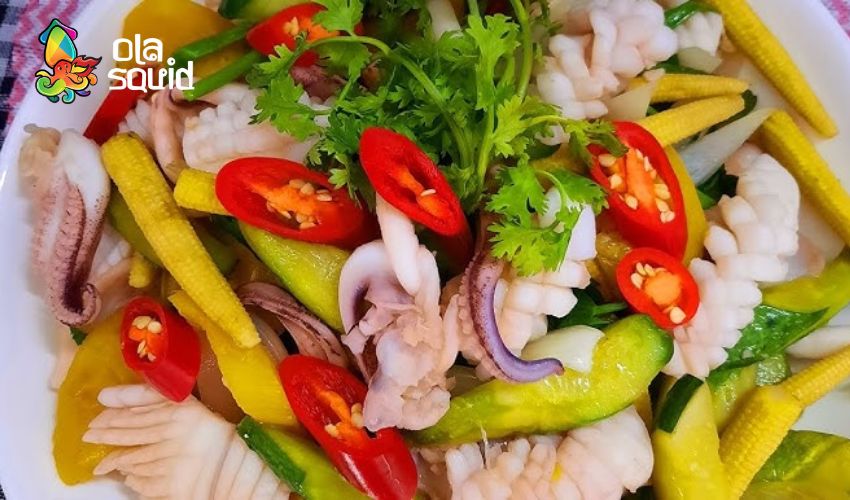
The combination of vegetables makes the dish lighter, not greasy, and suitable for both children and adults. Mixed stir-fried squid is a great suggestion when you want to add vegetables while still maintaining protein from seafood.
- Squid fried with betel leaves
Squid fried with betel leaves is an interesting variation, bringing the breath of Vietnamese cuisine. Squid is minced or cut small, mixed with spices, and then wrapped in individual green betel leaves. When fried, the betel leaves release a fragrant aroma, while the squid inside remains soft and sweet. Every little golden roll is incredibly appetizing and is also a “best-selling” snack for friend gatherings.

- Squid and vegetable ‘né’ (sizzling plate)
Squid and vegetable ‘né’ is a dish that is both piping hot and flavor-rich, usually prepared on a cast-iron skillet to maintain the attractive sizzling sound. Squid is lightly seasoned with bouillon powder, pepper, and garlic, then cooked with vegetables like onions, okra, baby corn, and tomatoes.
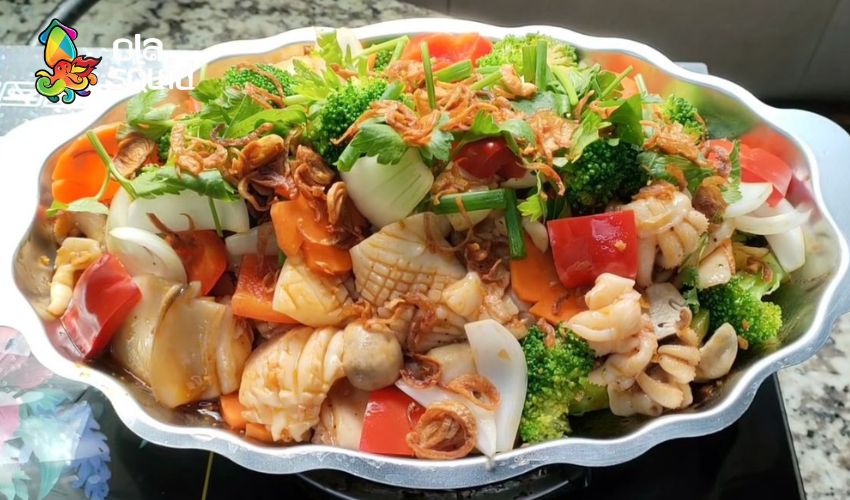
Each crispy, sweet piece of squid combined with perfectly cooked vegetables creates a balanced flavor, suitable for quick but nutritious meals.
- Steamed squid with ginger and lemongrass
The combination of fresh squid, ginger, and lemongrass always brings a pleasant and light feeling. Squid is cleaned, left whole or cut into rings, and steamed with crushed lemongrass, a few slices of ginger, and a little white wine to remove odor.
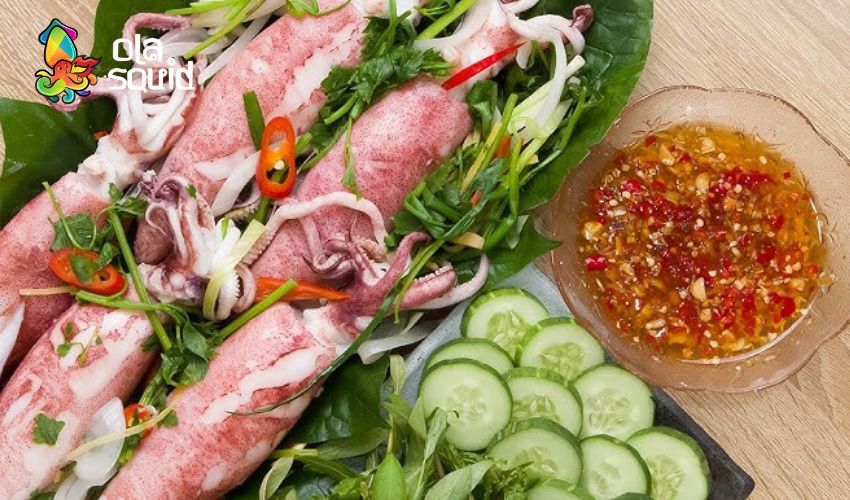
The finished product is a plate of mildly fragrant squid with crunchy meat and natural sweetness, dipped with salt, pepper, and lime for a perfect taste. Steamed squid with ginger and lemongrass is also a suitable dish for those on a light diet or who need something gentle and low-oil. Visit our homepage for more seafood inspirations.
Thai-style steamed squid is a dish that seems simple but requires meticulousness in every step, from selecting the squid, preparation, and mixing the sauce to timing the steaming. When you master these small but important secrets, the dish is not only tastier but also retains the full, fresh, and crispy flavor characteristic of seafood.
If you are looking for high-quality dried squid to process into delicious squid dishes yourself, you can refer to Ola Squid, where we specialize in providing tasty dried squid of high quality.
Ola Squid introduces a range of high-quality whole dried squid, sun-dried correctly and preserved safely, for every delicious meal.“