
 Dried squid
 Flattened dried squid
 Seasoned Shredded Squid
 Dried squid snack
 Tiếng Việt
 ไทย
ไทยThe price of tiger prawns is always a topic of interest for many consumers, restaurants, and small traders because this is a premium seafood variety known for its firm meat, rich sweetness, and high nutritional value. However, the price of tiger prawns can fluctuate depending on the timing, size, and market supply. This article by Ola Squid will help you update the latest price levels and provide essential information before you make a purchase.
1. Today’s Tiger Prawn Prices
Currently, there is no fixed price for tiger prawns on the market; it varies based on size (number of prawns per kg), the method of sale (live or frozen), and the distribution area. Generally, the larger the prawn (the fewer pieces per kg), the higher the price due to its thicker and firmer meat.

Below is a reference retail price table for tiger prawns (updated as of January 2026):
| Prawn Type | Price Range (VND/kg) |
| Large tiger prawns (10 – 15 pieces/kg) | 500,000 – 600,000 |
| Medium tiger prawns (20 – 25 pieces/kg) | 400,000 – 500,000 |
| Small tiger prawns (30 – 40 pieces/kg) | 280,000 – 350,000 |
| Live whole tiger prawns (various sizes) | 450,000 – 550,000 |
| Frozen tiger prawns (various sizes) | 320,000 – 380,000 |
Note: The above prices are for reference only. Actual prices may fluctuate daily, by locality, and based on the specific quality of the batch.
Read more: How much are whiteleg shrimp today? Latest update
2. Factors Affecting Tiger Prawn Prices
Unlike many food items with relatively stable prices, tiger prawn prices frequently fluctuate according to the market. Below are the main factors directly impacting the selling price:
- Market Supply – Demand: When consumption demand rises sharply during holidays, Tet, wedding seasons, or peak tourism, tiger prawn prices can increase by 15-20%. Conversely, when purchasing power slows down or supply is abundant, prices stabilize or even decrease slightly.
- Size and Quality of Prawns: The larger the prawn (fewer per kg), the higher the price due to scarcity and popularity. Additionally, live prawns always fetch higher prices than frozen or dead ones because the meat is firmer, sweeter, and retains more nutrients.
- Harvest Season: During peak harvest periods (usually from March to August), increased supply helps lower prices. Conversely, during off-seasons or when production drops, the market becomes scarce, causing prices to rise.
- Farming and Transportation Costs: Prices of feed, seed, electricity, water, labor, and especially fuel costs for transporting live prawns all affect the final retail price. Therefore, prawn prices in major cities are often higher than in farming regions.
- Weather and Disease: Storms, saltwater intrusion, or diseases like white spot and head yellowing can reduce farming output. When supply is affected, tiger prawn prices usually increase significantly.
- Processing and Distribution Channels: Whole prawns, peeled prawns, IQF frozen prawns, or vacuum-packed prawns will have different price levels. Additionally, prices at wholesale markets are usually lower than in supermarkets or specialty food stores due to differences in operational and storage costs.
3. Nutritional Content of Tiger Prawns
Not only popular for their fragrant and sweet taste, but tiger prawns are also a nutrient-rich food source suitable for many different diets. Here are the outstanding values tiger prawns provide:
- Rich in protein, low in fat: Most of the energy in prawns comes from protein – a vital nutrient that helps build and maintain muscle. High protein content with low fat makes them suitable for people losing weight, building muscle, or maintaining their physique.
- Rich in B-group vitamins: Including B1, B2, B3, etc., which help enhance energy metabolism, support the nervous system, and reduce fatigue.

- Contains heart-healthy omega-3: Omega-3 fatty acids support cardiovascular health and contribute to brain and physical development in young children.
- Rich in essential minerals: Calcium, iron, zinc, etc., support healthy bones and joints, boost immunity, and maintain better overall physical condition.
- According to Traditional Eastern Medicine: Prawns have warm properties and are believed to support kidney function, enhance vitality, and improve overall health.
4. Distinguishing Tiger Prawns from Farmed Prawns
Currently, in addition to sea-caught tiger prawns, intensive farmed shrimp, especially in the Southwestern region, are also very popular to meet rising consumption demand. Although farming techniques are constantly improving, there are still distinct differences between these two types of prawns.
Here is how to differentiate between natural and farmed tiger prawns:
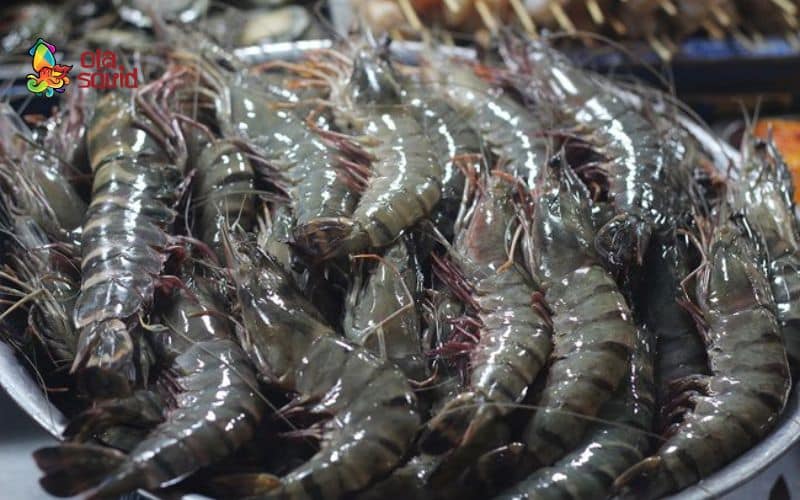
- Shell color: Sea tiger prawns usually have a characteristic reddish-black or pinkish tint. Meanwhile, farmed prawns usually have a greenish-black tint and look softer and thinner.
- Shell thickness and body firmness: Natural prawns have hard shells and firm bodies. Farmed prawns are usually softer due to different growing environments.
- Size: Naturally caught tiger prawns are often larger, commonly about 10-18 pieces/kg. Farmed prawns are often smaller and more uniform, potentially over 30 pieces/kg.
- Meat quality: Sea prawns have thick muscle fibers, intense sweetness, and the characteristic aroma of natural seafood. Farmed prawns are still delicious, but the richness and texture are often slightly less intense.
5. Tips for Selecting Fresh and Delicious Tiger Prawns
To ensure flavor and nutritional value, you should check tiger prawns carefully before purchasing. Here are signs to recognize fresh, firm-fleshed prawns:
- Shiny shell and close-fitting to the body: Fresh prawns have hard shells with natural colors (gray-green or dark brown) and distinct stripes. The shell should not be dull, slimy, or peeling.
- Intact head and legs: The prawn head must be firmly attached to the body, not loose. Prawn legs should be clear white or slightly pink, not blackened or falling off.
- Firm body, good elasticity: When pressing gently on the prawn’s body, if you feel the meat is elastic, not mushy, does not leak water, and has no strange odor, the prawn is fresh.
- Tight shell segments, natural tail spread: The tighter the segments on the body, the fresher the prawn. The prawn tail should spread slightly and not be abnormally curled.
- Prioritize reputable addresses: You should buy from supermarkets, large seafood stores, or suppliers with clear origins to avoid water-injected or chemical-treated prawns and ensure standard storage procedures.
6. Delicious Dishes from Tiger Prawns
With thick meat, intense sweetness, and characteristic firmness, tiger prawns are the ideal ingredient for preparing many dishes, from rustic to premium. Whether steamed, grilled, stir-fried, or used in hot pot, this prawn variety retains its original delicious taste and nutritional value.
Here are some delicious tiger prawn dishes favored by many families:
- Beer-steamed tiger prawns: A simple dish that retains the natural sweetness of the prawn. The beer steam helps remove the fishy smell and brings out an enticing aroma. Just dip with lime pepper salt or green chili salt to stimulate the palate.
- Grilled tiger prawns with chili salt: Prawns are marinated with mild chili salt, grilled over glowing charcoal until the shell turns an eye-catching orange-red. The prawn meat inside remains juicy, with a harmonious spicy and salty taste, perfect for outdoor parties.
- Tiger prawns in garlic butter sauce: The creamy, rich butter aroma blends with aromatic fried garlic, permeating every firm, sweet prawn meat fiber. This dish can be served with bread or eaten with white rice and is very suitable.
- Tiger prawn hot pot: Fresh tiger prawns dropped into a boiling hot pot make the broth naturally sweeter. Combined with green vegetables, mushrooms, and fresh vermicelli, it creates a cozy meal, especially suitable for family gatherings.
- Tamarind stir-fried tiger prawns: The combination of the delicate sour taste of tamarind, the natural sweetness of the prawns, and a hint of saltiness creates an irresistible dish that goes perfectly with rice. The thick sauce clinging to the prawn body makes everyone want to enjoy it while it’s still hot.
- Tiger prawn porridge: The sweet taste of prawns blended with smooth porridge creates a nutritious, easy-to-digest dish. This is an ideal choice for young children, the elderly, or people needing to nourish their health.
>>> See now: What dishes can be made with tiger prawns? 12 attractive suggestions for the whole family
With the detailed information above, we hope we have helped you answer the question “how much does 1kg of tiger prawns cost?” as well as how to choose fresh and quality tiger prawns. And don’t forget to follow the Culinary Corner section on our Blog page of Ola Squid to learn more interesting information about tips for choosing ingredients, secrets to preparing delicious dishes, etc., thereby elevating family meals every day. For your next snack break, visit our flattened dried squid page or check out the home page for more options.