 Dried squid
 Flattened dried squid
 Seasoned Shredded Squid
 Dried squid snack

 Tiếng Việt
 ไทย
When visiting coastal regions, you can easily hear the name “flash squid” on menus or mentioned by locals as a specialty you cannot miss. So, what is flash squid, why does this type of squid have a high price, and what makes diners love it so much? In this article, Ola Squid will explore with you its characteristics, origin of the name, price range, and how to choose fresh and delicious flash squid.
What is flash squid? Why is it called flashing squid or jumping squid?
Flash squid or flash squid refers to live squids that have just been caught and brought up from the sea. The special feature of this squid lies in its freshness: the squid is still alive, with clear eyes and skin glowing with shimmering flashing spots, which is why locals call it by the interesting name “flash squid” (flashing squid).

Characteristics of flash squid
The name flash squid stems from the phenomenon where the squid’s skin and eyes still glow with shimmering photophores right after being brought out of the water. Meanwhile, “mực nhảy” emphasizes the jumping movements of the squid while it is still alive. Therefore, flash squid and mực nhảy are actually two names for the same live squid, not two different species.
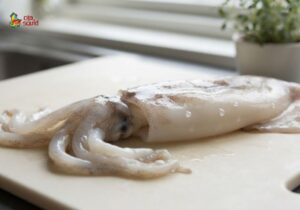
flash squid is usually relatively small in size, about 3 fingers wide, with a transparent body, glossy skin, and bright eyes. When freshly hauled up, the squid can still move vigorously, its body shines with natural colors, and its tentacles are firm. These are also signs that help diners easily recognize fresh squid when buying directly at the coast.
How much does flash squid cost? Why is it expensive?
The price of flash squid is usually higher than regular fresh squid because this is squid kept alive right after being caught, requiring special storage and transportation conditions. The price is also not fixed and varies depending on the sea region, harvesting season, supply, and purchasing method.
| Form | Specific Reference Price | Influencing Factors |
| Live flash squid | 500,000 – 800,000 VND/kg | Fishing region, squid season, yield, and demand |
| flash squid at rafts/restaurants | About 10% – 30% higher than the price bought directly at the dock (equivalent to 900,000 – 1,100,000 VND/kg depending on the time) | Cost of keeping squid alive, transportation, and processing |
| Frozen flash squid | 300,000 – 600,000 VND/kg (depending on size from small to large) | Freezing method, goods source, and time of purchase |
In particular, flash squid bought directly at coastal rafts or restaurants usually has a high price because sellers must maintain a suitable water environment to keep the squid healthy. Meanwhile, frozen squid will have a more accessible price but no longer retains the living state of freshly caught squid. Therefore, if you want to fully enjoy the characteristics of flash squid, you should consume it while the squid is still alive.

See more: Update on the latest price list of all types of fresh squid
Which sea region is flash squid a specialty of?
Speaking of flash squid, many people will immediately think of the Central coastal regions. Among them, Vũng Áng (Hà Tĩnh) and Cửa Lò (Nghệ An) are the two most famous locations for the flash squid specialty.
- Vũng Áng (Hà Tĩnh): Vũng Áng flash squid is famous because squids that have just been angled are immediately placed into seawater breeding rafts. Diners can enjoy the squid right at the raft with various preparation methods such as steaming, boiling, grilling, or making salad.
- Cửa Lò (Nghệ An): Cửa Lò mực nhảy is also a specialty sought after by many tourists when visiting Nghệ An beach. Squids are usually angled at night, then kept alive to serve diners as soon as they reach the shore.
- Some other sea regions: Besides Hà Tĩnh and Nghệ An, flash squid is also harvested in Nha Trang, Phan Thiết, and Phú Quốc. However, the naming and popularity of this specialty may vary depending on each locality.
The flash squid season is usually mentioned around from March to July of the lunar calendar, when sea conditions are favorable for harvesting. Fishermen mainly angle for squid at night, and there are even trips starting from around 3 to 4 AM to bring the squid ashore while they are still alive and fresh.

The method of catching and serving immediately after bringing the squid out of the sea creates the special nature of flash squid. Diners can not only enjoy the natural sweetness and crispiness of the squid but also feel more clearly the unique features of the local culinary culture and fishing profession.
How to choose fresh and delicious flash squid
To fully enjoy the characteristic sweetness and crispiness, choosing fresh flash squid is a very important factor. When buying, you can rely on a few external signs to evaluate the quality of the squid:
- Observe the skin color: Fresh squid has skin that is transparent white, glossy, not cloudy, dull, or showing abnormal areas.
- Check the squid’s eyes: The squid’s eyes should be clear, bright, with visible pupils and not bulging, cloudy, or discharging fluid.
- Press gently on the body: Fresh squid meat has good firmness and elasticity, leaving no lasting indentation when pressed gently. If the body is soft and mushy or indented, the squid may have lost its freshness.
- Check the tentacles: Tentacles and feelers are still firmly attached to the head, firm, not loose or mushy. This is also a sign to help recognize that the squid has just been caught and still maintains good quality.

>>> See more: How to choose fresh and delicious squid that not everyone knows
What delicious dishes can be made from flash squid?
flash squid has soft, sweet, and naturally crispy meat, so it can be processed into many dishes without needing too many spices. Below are some popular ways of making it, which are both easy to execute and help retain the characteristic flavor of the squid.
Steamed flash squid with ginger and scallions
Steamed flash squid with ginger and scallions is a simple preparation method that helps preserve the natural sweetness and crispiness of the squid. Ginger and scallions create a mild aroma, while enhancing the dish’s flavor without overpowering the fresh taste of the squid. This dish is best enjoyed hot, dipped in ginger fish sauce or lime salt and pepper.

Similar delicious dish: Simple yet irresistibly delicious way to prepare steamed squid with scallions
Grilled flash squid with salt and chili
Grilled flash squid with salt and chili is attractive with its slightly charred, fragrant skin and bold spicy-salty taste. The squid just needs to be grilled until medium done so that the inner meat remains soft and sweet, without being dry and chewy. When eaten hot, this dish is even better when served with Vietnamese balm and dipped in green chili salt.

Similar delicious dish: Revealing 14 delicious grilled squid recipes you should not miss
Stir-fried flash squid with sweet and sour sauce
Stir-fried flash squid with sweet and sour sauce brings an interesting balance between the sweetness of the squid and the spicy-sour taste of the sauce. The squid is quickly stir-fried with onions, pineapple, bell peppers, or tomatoes to both maintain crispiness and enhance the dish’s color. A lightly thickened sauce coats each piece of squid, which is very suitable to be eaten with hot rice.

Similar delicious dish: Revealing a simple yet attractive recipe for sweet and sour stir-fried squid
flash squid salad (Gỏi flash squid)
flash squid salad stands out with crispy fresh squid slices, combined with onions, herbs, and spicy-sour mixing sauce. The refreshing taste of vegetables helps balance the natural sweetness, while the mixing sauce makes the dish richer and stimulates the palate. However, if using live squid to make salad, special attention must be paid to origin, hygiene conditions, and ingredient processing methods to ensure safety.

Similar delicious dish: How to make authentic, crispy, and delicious spicy-sour squid salad at home
flash squid dipped in mustard / Japanese-style raw eating
flash squid dipped in mustard or eaten raw Japanese-style brings a rather special experience thanks to the fresh, crispy meat and mild sweet taste. Squid is usually thinly sliced, served with mustard, soy sauce, or characteristic spices to highlight the original flavor. Eating raw squid carries a risk of parasitic and bacterial infection, so you should only enjoy it when the ingredients are strictly controlled and properly handled.

FAQ – Frequently asked questions about flash squid
Is eating live mực nhảy good?
Mực nhảy has high freshness, so it is often used to make salad or raw dishes in some coastal regions. However, eating raw squid still conceals the risk of parasitic and bacterial infection, even when the squid is fresh. Therefore, if you are not sure about the origin and hygiene conditions, you should prioritize steaming, boiling, or thorough grilling to ensure safety.
Does frozen flash squid retain the same freshness as live squid?
flash squid properly frozen right after being caught can retain quite well the sweetness, nutrients, and meat texture. However, after thawing, squid usually cannot fully maintain the crispiness and complete live state like freshly caught squid. If you want to fully enjoy the characteristic flavor of flash squid, live fresh squid remains the ideal choice.
Hopefully, through this article, you clearly understand what flash squid is, how to recognize, choose, and the delicious dishes that can be prepared from this specialty. If you want to enjoy the delicious squid flavor right at home, you can refer to more products of dried whole squid Ola Squid – with diverse choices, suitable for grilling, simmering, or processing into many attractive dishes.