
 Tiếng Việt
 ไทย
ไทยIf you are looking for an ingredient that is both crunchy and sweet, as well as nutrient-rich, fresh cuttlefish is an excellent choice. With its firm, chewy texture and fresh ocean flavor, this type of squid can be prepared into many attractive dishes and provides numerous vitamins and minerals beneficial to your health. Let’s join Ola Squid to explore the characteristics, benefits, and secrets of choosing the best fresh cuttlefish in this article!
1. What is fresh cuttlefish?
Outstanding characteristics of fresh cuttlefish
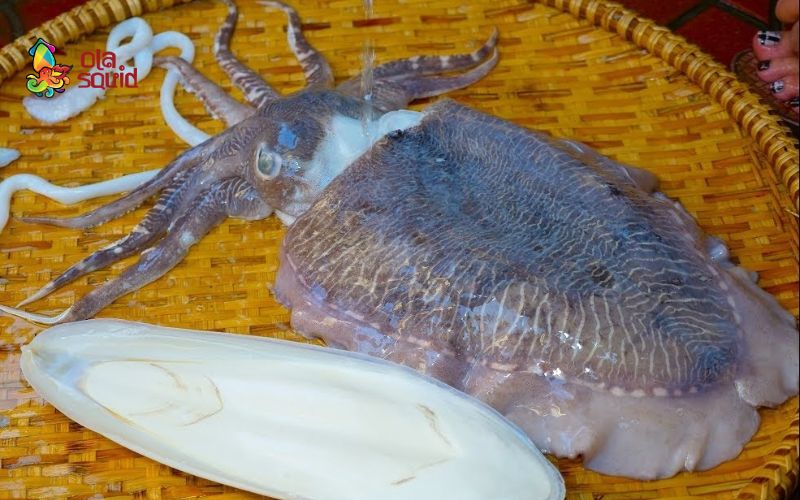
Cuttlefish (also known as sepia) is one of the most popular marine species thanks to its natural sweet taste and high nutritional value. They have a soft, rounded body, a wide head with 8 arms and two tentacles, a white belly, and a cuttlebone back marked with characteristic dark brown stripes. The average size of an adult cuttlefish is about 15-25cm, and a single one can weigh over 1kg.
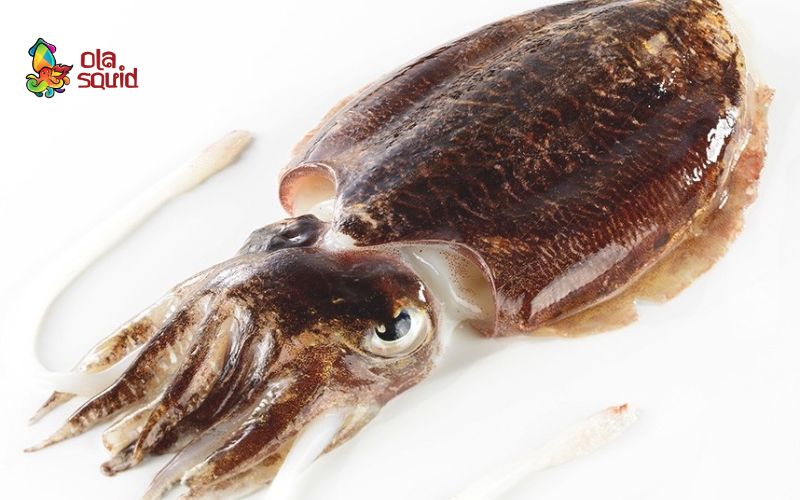
Fresh cuttlefish has a cuttlebone that helps regulate buoyancy, allowing them to move flexibly in the water, and they have the ability to change color for camouflage when facing danger. The flesh is thick and white; when eaten, it is both sweet and chewy, providing a natural fresh sensation. Cuttlefish is favored domestically and exported to many international markets, serving as an ideal ingredient for various culinary creations.
Common types and sizes of cuttlefish
Cuttlefish on the market today are mainly divided into two main types, each with its own unique characteristics and culinary applications.
- Japanese Cuttlefish: This type is small, usually 10-15cm long, with a characteristic bright black color and crunchy, chewy meat. Due to its freshness and attractive meat texture, it has high economic value and is often processed into sushi, sashimi, or enjoyed raw.
- Vietnamese Cuttlefish: Smaller than the Japanese variety, about 7-10cm, it also has a glossy black color and crunchy meat. Vietnamese cuttlefish is very common in local cuisine, often used for stir-frying, grilling, steaming, or cooking in soups, bringing a characteristic fresh sweetness.
Classification of cuttlefish by processing method:
- Fresh cuttlefish: Newly caught, the meat is white, thick, sweet, and crunchy, retaining its full natural flavor; it is usually used immediately or flash-frozen for preservation.
- Frozen cuttlefish: Prepared and frozen immediately after catching, it maintains its freshness for a long time, making it convenient for transport and storage.
- Dried cuttlefish: After being cleaned and sun-dried, this type can be stored for long periods and is used for cooking soups, braising, or as a snack.
2. How much does fresh cuttlefish cost?
The price of fresh cuttlefish currently fluctuates significantly depending on factors such as season, weather conditions, supply, size, and quality. Generally, fresh cuttlefish caught and sold within the day ranges from 200,000 to 350,000 VND/kg, with larger ones featuring thick, firm meat often commanding higher prices. Besides fresh ones, frozen cuttlefish (peeled and frozen) has a lower price, around 170,000 – 220,000 VND/kg, suitable for restaurants or long-term storage needs.
3. Nutritional benefits of fresh cuttlefish
Fresh cuttlefish is not only a delicious ingredient in seafood dishes but also contains many valuable nutrients for health. In 100g of cuttlefish, there are about 92 Kcal, while providing high-quality protein, B-group vitamins (B1, B2, PP), and many minerals such as calcium, phosphorus, iron, zinc, potassium, etc. These components offer outstanding benefits to the body.
- Supports bones, teeth, and cardiovascular health: Calcium and phosphorus help strengthen bones and teeth, while unsaturated fats and DHA contribute to stabilizing heart rate, regulating blood pressure, and reducing bad cholesterol, which is beneficial for heart health.
- Boosts the immune system and resistance: Vitamins A, C, zinc, and minerals in cuttlefish help the body fight diseases, improve the immune system, and promote recovery after illness or injury.
- Supports nervous function and reduces stress: DHA and B vitamins have the effect of protecting the brain, increasing the reflexes of nerve cells, and helping to prevent memory loss and neurological issues in the elderly.
- Reduces the risk of arthritis and supports blood circulation: Omega-3 found in cuttlefish helps reduce inflammation and pain from arthritis, while iron and folic acid support blood production, improve circulation, and prevent anemia.
4. Distinguishing cuttlefish, squid, and bigfin reef squid
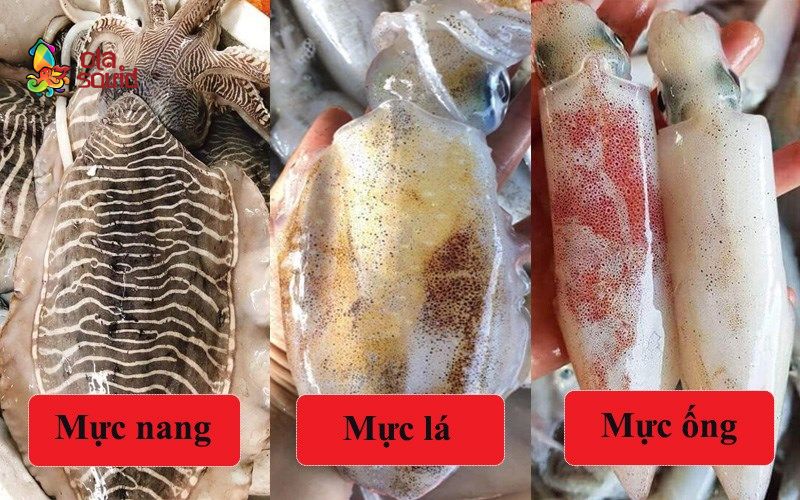
In the world of cephalopods, cuttlefish, squid, and bigfin reef squid are the three most common types, each possessing distinct biological and culinary characteristics to help you easily differentiate when choosing ingredients.
- Cuttlefish: This type has a round, bulbous body, a thick and hard cuttlebone, W-shaped eyes, and thick, crunchy white flesh. Cuttlefish sizes range from small to medium, typically 7-15cm. This variety is popular in cuisine and is often used for stir-frying, grilling, steaming, or preparing sashimi and sushi. A standout feature of the cuttlefish is its ability to change color for camouflage.
- Squid: Unlike cuttlefish, squid has a slender, cylindrical tube-shaped body and a softer internal shell (pen). The eyes are round, and the meat is white, soft, and slightly chewy, making it suitable for stir-frying, deep-frying, or salads. Squid is usually larger than cuttlefish and can reach 20-40cm.
- Bigfin reef squid: Bigfin reef squid possesses a flat, long, thin, and somewhat transparent body, shaped like a leaf with a soft and flexible internal shell. This type has soft, fine meat that easily absorbs spices, making it suitable for steaming, quick stir-frying, or soups. The average size of bigfin reef squid is usually 10-20cm, and it is lighter in weight compared to squid or cuttlefish.
See more:
5. Tips for choosing fresh cuttlefish
To prepare delicious squid dishes that retain their full fresh and sweet flavor, selecting high-quality fresh squid is the most important step.
- Prioritize live cuttlefish: Choose those swimming in the water, with shimmering bodies and clear eyes – a sign that the cuttlefish is still very fresh.
- Intact appearance: The cuttlefish should have its head, tentacles, and body intact, with skin that is slightly moist but not waterlogged or slimy.
- Size and elasticity: Choose cuttlefish 20cm or longer, with a plump, firm body; when pressed lightly, it should have elasticity and not be soft or sunken.
- Characteristic smell: Fresh cuttlefish has a mild, pleasant sea scent; avoid buying those with a foul, strong fishy, or stale smell.
- Natural color: The meat under the skin should be ivory white, not too pale or dull.
Fresh cuttlefish with its characteristic sweet and chewy flavor is nutrient-rich and an ideal ingredient for preparing many delicious and nutritious dishes for family meals. We hope that with the information in this article, you have gained a better understanding of fresh cuttlefish and can explore more types of squid, how to choose, preserve, and cook them.
If you are looking for high-quality dried squid (whole dried squid, seasoned flattened dried squid,…) to prepare delicious squid-based snacks yourself, you can visit Ola Squid, where we specialize in providing authentic, high-quality dried squid products.
Ola Squid introduces a range of high-quality whole dried squid, dried under perfect sunlight and safely preserved for every delicious meal.