
 Dried squid
 Flattened dried squid
 Seasoned Shredded Squid
 Dried squid snack

 Tiếng Việt
 ไทย
Squid hotpot is a suitable dish for family meals, weekend parties, or days when you want to change up your palate. Fresh squid, when blanched just right, has a natural crunchy sweetness, combined with a clear sweet broth, tomatoes, pineapple, mushrooms, and various side vegetables to create an appealing hotpot.
If you are looking for a simple way to cook fresh squid hotpot at home, just prepare the right ingredients and pay attention to the blanching time to make it successfully. Below is an easy-to-make squid hotpot recipe with a flavorful broth that still retains the natural sweetness of seafood, compiled by Ola Squid. Let’s check it out!
Preparing ingredients for squid hotpot
To cook a delicious squid hotpot, you do not need to prepare too many ingredients. The key is to choose fresh squid, combine it with vegetables to create a natural sweetness, and use spices that help balance the sour, spicy, salty, and sweet flavors of the hotpot. For a serving of about 3-4 people, you can prepare the following ingredients:
| Ingredients | Suggested quantity |
| Fresh squid | 700-800g |
| Pork knuckle bone or chicken bones | 500g |
| Tomatoes | 2-3 fruits |
| Pineapple | 1/2 fruit |
| Assorted mushrooms | 300g |
| Hotpot vegetables | 500-700g |
| Lemongrass | 3 stalks |
| Ginger | 1 small knob |
| Shallots | 3-4 bulbs |
| Garlic | 3-4 cloves |
| Fresh chili | 1-3 fruits |
| Tamarind or lime | An adequate amount |
| Satay sauce | 1-2 tablespoons |
| Fish sauce | 2-3 tablespoons |
| Sugar | 1-2 tablespoons |
| Salt, seasoning powder | An adequate amount |
| Fresh rice vermicelli or noodles | 500g |
The quantity of ingredients can be adjusted depending on the number of diners and personal taste. If you prefer a more pronounced sweet and sour hotpot, you can increase the amount of satay, chili, or tamarind. Conversely, if your family has young children, you should cook a clear broth first, then divide portions and add spicy seasoning later.
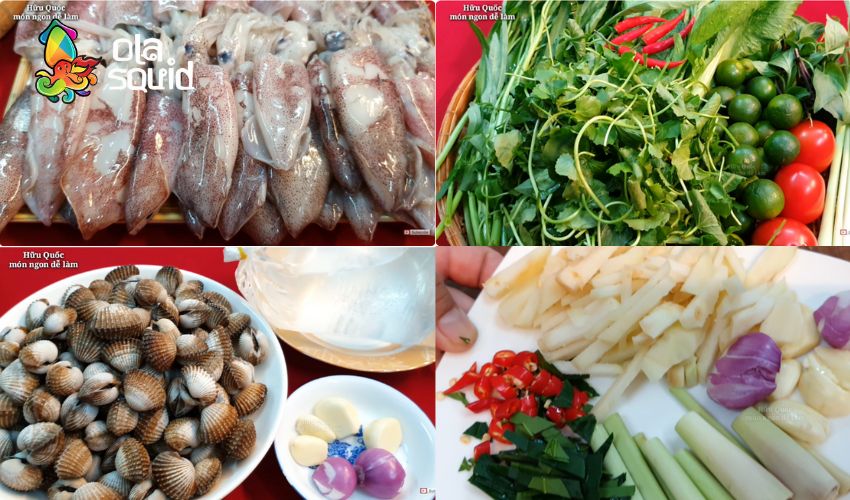
To make the cooking and dining process more convenient, you should fully prepare a hotpot cooker, mini gas stove or electric stove, ladle, chopsticks, and small bowls for dipping sauce. If using a mini gas stove, place it on a flat, sturdy, and well-ventilated surface. Before cooking, check the gas canister, hose, and related parts to ensure the stove operates safely.
How to choose fresh and delicious ingredients for squid hotpot
The quality of ingredients directly affects the flavor of the hotpot. Among them, squid is an ingredient that needs to be carefully selected to ensure freshness, crunchiness, and natural sweetness. Prioritize squid with a bright color, firm flesh, and no fishy or strange odors. Less-than-fresh squid will not only ruin the dish but may also cause a noticeable fishy smell in the hotpot broth, affecting the overall flavor.
How to recognize fresh squid
When buying squid, you can check it with your eyes, hands, and sense of smell. Fresh squid has a natural color, a firm body, and no abnormal odors.
Some easily recognizable signs include:
- Firm squid body: Gently press the body with your hand; the flesh should be elastic, not mushy or deeply indented.
- Bright and firmly attached skin: The skin layer remains intact with a natural gloss, without peeling off excessively.
- Clear squid eyes: The eyes are bright, relatively clear, and not cloudy or abnormally discolored.
- Natural scent: Fresh squid has a characteristic seafood scent, with no foul, sour, or ammonia-like odor.
- Head and body firmly attached: The head does not detach easily from the body, and the tentacles are firm.
You should buy squid from places with good cold storage and prepare it on the same day if possible. After purchasing, the squid needs to be cleaned and drained before putting it into the hotpot.

See more: How to choose fresh and delicious squid that not everyone knows
How to choose delicious tomatoes, pineapple, mushrooms, and side vegetables
Besides squid, tomatoes, pineapple, mushrooms, and assorted side vegetables also contribute to the sweetness, clarity, and balance of the hotpot. Therefore, you should prioritize fresh, undamaged ingredients so that the hotpot broth is fragrant and the vegetables retain their crunchiness.
- Tomatoes: Choose moderately ripe fruits with a natural red color, tight skin, firm in hand, and without bruises or signs of rotting. Moderately ripe tomatoes will give the hotpot a nice color and a mild sour taste.
- Pineapple: Prioritize fruits with a gentle aroma, relatively even eyes, and skin that is not mushy or rotten. Ripe pineapple creates a natural sweet and sour flavor, making the hotpot broth richer.
- Mushrooms: Choose fresh mushrooms with a dry surface, free from sliminess, bruises, or strange odors. Depending on the type of hotpot, you can use enoki mushrooms, oyster mushrooms, king oyster mushrooms, or your favorite mushrooms.
- Side vegetables: You should choose vegetables with a natural color, fresh leaves, without wilting or bruising. After purchasing, pick out damaged parts, wash them thoroughly with water, and drain them well before arranging them on a plate.
Preparing fresh ingredients and processing them correctly not only makes the hotpot more delicious but also limits cloudiness in the broth or rapid softening of vegetables when blanched.

Step-by-step detailed guide on how to cook squid hotpot
The method of cooking squid hotpot at home includes preparing the squid, preparing ingredients, cooking the broth, and completing the hotpot. To keep the squid crunchy and sweet, you should cook the broth beforehand and only blanch the squid as you eat.
Step 1: Preparing squid and deodorizing fishiness
Fresh squid after purchase needs to have the ink sac, internal organs, eyes, and internal hard backbone cleaned. Gently pull the head away from the body with your hands, remove the ink sac and internal organs, and rinse quickly under running water. The tentacles can be kept, cleaned thoroughly, and drained.
To deodorize the fishy smell, use a few slices of crushed ginger along with a little white wine, and gently rub it onto the squid body and tentacles for 1-2 minutes. Then rinse quickly with clean water and drain.
Do not soak the squid in wine or water for too long because it can make the squid meat mushy and reduce its firmness. For large-sized squid, you can score a few light lines on the body to help the squid cook faster and look more appealing when added to the hotpot.

See more: How to clean and prepare squid quickly and simply for an authentic flavorful dish
Step 2: Preparing vegetables and side ingredients
Wash the tomatoes and cut them into wedge shapes. Peel the pineapple, remove the eyes, and cut it into bite-sized pieces. Crush the lemongrass and cut it into segments; slice the ginger. Peel and finely chop the shallots and garlic.
Trim the roots of the mushrooms, rinse them quickly with water, and drain. The side vegetables also need damaged parts removed, washed, and set aside separately. Prepare rice vermicelli or noodles to serve with the hotpot.

Step 3: Cooking the hotpot broth
Wash the pork or chicken bones, blanch them briefly in boiling water, and rinse again to remove impurities, making the broth clearer. Put the bones into a pot with about 1.5-2 liters of water, add shallots and a few slices of ginger, and simmer for 45-60 minutes.
During simmering, skim off any foam floating on the surface to keep the broth clear and clean-tasting. Once the broth achieves the desired sweetness, remove the bones and strain out any remaining foam.
Next, sauté the garlic and lemongrass until fragrant, then lightly stir-fry the tomatoes. When the tomatoes begin to soften, add the mixture into the pot of broth along with the prepared pineapple. Season with fish sauce, sugar, salt, or seasoning powder to taste.
If you like a sour and spicy squid hotpot, you can add satay sauce, chili, and a little tamarind juice. Add each ingredient in moderation, stir well, and taste again to adjust the sour and spicy flavors accordingly.

Step 4: Completing the hotpot and enjoying
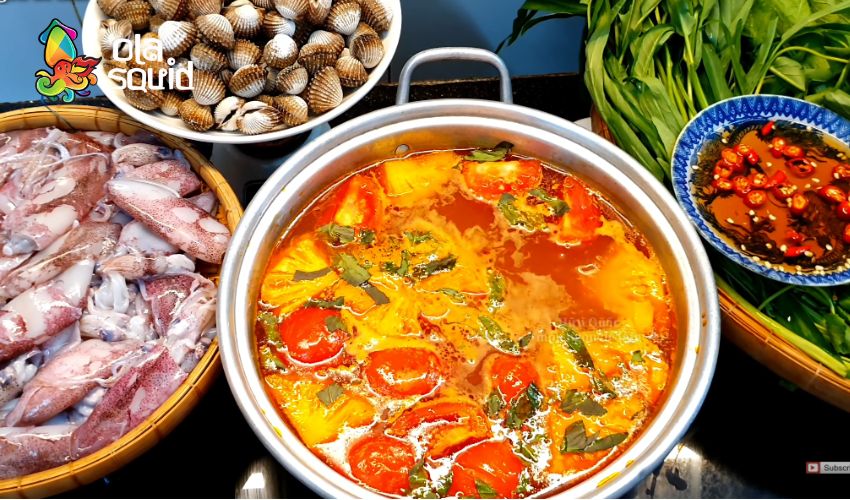
When the hotpot broth is well-seasoned, transfer it to a hotpot cooker and place it on the stove to keep it warm. Arrange the squid, mushrooms, side vegetables, and rice vermicelli or noodles on separate plates for convenience during the meal.
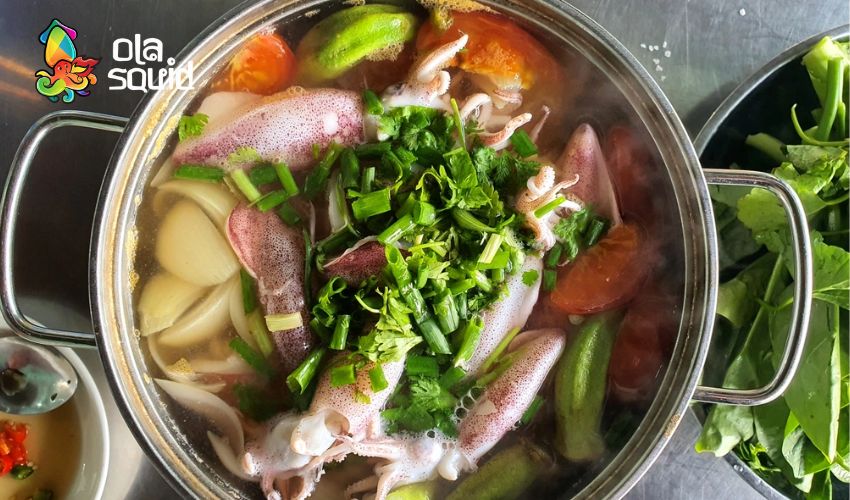
When eating, wait for the broth to boil before adding the squid. Perfectly cooked squid is crunchy, sweet, and not chewy. Afterward, you can successively blanch the mushrooms and vegetables according to the cooking time of each type.
You should not put all the squid into the pot right from the beginning. Instead, divide the squid into small portions and blanch only what you eat. This method keeps the squid hot, preserves its crunchy sweetness, and prevents the squid meat from becoming chewy due to overcooking.
See more delicious squid blanching recipes with the right flavor:
- How to make delicious, authentic crunchy vinegar-blanched squid at home
- Recipe for making flavorful, mildly sour fermented rice-blanched squid right at home
Secrets to making a perfectly delicious squid hotpot
Besides the basic squid hotpot recipe, a few tips during preparation, squid blanching, and broth seasoning will help the dish retain its natural sweetness, keeping the squid crunchy and delicious without being chewy.
How to blanch squid to be crunchy and delicious without being chewy
Squid should be blanched when the hotpot broth is gently simmering and eaten as soon as it is cooked. If left to boil for too long, the muscle fibers contract, making the squid meat easily chewy and losing its natural sweetness.
Before blanching, you should cut the squid into rings or bite-sized pieces. When the hotpot broth boils, put each portion of squid into the pot. For squid cut into rings or bite-sized pieces, the blanching time is about 1-2 minutes. When the squid turns opaque white and the flesh firms up, it is ready to be enjoyed.
If using whole squid or large pieces, the cooking time will be longer. Do not rely on a fixed time, but observe the color and firmness of the squid to determine when to take it out.

Adjusting the sour and spicy taste of the hotpot broth to personal preference
A good hotpot broth needs a balance among sour, spicy, salty, and sweet flavors. You should not season it too strongly right from the start because when squid, mushrooms, and vegetables are added for blanching, the broth’s flavor may change.
You can adjust the hotpot broth according to your taste as follows:
- Want a clean sour taste: Add pineapple, tomatoes, or a small amount of tamarind juice.
- Want a bold spicy taste: Add satay sauce, fresh chili, or dried chili depending on the desired level of spiciness.
- Want a mild sweet taste: Increase the amount of pineapple or use bone broth as a base.
- Broth is too salty or intense: Add boiling water little by little, then re-season until the taste is right.
- Broth is too bland: Supplement with fish sauce, salt, or seasoning powder in small amounts, avoiding over-seasoning which makes the broth harsh.
How to make a flavorful dipping sauce for squid hotpot
Squid has a natural sweetness, so it pairs well with dipping sauces that have sour, spicy, salty, and sweet flavors. The simplest way is to mix fish sauce with sugar, lime juice, minced garlic, and minced chili according to taste.
If you like a rich and thick dipping sauce, you can combine chili sauce with fish sauce, sugar, and lime juice. After mixing, taste and adjust each component to achieve a balance among salty, sweet, sour, and spicy notes.
You should only mix enough dipping sauce for the meal to keep its fresh flavor. You can prepare the dipping sauce 5-10 minutes before eating so that the ingredients blend better.

See more: Top 6 delicious dipping sauces for steamed squid, mixed in 5 minutes with authentic flavor
Popular variations of squid hotpot
Besides the traditional squid hotpot recipe, you can vary the broth and side ingredients to create many appealing versions. Depending on preference, families can choose bold spicy and sour squid hotpot, aromatic hairy basil squid hotpot, or Dai Lanh squid hotpot carrying the distinct characteristics of coastal cuisine.
Spicy and sour squid hotpot
Spicy and sour squid hotpot is suitable for those who love bold, palate-stimulating flavors. The broth can get its sourness from tomatoes, pineapple, tamarind, or lime, combined with satay and chili to create spiciness. Adding a little lemongrass makes the hotpot more fragrant and reduces the fishy smell of seafood.
When enjoying, you can blanch the squid with mushrooms, water spinach, napa cabbage, water mimosa, or other mild-tasting vegetables. These ingredients help balance the spiciness while making the hotpot more diverse.

Da Lat style hairy basil squid hotpot
Hairy basil hotpot stands out with the characteristic aroma of hairy basil leaves and a mild spicy kick from chili. When combined with squid, you should keep the broth light and clear to highlight the natural sweetness of the seafood.
Hairy basil should not be put into the pot from the beginning because cooking it for too long can diminish its characteristic fragrance. Instead, you can add hairy basil to individual portions when eating and blanch it just right. This method helps the leaves retain their freshness, aroma, and create a balance when consumed with squid.

Dai Lanh Nha Trang squid hotpot
Dai Lanh Nha Trang squid hotpot suits those who love hotpot dishes imbued with coastal cuisine characteristics. The cooking method can be implemented in a simple direction, prioritizing the natural sweetness of the squid and the clarity of the broth.
To make the hotpot more delicious, choose fresh squid, clean it thoroughly, and combine it with suitable vegetables. Pineapple, tomatoes, onions, lemongrass, and chili can be used to create a mild sweet and sour taste without overpowering the sweetness of the seafood. When eating, blanch the squid directly in the boiling hotpot broth and enjoy it as soon as it is cooked to keep its tenderness, sweetness, and avoid chewiness.
See more similar delicious dishes you may be interested in:
- How to cook sweet and clear squid sour soup at home for summer days
- How to make delicious squid soup cooked with water spinach without fishy smell
- How to cook shrimp and dried squid vermicelli soup with a sweet, flavorful broth
Frequently asked questions about cooking squid hotpot
How long should squid be blanched to cook through and avoid chewiness?
Blanch sliced or bite-sized squid rings for 1-2 minutes in boiling hotpot broth until just cooked. When the squid meat turns from translucent to opaque white and the body firms up, it can be taken out to enjoy.
The blanching time for squid can vary depending on the size and thickness of each piece. You should not let the squid boil for too long because prolonged high temperature causes the squid meat to shrink, easily becoming chewy and losing its natural crunchy sweetness.
What vegetables, rice vermicelli, or noodles should squid hotpot be served with to match the flavor?
Squid hotpot can be combined with many types of vegetables depending on the broth recipe and family taste. Some easy-to-eat choices include water spinach, napa cabbage, mustard greens, water mimosa, garland chrysanthemum, enoki mushrooms, king oyster mushrooms, or assorted mixed mushrooms.
Regarding carbohydrates, fresh rice vermicelli is a popular choice because of its light taste, which does not overpower the hotpot broth. If you want a more filling meal, you can use egg noodles, instant noodles, or cellophane noodles to serve with it.
How long can leftover squid hotpot be stored in the refrigerator?
Leftover squid hotpot should be allowed to cool down slightly, put into a container or pot with a tight lid, and stored in the refrigerator compartment. It is best to consume it within 1-2 days and reheat it thoroughly before eating.
If the hotpot has been left at room temperature for a long time, especially in hot weather, you should not continue storing it for reuse. For unblanched squid, separate it from the hotpot broth and put it in the refrigerator compartment as soon as possible to maintain quality.
Cooking squid hotpot at home is not too complicated and can be flexibly adjusted according to each family’s taste. From selecting and preparing the squid, cooking the broth to the way the squid is blanched, every step affects the flavor and deliciousness of the dish. When executed correctly, you will have a steaming hotpot with crunchy sweet squid, flavorful broth, and appealing side vegetables and mushrooms.
If you want to prepare additional snacks or nibbles after the hotpot meal, you can refer to the whole dried squid, flattened seasoned dried squid, and shredded seasoned dried squid products from Ola Squid. The dried squid products come in various sizes and preparation methods, suitable for grilling, simmering, or using as a home-cooked side dish.