 Dried squid
 Flattened dried squid
 Seasoned Shredded Squid
 Dried squid snack
 Tiếng Việt
 ไทย
ไทยSalted dried squid is a familiar dish in the kitchens of many families in Central Vietnam, especially during the rainy and stormy season when fresh fish is scarce. Compared to regular dried squid, the squid is salted before drying, giving it a bolder flavor and making it more convenient to preserve. This article by Ola Squid will help you understand what salted dried squid is, its reference market price, how to properly select it, and suggest delicious and easy-to-make dishes at home.
What is sun-dried salted squid?
Sun-dried salted squid is fresh squid that has been cleaned, marinated with salt at a certain ratio, and then sun-dried until it reaches the desired dryness. This preparation method gives the squid a rich, salty flavor, firm flesh, and allows it to be stored much longer than fresh squid.

The difference with salted squid lies in the step of marinating with salt before drying. While regular dried squid is mainly processed and then directly dried or dehydrated, salted squid is flavored right from the beginning, so it is usually bolder when cooked and may need to be soaked in water to adjust the salinity.
If you make it yourself at home, you can proactively choose fresh squid, the amount of salt, and the drying time according to your needs. At the same time, preparing it yourself helps you better control hygiene issues, limits ingredients of unknown origin, and saves costs if made in the right quantity.
Preparation before making sun-dried salted squid
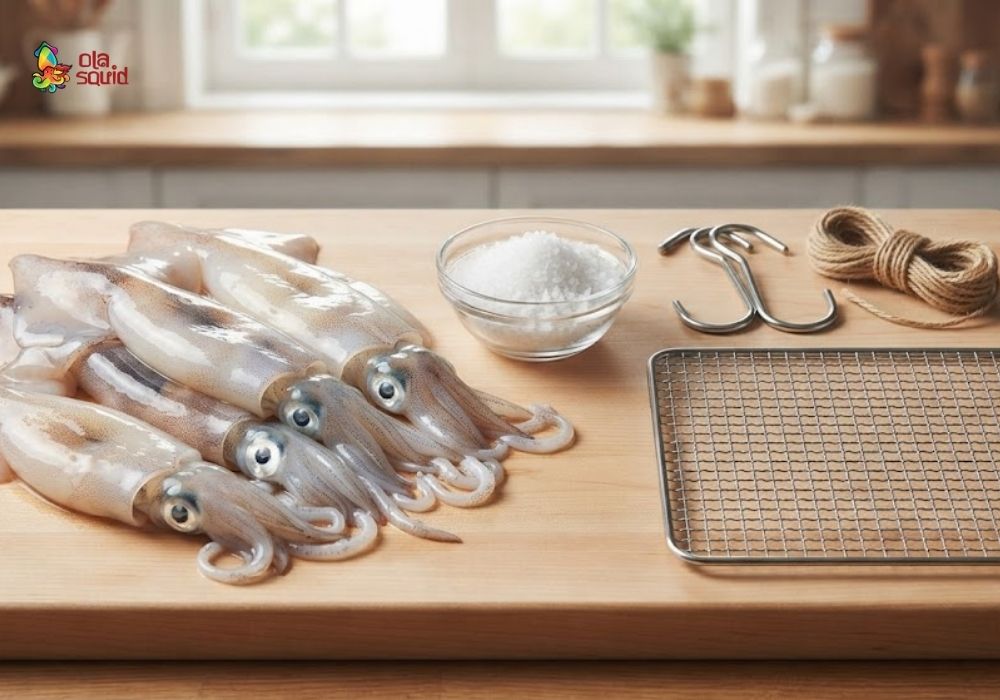
To make sun-dried salted squid turn out delicious, with firm meat and even dryness, you should prepare fresh ingredients and clean drying tools from the very beginning.
- Fresh squid: You can choose squid, bigfin reef squid, or cuttlefish that are fresh, with firm bodies, bright skin, clear eyes, and no strange odors. The fresher the squid, the more natural sweetness and aroma it retains after drying.
- Coarse salt: You should use clean, dry coarse salt free of impurities to easily adjust the salinity when marinating.
- Drying tools: Prepare hanging ropes, stainless steel food hooks, or clean drying racks/nets depending on the size and shaping method of the squid. The tools must be cleaned and thoroughly dried before use to limit dirt, insects, and bacteria from sticking to the squid.
Steps to make sun-dried salted squid at home
The method of making sun-dried salted squid is not too complicated, but you need to pay attention to the preparation stage, the salt ratio, and the drying time so that the squid dries evenly while maintaining its deliciousness. You can follow these 4 steps in order:
Step 1: Preparing the squid
Wash the purchased fresh squid quickly with clean water, removing the ink sac, internal organs, eyes, and squid teeth. Then, wash it once more and let it drain thoroughly before marinating. The cleaner and drier the squid is, the easier it will dry evenly, reducing fishy odors and the risk of spoilage.
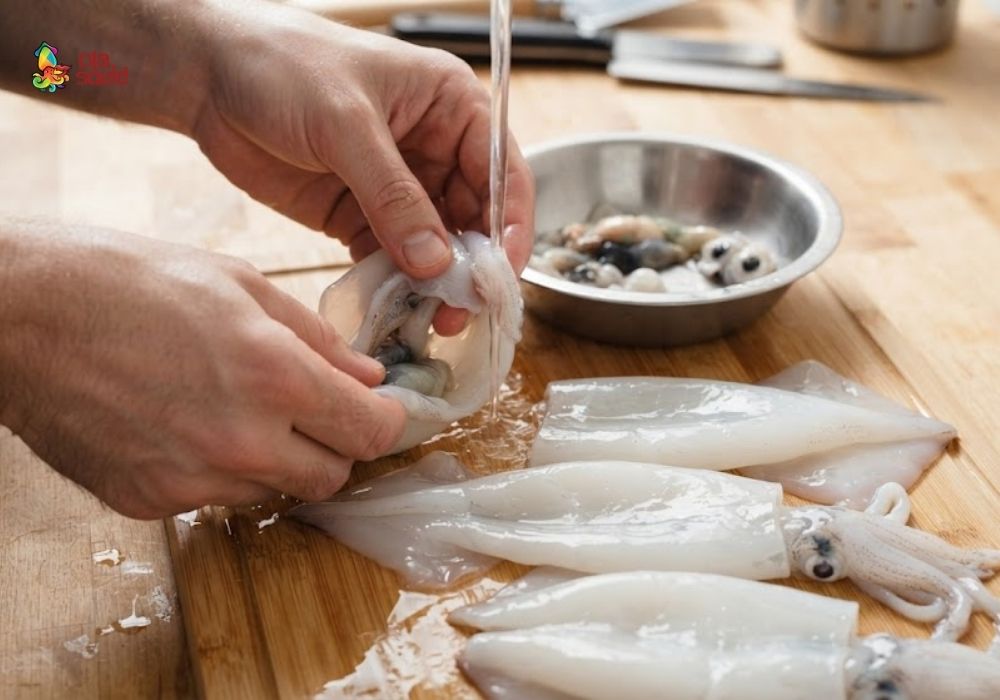
See details: How to prepare clean squid quickly and simply for an authentic delicious dish
Step 2: Marinating with salt
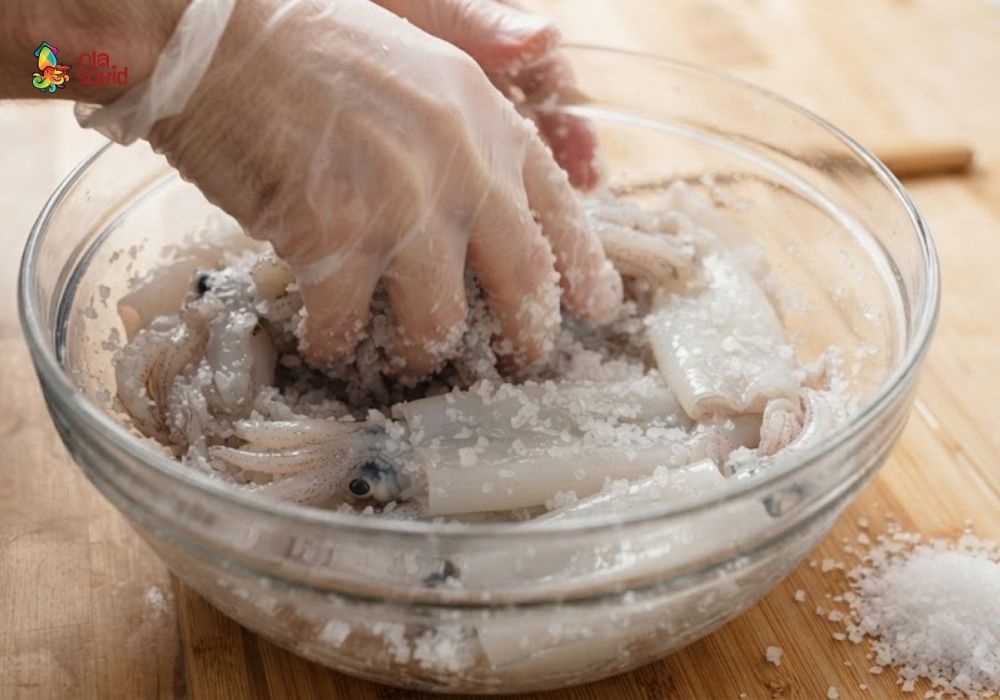
Depending on your taste, you can choose a mild or salty ratio, then mix well so that the salt covers the entire squid body. The reference amount of salt is as follows:
- Mildly salted: Use about 5-7% salt compared to the weight of the squid.
- Salty: Use about 12-15% salt compared to the weight of the squid.
After mixing, let the squid rest for a sufficient time for the salt to penetrate evenly before drying. Do not add too much salt if you want to keep the natural sweetness of the squid.
Step 3: Choosing the right drying method
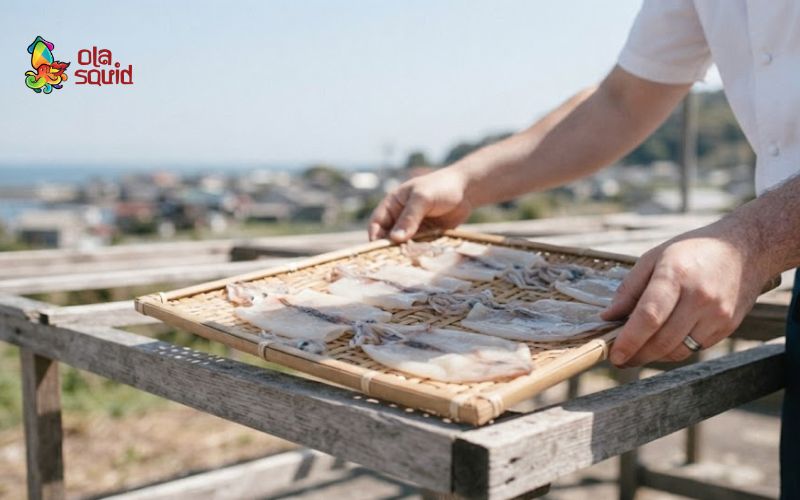
With hook-caught squid or whole squid, you can use clean ropes or hooks to hang each piece, helping the squid get even exposure to sun and wind. If the squid has been split or is large in size, you should spread it out on clean racks or nets, avoiding overlapping pieces. The drying location needs to be airy, receive direct sunlight, and be shielded from dirt and insects.

Step 4: Timing and checking dryness
The drying time is not fixed but depends on the size of the squid, the amount of salt, the intensity of the sun, and the air humidity. During the drying process, you should turn them over or change positions so that the squid dries evenly and the underside does not remain damp.

The squid meets requirements when its body is firm, the surface is dry, free of excess water, and carries a characteristic aroma. If the squid is still soft, moist, or feels slimy, you should continue drying it in good sunlight conditions instead of packing it right away.
See more: How to dry squid at home deliciously with authentic coastal flavor
Important notes when sun-drying salted squid at home
To make the dried squid both delicious and hygienic, you need to pay attention to dryness, the salting method, and the drying location. A few small mistakes during the process can cause the squid to spoil quickly or lose its natural flavor.
- Avoid drying when there is insufficient sun: Squid that is not dried enough, especially in humid or cloudy weather, easily gets damp and molds. You should choose a sunny day, dry it in an airy place, and only pack it when the squid has reached the necessary dryness.
- Marinate with salt very evenly: If the salt is not distributed evenly, the finished product can easily end up too salty in some spots and bland in others, affecting the quality of the squid. When marinating, you should mix thoroughly so that the salt covers both sides evenly, especially for large-sized squid.
- Choose a clean drying location: Do not dry squid near walkways, garbage gathering spots, or areas with lots of smoke, dust, and insects. It is best to use clean nets or racks, and shield them to limit flies and dirt from sticking to the squid throughout the drying time.
How to preserve sun-dried salted squid after making
After drying to the desired dryness, you should let the squid cool completely before packing to prevent moisture from condensing inside. Depending on the dryness and salinity, you can choose the appropriate storage method:
- Thoroughly dried, high salinity squid: Put it in a zip bag or sealed container, place it in a dry, cool place, away from direct sunlight and areas with high humidity.
- Squid with remaining moisture or mild salinity: You should divide it into small portions, wrap it tightly, and store it in the freezer compartment to limit mold and maintain better quality.
- Shelf life: Squid that is thoroughly sun-dried and properly stored can be used for several months. If kept in the freezer, the storage time can be longer, but you should check the smell, color, and surface of the squid before processing.
If you notice the squid has a strange smell, is slimy, discolored abnormally, or shows signs of mold, you should not continue using it.

See more: How to store dried squid properly for long-term use
Frequently asked questions about salted dried squid
Can moldy sun-dried salted squid be eaten?
You should not eat squid that has molded, even if mold is only visible on a small part. Washing, scraping off the moldy spots, or grilling again does not completely eliminate potentially harmful substances. It is best to discard this batch of squid and recheck your drying, packaging, and storage methods.
Can it be made without strong sunlight?
You can still make squid when there is mild sun, but the drying time will be longer and the squid is prone to dampness if the air humidity is high. If the weather is cloudy, rainy, or has unstable sunlight, you should temporarily stop drying or use a food dehydrator to better control the dryness.
Is sun-dried salted squid good for health?
Squid provides protein and several minerals, but sun-dried salted squid has a higher sodium content than fresh squid because it has been marinated with salt. Therefore, it should be eaten in moderation and balanced with other dishes during the day. People who need to restrict salt should pay special attention to their portion size.
How long should salted squid be soaked to reduce saltiness before cooking?
You can soak the squid in clean water for about 10–20 minutes, then check the saltiness before cooking. If the squid is still too salty, change the water and soak it for a little longer instead of soaking it for too long right from the start. After soaking, you should let the squid drain so it does not affect the grilling, frying, or stir-frying process.
How is salted dried squid different from one-sun dried squid?
Salted dried squid is marinated with salt before drying, giving it a bold flavor, firm flesh, and usually a higher degree of dryness. Meanwhile, one-sun dried squid is only dried for a short time, firming up on the outside while remaining soft and moist on the inside, retaining its natural sweetness. Therefore, the two types differ quite clearly in salinity, texture, and preparation methods.
Hopefully, the above sharing has helped you grasp how to make sun-dried salted squid, from choosing the squid and marinating with salt to drying and storing it properly. If you love products made from dried squid and want to enjoy delicious, convenient squid flavors right at home, you can refer to dried squid from Ola Squid with many suitable options for grilling, simmering, and everyday cooking.