
 Tiếng Việt
 ไทย
ไทยDried squid is a familiar delicacy loved by many for its natural chewy and sweet taste, rich aroma of the sea, and its versatility in countless delicious dishes. Instead of buying it pre-made on the market, more and more people are choosing to learn how to make dried squid at home to proactively control quality, ensure hygiene, and preserve the freshness of the ingredients.
So, how do you make dried squid so that the meat is fragrant, chewy, and not fishy? Let’s explore the simple yet extremely effective steps in detail right below.
What is dried squid? Why should you make it at home?
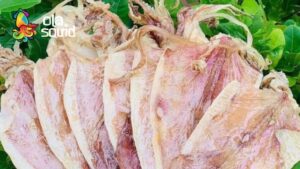
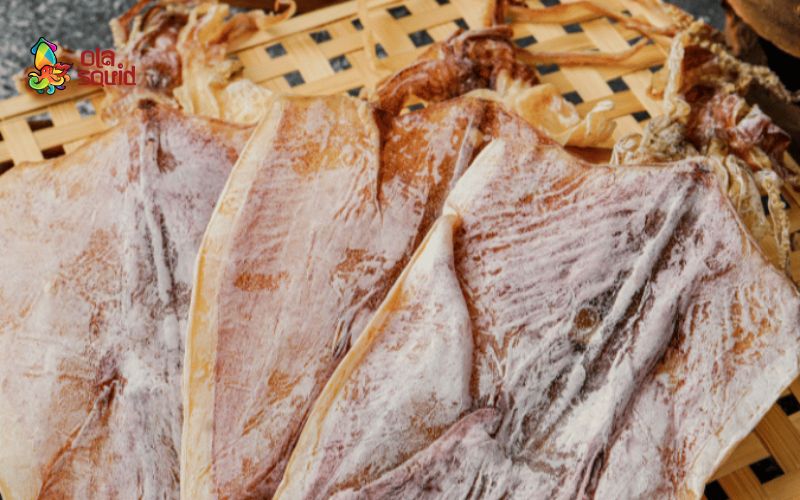
Dried squid is a product processed from fresh squid by removing most of its moisture through natural sun-drying or heat-drying to extend its shelf life while retaining its characteristic flavor and nutritional value.
Nowadays, many people choose to make dried squid at home to ensure quality and feel more secure when consuming it. Not only does it help save costs, but this method also allows you to proactively select fresh ingredients and control the entire processing procedure.
Nutritional value and flavor of dried squid
Dried squid is not only attractive for its rich flavor but is also a nutritious food source, providing plenty of protein, vitamins, and minerals essential for the body. Approximately 100g of dried squid can supply a significant amount of nutrients, helping to maintain energy and enhance overall health.
- Rich in protein: Dried squid contains about 60.1g of protein, which helps supplement energy, support muscle development, and create a feeling of satiety for longer.
- Fat: The fat content in dried squid is not too high, around 4.5g, including unsaturated fatty acids like omega-3, which help support heart health and contribute to nutritional balance.
- Zinc: Zinc is an important mineral that helps strengthen resistance, supports the cell regeneration process, and maintains overall health more effectively.
- Rich in vitamin B2: Vitamin B2 in dried squid helps the body effectively convert fat, protein, and starch into energy. The vitamin B2 content in dried squid is rated higher than in many common types of meat and seafood.
- Calcium: Dried squid contains the necessary amount of calcium to help maintain bone density, support strong teeth, and contribute to limiting the risk of osteoporosis when consumed reasonably.
When dried correctly, squid meat retains its natural sweetness, characteristic aroma, and attractive chewiness. Beyond being a familiar snack, dried squid can also be processed into many delicious dishes like grilled squid, tamarind-glazed squid, stir-fried squid with fish sauce, or stir-fried with onions. It is this rich, delicious flavor that makes dried squid a specialty loved by many.
Benefits of making it yourself: hygiene safety, cost savings, and quality control
When processing it yourself, you can take charge from selecting the ingredients to storing the finished product, helping the squid retain its natural flavor and limiting food safety issues:
- Controlled origin: Making dried squid yourself helps you control the entire preparation and drying process, limiting the use of preservatives, food coloring, or low-quality squid found on the market.
- Active control: You can choose your favorite type of squid, such as hook-caught squid, squid tubes, or broad squid, to create a product that suits your taste. Additionally, the dryness, chewiness, or flavor of the squid can easily be adjusted according to your needs.
- Cost savings: The price of fresh squid at the market is usually 40-60% lower than the finished dried squid of the same type. Calculating this, doing it yourself can save from 150,000 – 300,000 VND/kg depending on the type of squid. By investing once in preparation and drying equipment, you can produce enough dried squid to last for a long time.
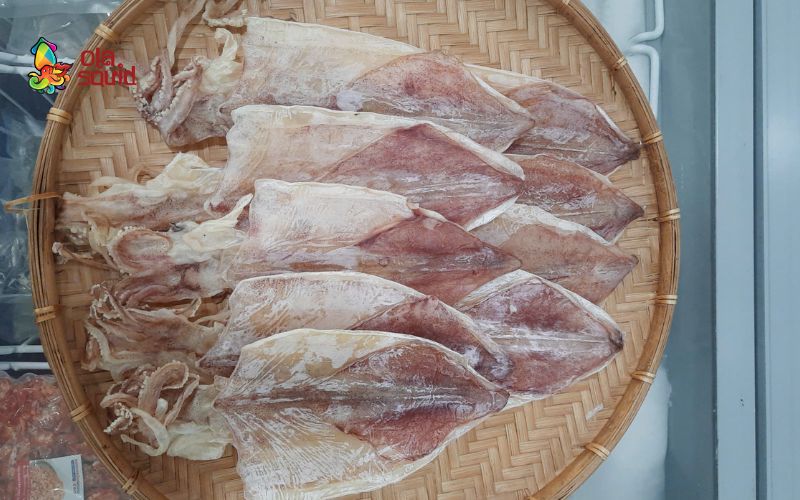
- No worries about buying chemically treated squid: Some types of ready-made dried squid may be bleached or use additives to increase attractiveness. When making it yourself, you are completely assured of the color, smell, and natural quality of the product.
- Flexible storage and preparation: Home-made dried squid can be used for grilling, tamarind glazing, stir-frying with fish sauce, sautéing, or as a snack. Proactively preparing it at home also helps save preparation time.
Execution time and what to prepare
Making dried squid at home does not require too many steps, but it needs sufficient drying time to achieve the natural chewy and delicious consistency. Depending on weather conditions and the method used, the total time can range from a few hours to 2-3 days.
The reference time is as follows:
- Squid preparation: about 30-60 minutes, including cleaning, removing the ink sac, internal organs, and rinsing to remove the fishy smell.
- Natural sun drying: about 1-3 days. If the weather is sunny, the squid usually needs 2-4 days of sun to reach the standard dryness.
- Drying with an oven or food dehydrator: about 6-12 hours, the time will vary depending on the size of the squid and the drying temperature.
- Shelf life after completion: Dried squid can be stored for several weeks to several months if packed airtight and stored correctly.
How to choose fresh, delicious squid for making dried squid
The quality of dried squid depends heavily on the input ingredients. Fresh squid that does not meet the standards will result in dried squid with a fishy smell, dull color, and mushy texture, no matter how good your technique is.
Which type of squid is most suitable?
Not every type of squid makes good dried squid. Popular types of squid often used to make dried squid include:
| Type of Squid | Meat characteristics | Suitable for making | Note |
| Squid tube | Long body, soft meat and easy to process. | Hanging dried squid, shredded dried squid | Most common type, easy to find |
| Broad squid | Wider body and thicker meat | Grid dried squid, shredded dried squid | Thin meat, dries faster |
| Cuttlefish | Small, less meat | Whole dried squid | Suitable for drying whole |
Note: You should prioritize choosing medium-sized squid tubes (150-300g/each), with moderately thick meat, easy to process, stable results, and giving the most characteristic sweet and chewy flavor.
How to identify standard fresh squid
To make delicious dried squid, the first important step is to choose standard fresh squid. The fresher the squid, the sweeter, more fragrant, and more beautifully colored the finished product will be after drying:
- Bright, shiny skin with natural colors: Fresh squid usually has bright skin, with a slight natural pink or purplish-brown glow. Do not choose squid with pale, dull colors or many strange spots on the body.
- Firm meat with good elasticity: When pressing lightly on the body, the meat quickly bounces back and leaves no indentation. This is a sign that the squid is fresh and retains its natural sweetness.
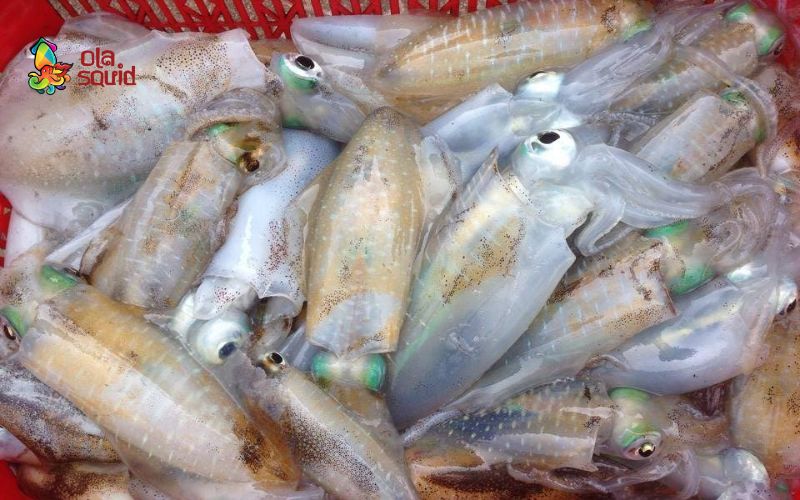
- Head and body attached tightly: You should choose squid with heads firmly attached to the body, with tentacles intact and not falling off much.
- Clear eyes, not cloudy: Fresh squid eyes are usually crystal clear, with the pupil clearly visible inside. If the eyes are cloudy, dull, or yellowish, the squid may have been stored for a long time.
- Slight, characteristic fishy smell of seafood: Fresh squid only has the slight, natural fishy smell of the sea. If the squid has a strong, sour, or unpleasant foul odor, it should not be used to make dried squid.
>>> SEE NOW: How to choose fresh, delicious squid that not everyone knows
Types of squid to avoid when making dried squid
Not every type of squid is suitable for making dried squid. If you choose low-quality or non-fresh squid, the final product after drying will easily become fishy, mushy, lose its sweetness, and spoil quickly during storage.
- Squid left for too long, no longer fresh: Squid with a strong foul odor, cloudy eyes, soft body, or slimy texture usually has reduced quality. When dried, the meat easily becomes mushy and loses its natural chewiness.
- Squid with a broken ink sac: A broken ink sac will make the body turn black and have a slightly bitter taste. The finished product after drying usually lacks aesthetics and affects the flavor.
- Long-frozen squid: Squid frozen for too long usually loses water, its meat becomes mushy, and its sweetness decreases. When dried, it easily becomes dry and tough, losing its characteristic aroma.
- Squid that is too small or too thin: Small squid easily becomes dry and hard after drying; the meat lacks sufficient chewiness and is difficult to reach the desired quality.
- Squid with signs of chemical treatment: You should not choose squid with an unnatural white color, strange shiny body, or chemical smell, as it may have been treated with preservatives, affecting quality and food safety.
>>> Read more: Summary of common types of dried squid on the market today
How to prepare squid before drying
Proper preparation is a step that cannot be skipped if you want the final dried squid to not be fishy or black, and to retain its natural ivory-white color.
Necessary tools to prepare
To ensure the preparation and making of dried squid at home proceed conveniently, you should prepare all necessary tools from the beginning. Careful preparation will help ensure the squid is cleaned correctly, dried evenly, and maintains a delicious quality after completion.
- Sharp knife and clean cutting board
- Clean basin of water and sea salt
- Drying tray or rack
- Food drying net
- Food-grade gloves
Detailed steps for cleaning squid
To ensure the dried squid has a delicious aroma and is not fishy, the preparation must be handled carefully from the beginning. Here are the simple yet effective steps for cleaning squid:
- Step 1 – Remove internal organs and eyes: First, gently detach the head to clean out the intestines, ink sac, cartilage, squid beak, eyes, and peel off the skin. Handle with care to avoid breaking the ink sac, which would make the squid body black and bitter.
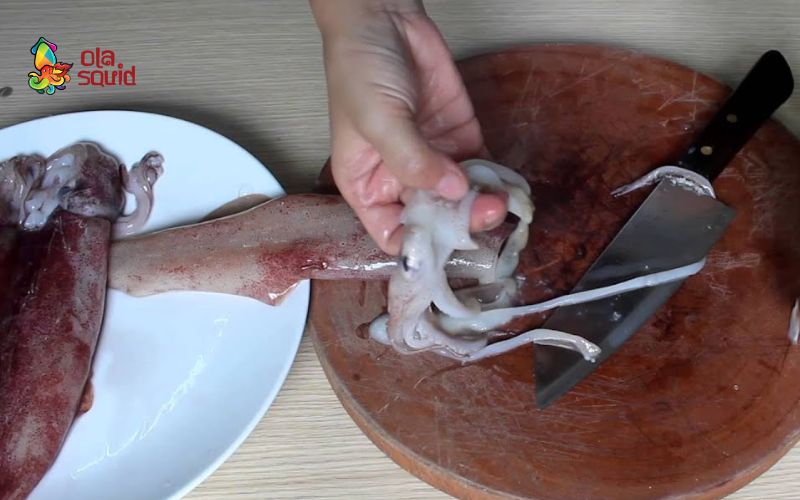
- Step 2 – Clean the squid body: Rinse the squid under clean running water, use your hands or a soft brush to scrub lightly to remove the slime and dirt attached to the outside.
- Step 3 – Soak in diluted salt water: Soak the squid for about 10-15 minutes in diluted salt water to reduce the fishy smell, helping the meat become firmer and cleaner.
- Step 4 – Let drain and prepare for drying: Rinse again with clean water, let sit for about 20-30 minutes to drain, then arrange the squid on a drying tray or net. You should place the squid pieces apart from each other so they dry evenly and limit mold during the drying process.
Refer further: Revealing how to clean squid, odor-free and super fast
Should you marinate with spices before drying?
Normally, traditional dried squid is dried in its original state to fully preserve the natural sweetness and characteristic aroma of seafood. Therefore, many people do not marinate with spices before drying so the final product can be used flexibly for many different dishes.
However, if you prefer a richer flavor, you can still lightly marinate the squid before drying with some ingredients like salt, chili, garlic, or sate. This method is usually suitable when making ready-to-eat dried squid or shredded squid.
When marinating, note the following points:
- Only marinate lightly to avoid losing the natural sweetness of the squid.
- Do not use too much sauce as the squid will take longer to dry and easily become moldy.
- Marinated squid usually has a shorter shelf life than plain dried squid.
- If sun-drying naturally, prioritize dry spices to limit insects from landing on the squid.
How to make dried squid by sun-drying (traditional)
Sun-drying is the traditional method of making dried squid that many people apply because it helps the squid retain its natural flavor, chewiness, and characteristic aroma. Just choose the right type of squid and dry it correctly, and you can completely make high-quality batches of dried squid right at home.
Ideal weather conditions for drying squid
Weather is a major factor determining the quality of the final dried squid product. You should choose days with strong sun, dry air, and low humidity for the squid to dry quickly, limiting mold or unpleasant odors.
- The ideal temperature is usually 28-35°C.
- Continuous sun for about 2-3 days.
- The drying area needs to be airy, clean, and have light to moderate wind.

- The start time for drying is from 8-9 AM, when the sun is warm enough.
- The collection time is from 4-5 PM, before the humidity increases in the late afternoon.
- Avoid drying when the weather is overcast, raining, or there is high air humidity because the squid can easily become slimy and take a long time to dry.
If weather conditions are favorable, the dried squid will have a beautiful light pink color, with a dry body that still retains its natural chewiness and sweetness.
In the Central and South Central provinces (Binh Thuan, Khanh Hoa, Quang Ngai) – areas with abundant sun and year-round sea breezes, they often produce the best quality dried squid. This is also why reputable brands like Ola Squid choose their squid source from these coastal areas.
How to hang dry squid (hook-caught squid) – thick meat, chewy, intensely sweet
Hook-caught squid usually has a thick body and firm meat, making it very suitable for traditional hanging dry methods. This drying method is suitable for whole large-sized squid tubes (over 200g/each), helping the squid dry evenly, retain a beautiful shape, and limit contact with the surface below.
- After cleaning, proceed to use bamboo sticks or hooks to fix the squid body.
- Hang the squid body vertically or slightly tilted in a place with good sun and even air circulation.
- The distance between each squid should be enough, about 5-7 cm, to avoid sticking together.
- Dry continuously for 2-4 days until the squid is semi-dry, the surface is dry but the inside still retains a slight chewiness.

How to grid-dry squid (net-caught squid) – thin meat, soft, easy to chew
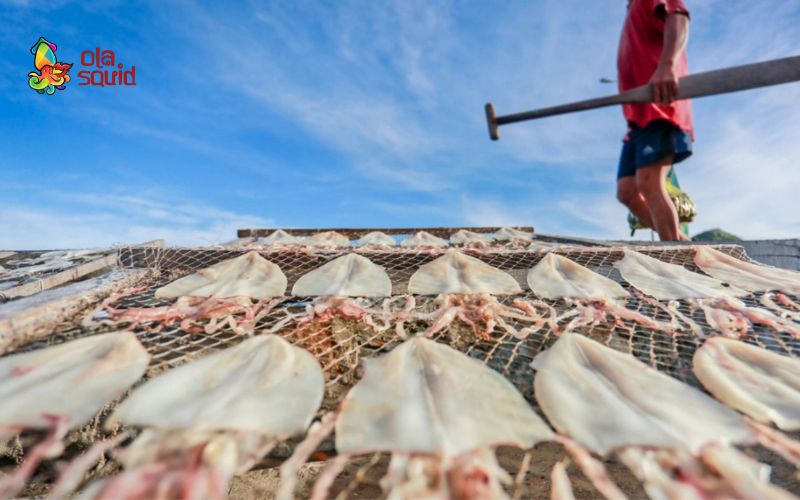
Cuttlefish or split squid tubes often have a thinner and softer body, so they are suitable for drying on a grid or food net to avoid tearing during the drying process.
- Arrange the squid in a single layer, with the inner side (white meat) facing up for the first 2-3 hours, then flip the skin side up after a few hours to dry more evenly.
- Use bamboo sticks to stretch the squid so the meat does not curl up during the drying process.
- The drying time is usually 1-2 days depending on the thickness of the squid and the weather. (Less than hanging dry because the meat is thinner and exposed to sun on both sides).
- Cover the drying grid with a fly-proof net.
>>> SEE NOW: Standard way to dry squid, retaining natural sweetness
Important notes when sun-drying
To ensure the dried squid reaches delicious quality and can be stored for a long time, you should note some important points during the drying process:
- Do not dry the squid too close together as it will make it take longer to dry and easily develop an odor.
- Should use a protective net to limit flies, dust, and insects from landing on the squid.
- At night, bring the squid indoors to avoid absorbing night dew moisture.
- Avoid over-drying as it will make the squid harder and reduce its natural sweetness.
- After finishing, you should store the squid in an airtight bag or vacuum seal it to keep it fragrant and delicious longer.
How to make dried squid using an oven / food dehydrator
Besides the traditional sun-drying method, many people currently choose to use modern ovens or food dehydrators to make dried squid at home. This way helps to be more proactive about time, limits weather impacts, and ensures hygiene during processing.
When should you use an oven instead of sun-drying?
Drying squid using a machine or oven is a suitable choice when the weather is unfavorable or there is no outdoor drying space. You should use the drying method when:
- It is raining, there is high humidity, or there is little sun for a long time.
- Living in an apartment or area lacking drying space.
- Producing in large quantities, so you want to control the temperature and drying time more stably.
- Need to ensure hygiene, limiting dust and insects from contacting the squid.
Guide to drying squid using an oven
The oven is a familiar device, easy to apply for making dried squid at home in moderate quantities, although less effective than a specialized dehydrator:
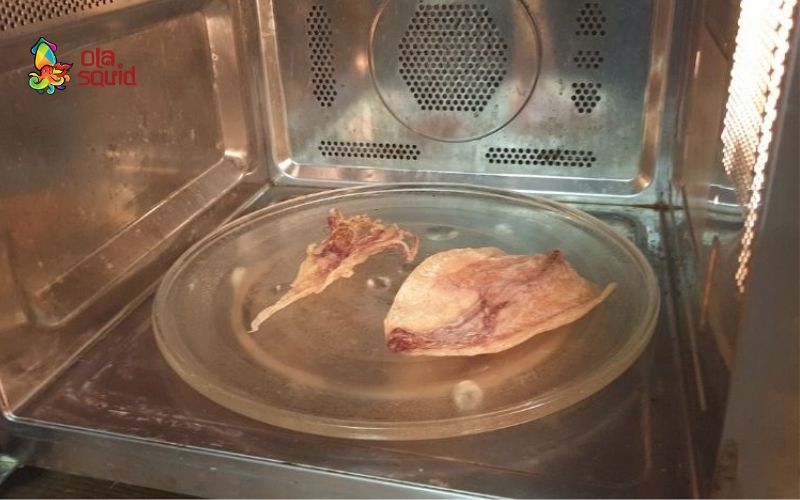
- Prepare the drying tray: Line with parchment paper or foil, arrange the squid pieces apart so heat circulates evenly. With large squid, you should make a few light cuts on the body so the squid dries faster and more evenly.
- Preheat the oven before drying: Start the oven at a temperature of about 60-70°C for 5-10 minutes to stabilize the heat. Note: do not use the broil/grill mode, only use the normal heating mode (bake/convect).
- Dry the squid at 60-80°C for about 4-6 hours depending on thickness. During drying:
- Leave the oven door slightly ajar to let moisture escape.
- Flip the squid every 1-2 hours.
- Check regularly to avoid over-drying the squid.
- Finish and store: When the squid reaches the desired dryness, take it out and let it cool completely before putting it into a zip bag or airtight container. Store in the refrigerator to keep the squid fresh and delicious longer.
Guide to drying squid using a food dehydrator
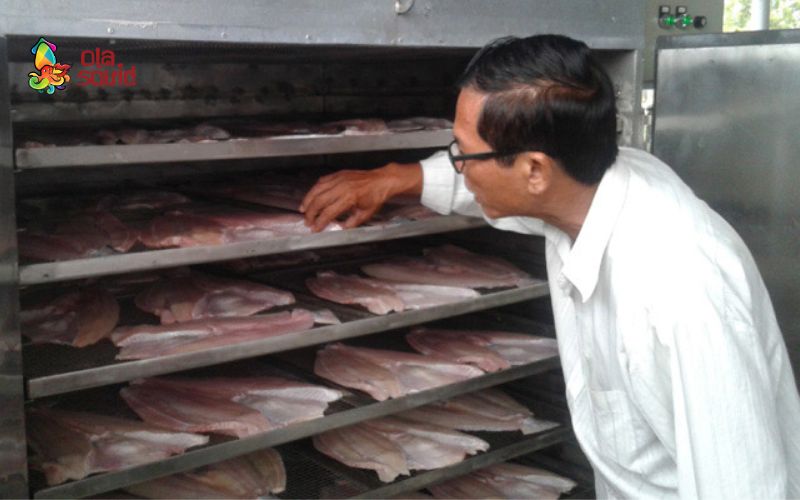
The food dehydrator provides the best results regarding uniformity and is more energy-efficient than an oven:
- Set the appropriate temperature: Adjust the dehydrator to about 55-70°C. This is the ideal heat level that helps the squid dry gradually, retaining its natural sweetness without becoming dry and tough.
- Arrange squid on the drying tray correctly: Place the squid spread evenly on each tray, do not overlap them to ensure good heat flow. With large squid, you should split the body slightly to make it dry more evenly.
- Change the position of the trays every 2-3 hours if the machine does not have an automatic rotation mode.
- Drying time: Depending on the thickness of the squid, the drying time usually lasts about 6-8 hours. During the drying process, you should check periodically and swap tray positions if necessary for more even drying.
Compare sun-drying and machine drying: pros/cons
| Criteria | Traditional sun-drying | Oven/dehydrator drying |
| Flavor | Natural fragrance, sweeter | Stable but slightly less fragrant |
| Time | 2-4 days | 6-8 hours |
| Cost | Nearly 0 (uses natural sun) | Electricity usage, needs equipment |
| Quality control | Depends on the weather | Proactive, stable |
| Hygiene | Depends on outdoor environment | Clean, controlled |
| Suitable when | Have drying yard, good weather | Rainy season, apartments, large quantities |
How to make shredded dried squid at home
Shredded dried squid is a snack loved by many for its natural sweet and chewy taste, strong aroma of seafood, and its ability to be easily combined with many different spices. With just a few simple steps, you can completely make your own delicious shredded squid right at home.
Ingredients to prepare
To make delicious shredded dried squid at home, you need to prepare:
- Fresh squid
- Sugar, cooking oil, fish sauce
- Garlic, chili, a bit of vinegar or lime juice
- MSG, pepper (optional)
Execution steps
- Step 1 – Grill the squid: Grill the dried squid over charcoal, electric stove, or air fryer until it smells fragrant and the squid body puffs up slightly.
- Step 2 – Soften and shred: After grilling, use a pestle to pound lightly to soften the squid, then proceed to shred it into bite-sized strips along the length of the squid body.
- Step 3 – Simmer with spices: Sauté garlic in a little cooking oil until fragrant, then add the squid and stir with spices like fish sauce, sugar, pepper, or chili until the squid is well-coated and smells attractive.
- Step 4 – Completion: When the squid is slightly dry and smells enticing, turn off the heat and let it cool before enjoying or storing.
How to marinate shredded squid for more intensity
Depending on your taste, you can vary shredded squid with different types of spices to make the dish more attractive and less boring.
- Spicy-sweet Korean style: Combine Korean chili paste, a little honey or sugar, minced garlic, and some toasted sesame to create a light spicy taste mixed with an attractive sweet aftertaste. This marinating style helps the squid strips become flavorful, fragrant, and very suitable as a snack.
- Classic salty-sweet style: This is a familiar marinating way with fish sauce, sugar, pepper, and fragrant fried garlic. The harmonious flavor between salty and sweet helps retain the natural chewy and sweet taste of the squid.
- Garlic butter style: Sauté garlic with unsalted butter and then stir with shredded squid to create a characteristic fatty aroma. You can add a little sugar and chili powder to make the dish more flavorful.
What does the standard finished product look like?
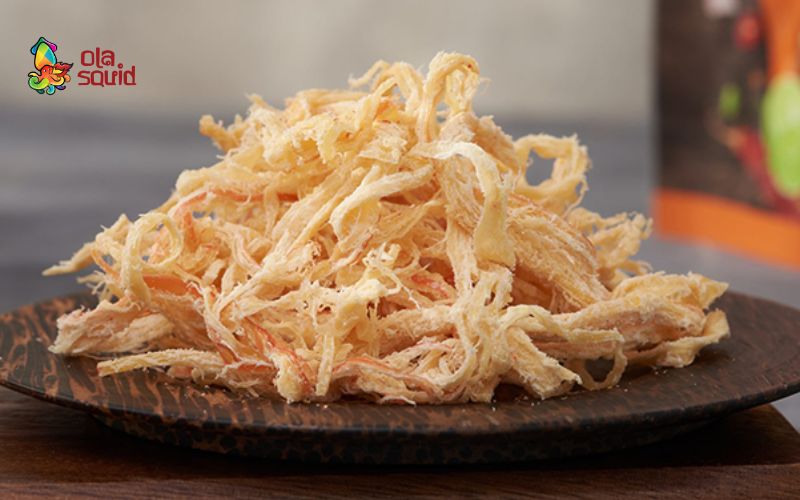
Standard shredded squid has a light to dark brownish-yellow color (depending on the spices), even strips, dry and not sticky to the hands, smells of grilled meat and spices, with no fishy odor. When eaten, it has the natural chewy and sweet taste of squid combined with rich spices, and the strips are neither hard nor mushy.
How to store dried squid long-term without getting moldy
Dried squid after being dried correctly still needs to be stored carefully to retain its aroma, chewiness, and sweetness, and to avoid mold. Depending on the duration of use, you can choose the appropriate storage method below.
Short-term storage (under 2 weeks)
If you plan to use it within a short time, you just need to put the squid in a zip bag, an airtight container, or wrap it carefully in clean newspaper and leave it in a cool, dry place. Avoid direct sunlight and areas with high humidity because the squid can easily re-absorb moisture. You can put in an additional food-grade desiccant pack to help the squid maintain its dryness and limit mold.
Medium-term storage (1-3 months)
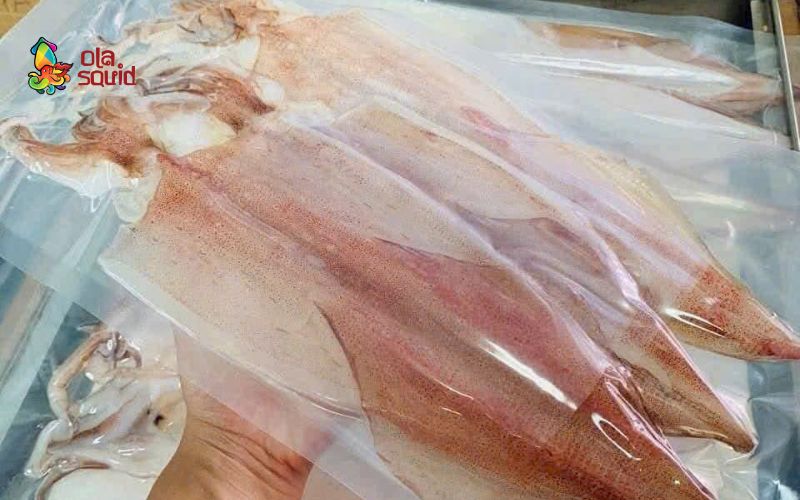
To store longer, you should put the squid in an airtight bag or vacuum seal it and place it in the refrigerator’s cool compartment. Stable temperature will help the squid retain its chewy softness and natural flavor. Before storing, ensure the squid is completely dry. If the squid is still slightly moist, water vapor accumulating in the bag can make it mold quickly or develop strange odors.
Long-term storage (3-12 months)
For long-term storage needs, the freezer is the most suitable choice. The squid should be divided into small portions, wrapped tightly, or vacuum sealed to make it convenient to use and avoid repeated thawing.
When you need to use it, you should only take the sufficient amount and let the squid thaw naturally before processing. This storage method helps the squid retain its sweetness, characteristic aroma, and minimizes the risk of mold for a long time.
>>> See now: Tips to store dried squid properly for long-term use
Suggestions for processing dried squid after making
After making dried squid at home, you can transform it into many attractive dishes with diverse flavors. From rich drinking snacks to chewy and delicious munchies, dried squid always brings an irresistible attraction thanks to its characteristic natural sweetness.
Dried squid stir-fried with garlic fish sauce / tamarind sauce
Dried squid after grilling and shredding can be simmered with garlic-chili fish sauce or sweet and sour tamarind sauce to create a flavorful dish, perfect for meals and suitable as a snack. The chewy and sweet taste of the squid blends with the thick and flavorful sauce, making the dish even more attractive.
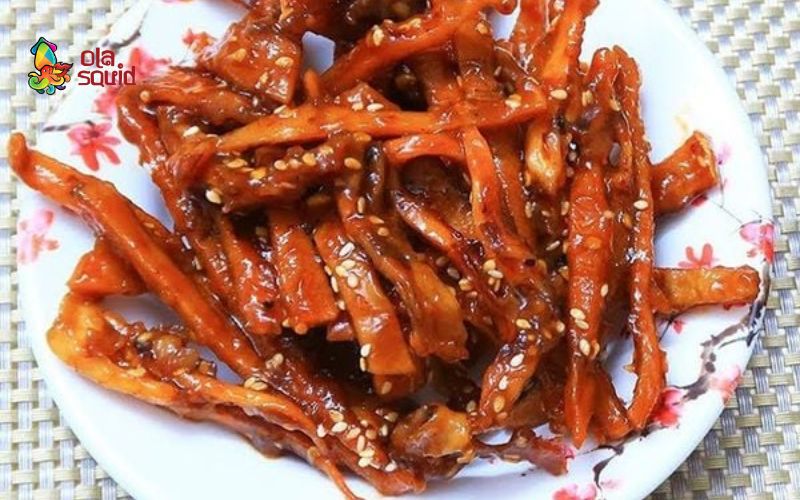
See more: 3 ways to make super delicious glazed dried squid at home
Grilled dried squid (charcoal, electric stove, oven)
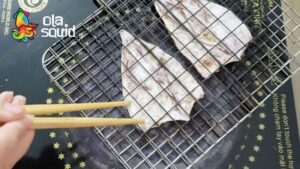
This is a simple processing method that retains the full original flavor of the dried squid. When grilled, the squid gives off a characteristic aroma, the squid body puffs up slightly and has a moderate chewiness. You can dip grilled dried squid with chili sauce or green chili salt to enhance the flavor. Use an electric stove or oven at 180-200°C for 5-8 minutes, then flip evenly.
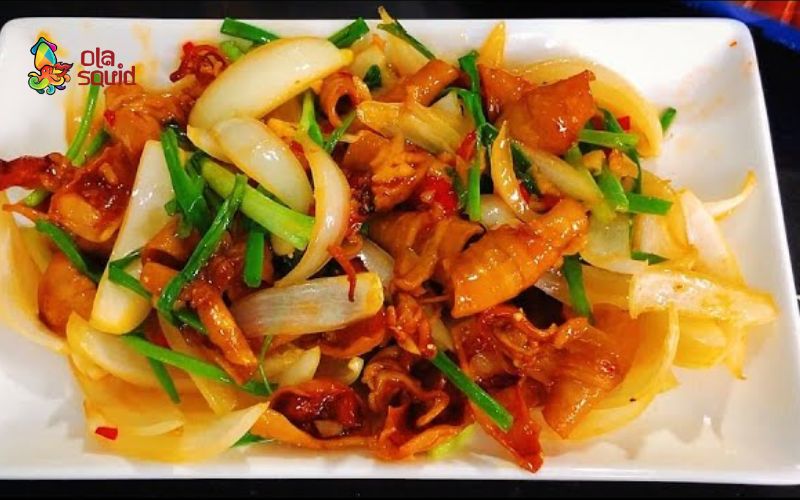
Dried squid stir-fried with onions
Dried squid stir-fried with onions creates a delicious dish with a natural sweetness and an attractive light crunch. Onions help balance the saltiness of the squid, while making the dish more flavorful and easier to eat in family meals.
Dried squid salad with mango / ambarella
Thinly sliced grilled squid combined with shredded green mango or ambarella, added with herbs, roasted peanuts, and sweet and sour dipping sauce. The slight acidity of the fruit combined with the chewy sweetness of the squid creates an attractive salad, suitable for hot days or gatherings with friends.
Refer now:
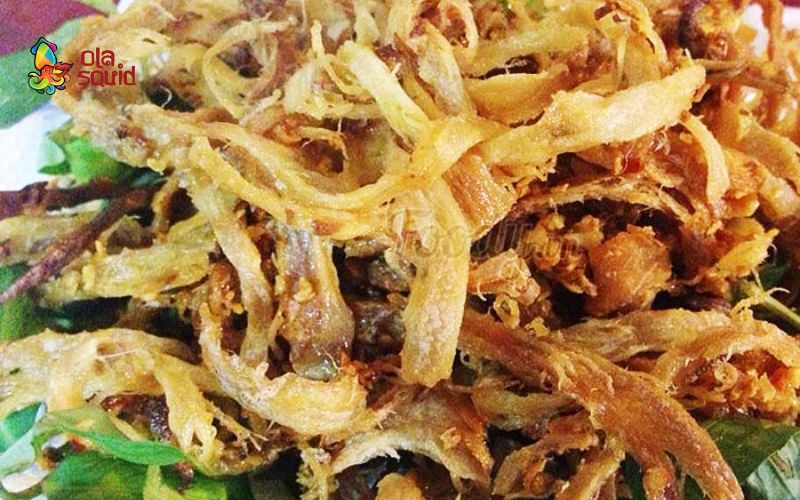
Crispy fried dried squid
Crispy fried dried squid is a snack loved by many for its light crispy outer layer while still retaining the natural chewy sweetness inside. It can be fried with garlic butter, fish sauce, or sate to increase the flavor and attractiveness of the dish.
Common mistakes when making dried squid & solutions
Even experienced people sometimes encounter problems. Understanding the cause helps you handle it quickly and avoid repeating it in the next batch.
Squid is black (due to broken ink sac)
This is a fairly common error when processing squid incorrectly. If you break the ink sac while removing internal organs, the black ink will spread onto the squid body, making the final product dark and aesthetically unpleasing.
To fix this, handle gently when separating the squid head and internal organs. If you accidentally break the ink sac, rinse immediately under clean running water and use salt to scrub lightly to remove the black marks before drying.
Squid has a fishy smell (cleaning not clean)
Squid still having a fishy smell is often due to not cleaning the internal organs, the slime layer, or not rinsing thoroughly after preparation. This makes the squid still have an unpleasant odor after drying and affects the flavor.
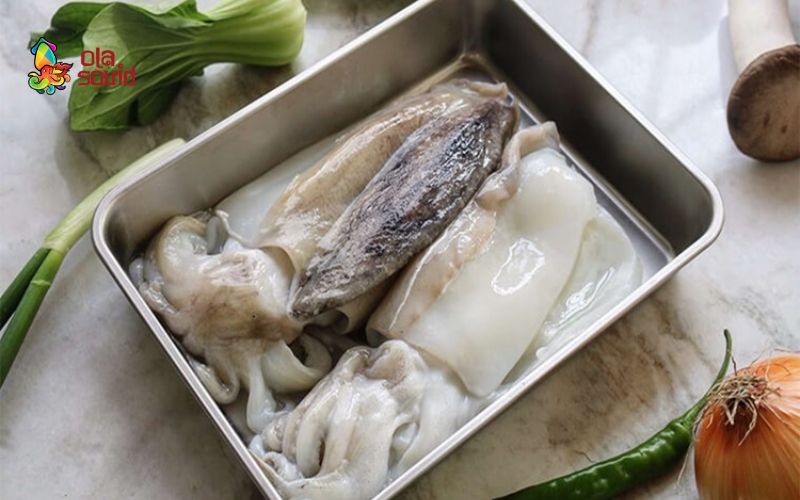
After cleaning, you should soak the squid in diluted salt water for about 10-15 minutes, then rinse it many times with clean water. You can add a few slices of ginger or a little white wine to deodorize more effectively.
Squid is moldy after making (insufficient sun-drying or improper storage)
Squid that has not reached the required dryness or is stored in a humid environment easily develops mold, has a strange odor, and is no longer safe to use.
To avoid this situation, you need to dry or dehydrate the squid for enough time until the body is dry and firm. Then, store it in an airtight bag, vacuum seal it, or leave it in the refrigerator’s cool/freezer compartment to limit moisture infiltration.
Squid is too dry, loses sweetness (dried too long)
Many people think the longer it dries, the longer it can be stored; however, this can cause the squid to become hard and dry, losing its soft, chewy texture and reducing its natural sweetness.
The ideal drying time is usually from 1-3 sunny days depending on the size of the squid and the sun intensity. When you see the squid is dry, the body firm but still retains a slight chewiness, it is standard. Do not dry for too long in continuous harsh sun.
Frequently Asked Questions (FAQ)
Can you make dried squid without sun?
Yes. You can completely make dried squid using an oven or food dehydrator instead of the traditional sun-drying method. Just maintain the appropriate temperature level around 55-80°C and dry for enough time, the squid will still reach the chewy, delicious consistency and can be stored for a long time. This is a convenient solution during the rainy season or in places lacking drying space.
How long does homemade dried squid last?
If dried or dehydrated until sufficiently dry and stored properly in an airtight bag, homemade dried squid at room temperature in an airtight container with a desiccant pack can be used for 4–6 weeks. If kept in the refrigerator, it lasts 2-3 months and longer when stored in the freezer for 6-12 months. However, to keep its natural deliciousness, it should be used as soon as possible after processing.
Can pregnant women eat dried squid?
Pregnant women can still eat dried squid in moderate amounts because it is a food rich in protein, calcium, and minerals. However, do not eat too much because dried squid often contains high salt content and easily causes bloating if used frequently. It is best to choose clean squid with a clear origin and process it hygienically to ensure safety for health.
>>> Can pregnant women eat dried squid? How to eat safely
Making dried squid yourself correctly not only helps you create batches of fragrant, chewy, and sweet squid to your liking but also ensures quality and safety when consuming. Just choose fresh ingredients, prepare correctly, and store reasonably, and you can enjoy many attractive dishes from dried squid right at home.
If you don’t have much time to process it yourself but still want to enjoy high-quality dried squid with the standard sea flavor, don’t forget to contact Ola Squid immediately. Here we specialize in providing high-quality dried squid, carefully selected with a clear origin, thick meat, naturally sweet, and suitable for both daily consumption and as gifts.
“