
 Tiếng Việt
 ไทย
ไทยFragrant, chewy, and sweet grilled dried squid has always been a favorite treat for many. However, if you grill too much without knowing how to properly store the grilled dried squid, it can easily become soft, lose its aroma, or spoil quickly. So, how can you maintain the deliciousness, chewiness, and enticing flavor of the squid after grilling? In this article by Ola Squid, let’s explore simple yet effective ways to store grilled dried squid, ensuring you can enjoy this delicacy with peace of mind at any time.
Why does grilled dried squid need to be stored differently than ungrilled dried squid?
After grilling, dried squid possesses an enticing aroma and characteristic chewiness; however, it can easily lose its quality if not stored correctly. Compared to whole dried squid that has not been processed, grilled squid has undergone heat treatment, which significantly alters its meat structure and moisture content. Therefore, storage requires more care to preserve its delicious taste and ensure safety for consumption.
Grilling temperature changes the squid meat structure
When grilled over charcoal, alcohol, or in an oven at 200 – 250°C, the squid meat begins to cook and loses some of its natural moisture. This makes the squid more fragrant but also makes the surface prone to absorbing moisture from the environment if left out for too long.
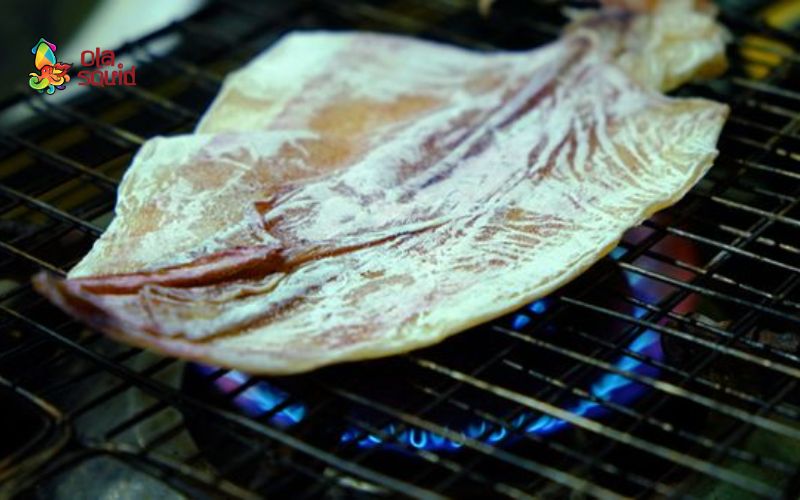
Once grilled, the squid is no longer in its original completely dry state, making it susceptible to softening, spoilage, or higher bacterial growth if stored incorrectly. That is why grilled squid generally has a much shorter shelf life than unprocessed dried squid.
Furthermore, the protein denatured by heat is more prone to oxidation, especially in tropical regions like Vietnam where ambient humidity is often above 70-80%. Protein oxidation is the primary reason grilled squid left out for too long develops a slight fishy or burnt smell, even without visible mold.
Why shouldn’t you store grilled squid with ungrilled dried squid?
Many people have a habit of storing leftover grilled squid in the same bag or container as ungrilled dried squid, but this is a common mistake that leads to both parts spoiling.
- Moisture differential: Ungrilled squid has a much lower moisture content than grilled squid. When stored together, moisture from the grilled squid will transfer to the ungrilled squid, causing it to become soggy before you even get a chance to use it.
- Heat-induced odor transfer: The smoky and grilled aroma from the heat-treated squid will permeate the ungrilled squid, altering its original flavor—this is particularly noticeable with sun-dried squid that has a delicate natural scent.
- Bacterial risk: Although grilled squid has been exposed to high heat, it has since been re-exposed to the external environment and may carry bacteria from the air. Storing it with sealed ungrilled dried squid increases the risk of cross-contamination.
How long can grilled dried squid be stored?
Storage time depends directly on the methods and conditions used. Below is a summary table for your quick reference:
| Storage Method | Conditions | Maximum Duration | Quality Maintained |
| Room temp, uncovered | Well-ventilated, under 30°C | 2-4 hours | Drops quickly after 2 hours |
| Airtight container, room temp | With desiccant packet, under 28°C | 6-8 hours | Acceptable |
| Refrigerator (0-4°C) | Airtight container/bag | 2-3 days | Good if reheated properly |
| Freezer (-18°C) | Vacuum-sealed bag | Up to 2 weeks | Quite good after thawing and reheating |
According to general recommendations from food safety experts, heat-processed seafood should not be kept at room temperature for more than 4 hours, especially in the hot and humid climate of Vietnam.
How to store grilled dried squid properly
To ensure grilled squid retains its delicious flavor and does not become dry, hard, or permeated with odors, you can apply one of the storage methods below.
Method 1: Short-term storage for the day (under 8 hours)
In this case, when you have leftovers from grilling and plan to use them within the day, the goal is to keep the squid from becoming soggy and losing its scent. The best approach is to let the squid cool completely at room temperature for 10-15 minutes before storing. Never put hot squid into an airtight container, as the heat will condense into moisture inside.
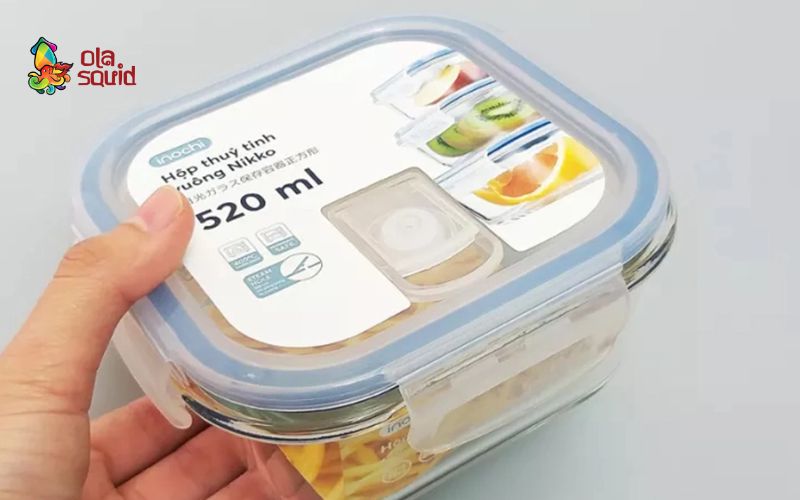
- After cooling, place the squid into a plastic or glass container with a tight lid or wrap it securely with food-grade plastic wrap.
- Place the container in a cool, dry place away from direct sunlight or high-temperature areas, as these can cause the squid to become rancid and tough.
- Avoid placing it near strongly scented foods, as grilled squid easily absorbs odors from items like onions, garlic, durian, or raw ingredients. Storing it separately is essential to maintain its natural flavor.
Method 2: Refrigerator storage (2-3 days)
If you know you won’t use it all in one day, the refrigerator is the safest option to maintain the best quality for grilled squid for 2-3 days. Note that refrigerators have relatively high humidity; the cooling compartment often maintains 80-90% relative humidity. To store grilled dried squid in the fridge, you must:
- Put the squid in an airtight container or zip-lock bag: After the squid has cooled completely, place it in a sealed box or food-grade zip-lock bag to limit air and moisture infiltration. This helps the squid retain its chewy texture and prevents it from drying out.
- Wrap with an extra layer of foil or plastic wrap: To better preserve the flavor, you can wrap the squid in a layer of foil, parchment paper, or plastic wrap before placing it in the container. This absorbs surface moisture and limits odor absorption from other fridge items.
- Squeeze out excess air from the zip-lock bag before sealing—no vacuum sealer required; just press the bag slowly from the bottom up.
- Store on the middle or lower shelf (not near the freezer) to prevent the outer layer of the squid from freezing.
- Reheat before consumption: Before eating, it is recommended to reheat it in a dry pan, oven, or air fryer so the squid regains its appetizing aroma and chewy texture as if freshly grilled.
Method 3: Freezer storage (up to 2 weeks)
The freezer is the option when you have grilled a large quantity and cannot consume it within 2-3 days. Properly frozen grilled squid retains its flavor quite well for up to 2 weeks. Beyond this time, ice crystals forming inside the squid meat begin to break down the cellular structure, making the texture mushy and less fragrant after thawing.
- Let the squid cool completely before freezing: After grilling, let the squid cool entirely before moving it to the freezer. Placing hot food in the freezer creates condensation, affecting the quality and flavor of the squid.
- Portion into smaller, ready-to-use amounts: It is best to divide the squid into individual portions before storage for convenience. This limits the need to thaw the whole batch and re-freeze it multiple times, which avoids drying it out and losing its natural texture.
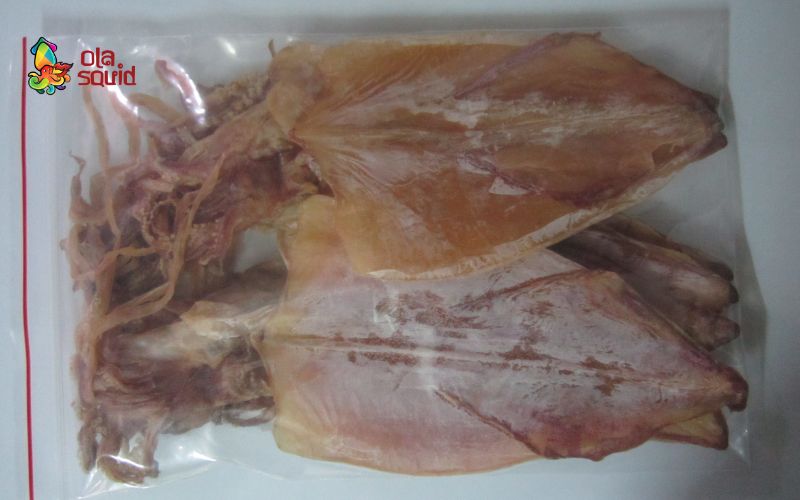
- Wrap tightly with zip-lock bags or specialized containers: Use zip-lock bags, airtight containers, or an extra layer of plastic wrap to keep air out. This prevents freezer burn and minimizes odor absorption from other freezer items.
- Store in a freezer with stable temperatures: The squid should be stored at approximately -18°C for the best quality. In this way, grilled dried squid can be used for up to 2 weeks while retaining its characteristic chewiness and sweetness.
- Write the freezing date on the bag to keep track of its shelf life.
- Thaw properly: Transfer the squid from the freezer to the refrigerator compartment to thaw overnight. Do not thaw at room temperature or in warm water, as this will make the squid mushy and prone to bacterial growth.
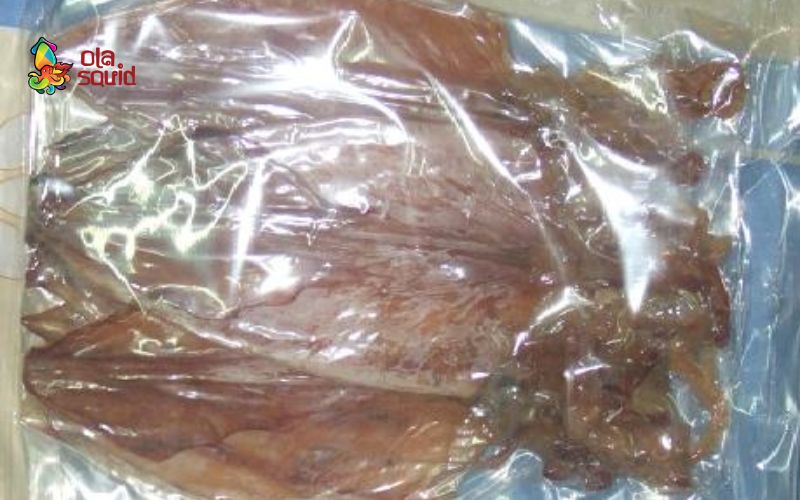
Method 4: Temporary storage without a refrigerator
This is a realistic scenario during picnics, camping, or simply during power outages. Without cooling equipment, storage capacity is significantly limited, so the goal is just to extend the safe consumption period by a few hours; it cannot replace a refrigerator.
- Do not let the grilled squid come into direct contact with air; put it in an airtight container immediately after cooling.
- You can use food-grade desiccant packets: If you need to store it for many hours without a fridge, you can place extra food-grade desiccant packets alongside it to limit moisture and keep the squid drier.
- At a room temperature of 28-32°C (typical in Vietnam), grilled squid in an airtight container is safe for a maximum of 4-6 hours; after this time, check for signs of spoilage before eating.
- Store the squid in a clean area, away from direct sunlight, stove heat, high-temperature spots, or high humidity.
- Do not store near strong-smelling foods: Grilled squid easily absorbs odors from the surroundings. Therefore, avoid keeping it near pungent items like onions, garlic, durian, or raw foods.
>>> Reference: Tips for making delicious grilled dried squid at home
How to reheat grilled dried squid to regain its crispy aroma
After cold storage, squid often becomes softer than when freshly grilled. Proper reheating will make the squid tastier and more enticing.
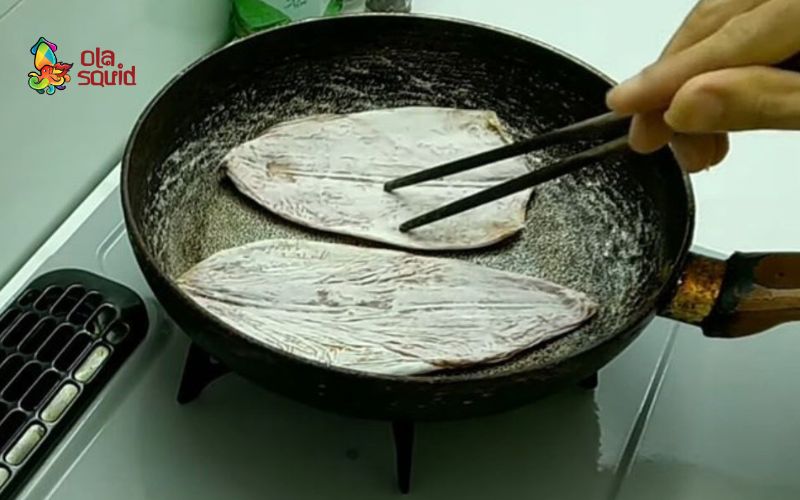
Method 1: Reheating on a dry pan
This is the simplest method and yields the best results in terms of texture; no special equipment is needed, just a thick pan and a standard stove.
- Place a cast-iron or thick pan on the stove, heat it over medium or low heat for 1-2 minutes, without adding oil.
- Gently reheat the squid: Place the squid on the pan, press down lightly, and flip frequently so the heat distributes evenly. Reheating slowly helps the squid warm up while maintaining its natural chewiness.
- Do not overheat or use excessive heat: High temperatures or prolonged reheating can easily burn the edges, dry out the meat, or cause it to lose its signature sweetness. It is best to heat for only 1-2 minutes until the surface is dry and releases an aroma.
- Let the squid rest for 1-2 minutes on the plate before eating to allow the heat to distribute evenly.
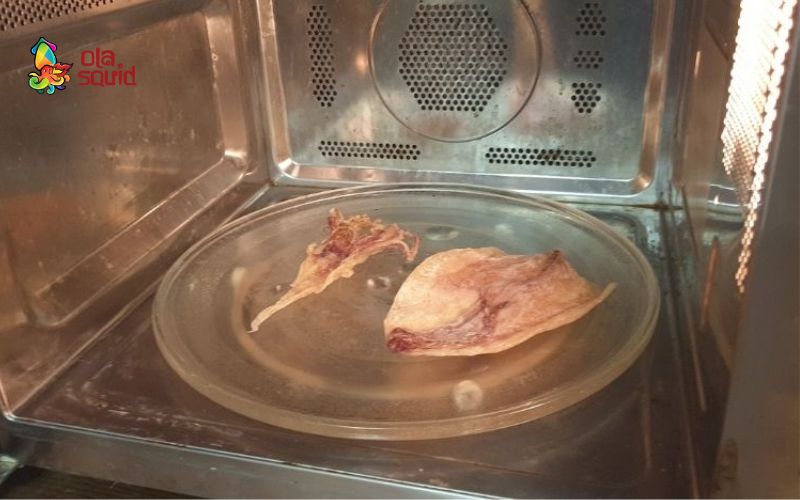
Method 2: Reheating in the microwave
The microwave is the fastest method but the least stable, often causing the squid to become chewy or hard if not controlled correctly.
- Place the squid on a microwave-safe plate: Place the squid on a ceramic or heat-resistant glass plate, spreading it out so the heat distributes more evenly during the reheating process.
- Heat at a moderate temperature: Only heat the squid for about 20-30 seconds at a medium power of 50-60%. If the squid is still cold, you can add a few seconds, avoiding prolonged heating which makes it dry and hard.
- Total reheating time usually should not exceed 60-90 seconds for a single serving.
- You can place a small cup of water in the oven: A small tip to help the squid retain its soft, chewy texture is to place a cup of water inside the microwave when reheating. The steam will prevent the squid from losing moisture too quickly.
- After reheating, let the squid sit uncovered for 1-2 minutes for the steam to escape before eating to prevent it from becoming soggy.
Reheating grilled dried squid in the microwave is quick and simple.
Method 3: Reheating in an oven or air fryer
Compared to the microwave, an oven or air fryer helps the squid release a clearer aroma, the surface becomes slightly firm, and it retains a chewiness closer to freshly grilled squid. This is a convenient method if you need to reheat a large quantity while still ensuring flavor and food quality.
Using an oven:
- Preheat the oven at 180°C for 5 minutes.
- Arrange the squid in a single layer, avoiding stacking so it heats evenly and maintains its natural flavor.
- Grill for 4–6 minutes, flipping the squid once halfway through to ensure it heats evenly.
- Then, remove the squid and let it cool for 2-3 minutes before eating.
Using an air fryer:
- Set the air fryer temperature to 170°C for 3-4 minutes.
- Arrange the squid in the basket, without overfilling, to allow hot air to circulate evenly.
- If the squid pieces are thick or you have a large whole squid, shake the basket or flip the squid after 2 minutes.
- The air fryer provides the best results for crispness among the three methods, especially suitable for squid stored in the fridge overnight.
Reheated grilled dried squid in an air fryer becomes hot and crispy again.
>>> Read more: Tips for proper dried squid storage, keeping it fresh for long periods
Signs that grilled squid is spoiled and should not be eaten
Grilled dried squid, if not stored properly or left for too long, easily degrades in quality and develops harmful bacteria. Recognizing early signs of spoilage helps avoid health risks:
- Unusual ammonia smell or strong fishiness: Delicious grilled squid typically has a signature aroma of dried seafood. If the squid smells sour, musty, or unusually foul, it is likely spoiled or contaminated.
- Appearance of unusual white, green, or black spots: If small white, green, or black dots appear on the surface, there is a high chance the squid has developed mold due to damp storage or excessive storage time.
- Abnormally slimy or wet surface: Properly stored squid will be dry or slightly tacky. If it feels slimy or slippery to the touch, bacteria have begun to grow on the surface.
- Abnormal color changes: Grilled squid usually has a natural golden-brown color. If the squid turns dark black, gray, pale green, grayish-white, or has irregular discolored patches, the quality is no longer guaranteed.
- Burnt smell not caused by grilling: Grilled squid has a distinctive smell from the Maillard reaction. If a burnt smell appears without reheating or differs completely from the usual scent, it may be due to excessive fat oxidation.
- Strange taste when eating: If the squid has an unusually sour, bitter, bland taste, or has lost its natural sweetness, stop eating immediately to avoid digestive issues.
- Meat is too hard or crumbly: Squid that is excessively dry, abnormally hard, or conversely, mushy and easily crumbled, is a sign that the quality has degraded after a long storage period.
See also: Is moldy dried squid edible? Safe handling methods
Tips and tricks for grilling the right amount to avoid multiple storages
Grilling just enough not only helps the dish retain its full flavor but also limits the need for repeated storage and reheating. Here are some tips to help you estimate the right amount of squid and enjoy it at its best immediately after grilling:
- Estimate portion by number of people: For a group of 2-3 people, grilling about 1-2 medium-sized squids is sufficient. If accompanied by other snacks or side dishes, you can reduce the amount of squid to avoid leftovers.
- Do not grill too much at once: Grilled squid is best when hot and freshly shredded. Grilling too much at once makes it likely that the rest will need storage, reducing its chewy sweetness and natural aroma. For large gatherings, you should grill in batches rather than all at once.
- You can grill partially then reheat when needed: If you want to prepare ahead for a party or gathering, you can grill the squid partially and store it short-term. When it’s time to eat, just reheat it using a pan, oven, or air fryer so the squid is more delicious.
- Do not reheat repeatedly: Repeated storage and reheating will make the squid meat dry, hard, lose its natural sweetness, and significantly decrease in quality. Therefore, only take out an appropriate amount for each meal.
- Choose squid size based on usage needs: If you only use it for a small family, prioritize medium-sized squid to easily divide portions and limit leftovers after the meal.
- Use stainless steel trays or warming grill racks to keep the squid warm longer during the meal, reducing the amount of squid that cools down and requires storage.
We hope the above insights have helped you understand more about how to store grilled dried squid so it maintains its chewiness, aroma, and quality after processing. By applying the right storage and reheating methods, you can fully enjoy delicious grilled squid at any time without worrying about it becoming tough or flavorless.
If you are looking for a source of delicious, high-quality dried squid with a natural sea flavor and distinct aroma, don’t forget to visit Ola Squid to select products that have been carefully vetted. Here, you can easily find various types of fragrant, carefully packaged dried squid, perfect as gifts or for enjoyment with your family.