
 Tiếng Việt
 ไทย
ไทยSun-dried squid (mực một nắng) has long been a favorite specialty across all three regions of Vietnam, but not everyone knows that this delicacy can easily be made at home. If you are looking for how to make sun-dried squid, from selecting fresh squid, processing, and drying under the sun to proper storage, this article will guide you through each specific step. Let’s gather the ingredients and get started on making this specialty at home by following the instructions below.
What is sun-dried squid? How does it differ from regular dried squid?
Many people confuse sun-dried squid with regular dried squid, but they are actually two completely different products in terms of drying process, texture, and flavor.
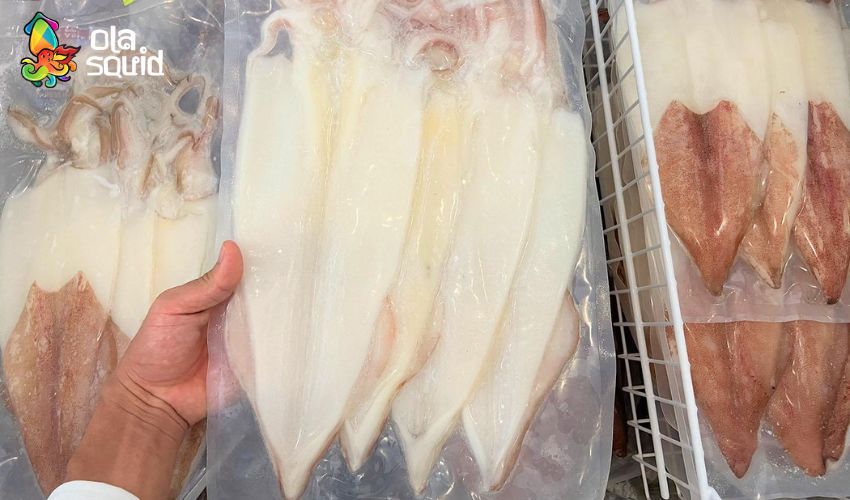
Sun-dried squid is fresh squid that has been processed and dried under strong sunlight for about 4 – 8 hours. The finished product still retains a certain level of moisture, with chewy, sweet meat, a natural ivory-white color, and a mild sea aroma. This is a semi-dried state, not fully dehydrated squid.
Regular dried squid is dried or dehydrated for several days until all moisture is removed, resulting in tough meat, a darker color, and the ability to be stored at room temperature for months.
| Criteria | Sun-dried squid | Regular dried squid |
| Drying time | 4 – 8 hours | 2 – 4 days or many hours of dehydration |
| Remaining moisture | ~40 – 50% | <15% |
| Texture | Chewy, soft, slightly moist | Hard, dry, fibrous |
| Flavor | Freshly sweet, mild sea aroma | Rich, saltier |
| Shelf life | 3 – 7 days (chiller), 1 – 2 months (frozen) | 3 – 6 months (chiller), 6 – 12 months (frozen) |
| Common preparation | Grilling, frying, stir-frying | Grilling, steaming, salads |
See more: Update on the latest sun-dried squid prices, where to buy the best?
Criteria for choosing fresh squid for sun-drying
The success of sun-dried squid depends 70% on the quality of the raw materials. Substandard fresh squid will result in a fishy smell, dull color, and mushy texture – no matter how correctly you follow the drying technique.
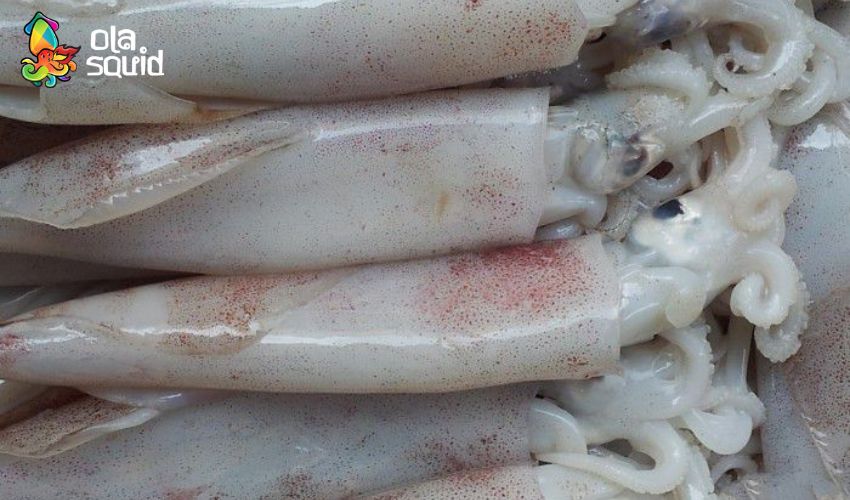
When choosing squid, prioritize purchasing at seafood markets early in the morning or from facilities that source fresh directly from fishing boats. Squid caught within the day usually has the best quality for sun-drying because the meat is firm, highly sweet, and loses less weight during drying.
Signs of high-quality fresh squid:
- Color: The squid body is opaque white or slightly light pink, with the outer skin intact and not peeled off or discolored to grayish-brown.
- Smell: Natural, mild sea smell, no ammonia, sour, or pungent fishy odors.
- Elasticity: Pressing on the squid body, the meat should be elastic, immediately returning to its original shape without leaving dents or becoming mushy.
- Eyes: Still clear and bright, not cloudy or deeply sunken.
- Tentacles and head: Still firmly attached to the body, not loose or slimy.
- Ink sac: Still intact, not ruptured; if it is ruptured, it can still be used, but it needs immediate processing.
As for the type, squid (muc ong) and broad squid (muc la) can both be used to make sun-dried squid, but each variety offers different flavors and textures.
Tools needed for drying squid
There is no need to invest in many specialized devices; you can absolutely make sun-dried squid with simple tools already available at home.
Basic tools required:
- Sharp knife and clean cutting board to split the squid evenly, avoiding tearing the meat.
- Large water basin for washing the squid multiple times and soaking during preparation.
- Bamboo or stainless steel skewers to stretch the squid body during drying, helping it dry evenly.
- Stainless steel mesh tray or drying rack to lay the squid flat, allowing both sides to be ventilated.
- Fly/insect screen, which is mandatory when drying outdoors to prevent flies from landing on it.
- Clean tray or platter for holding the squid and draining water before drying.
- Food-grade gloves to maintain hygiene while processing and handling the squid.
Detailed guide on how to make sun-dried squid
The process of how to make sun-dried squid consists of 4 main steps, each with important technical points to note so that the final product reaches the best quality.
Step 1: Squid processing – technique for splitting and cleaning properly
Cleaning the squid properly ensures it does not become fishy or bitter after drying. Many people skip this step or do it too hurriedly, resulting in a finished product with an unpleasant smell.
Processing steps:
- Initial wash: Rinse the squid under cold running water to remove impurities on the outside.
- Separate head and tentacles: Gently pull the head away from the body; the ink sac will follow. If you want to keep the head to dry with the body, remove the hard beak and eyes.
- Remove cartilage: Put 2 fingers into the squid body and pull out the transparent cartilage rod.
- Peel the skin: Peel off the purple/red skin layer on the outside of the squid body, or keep it if you want to maintain a nice color.
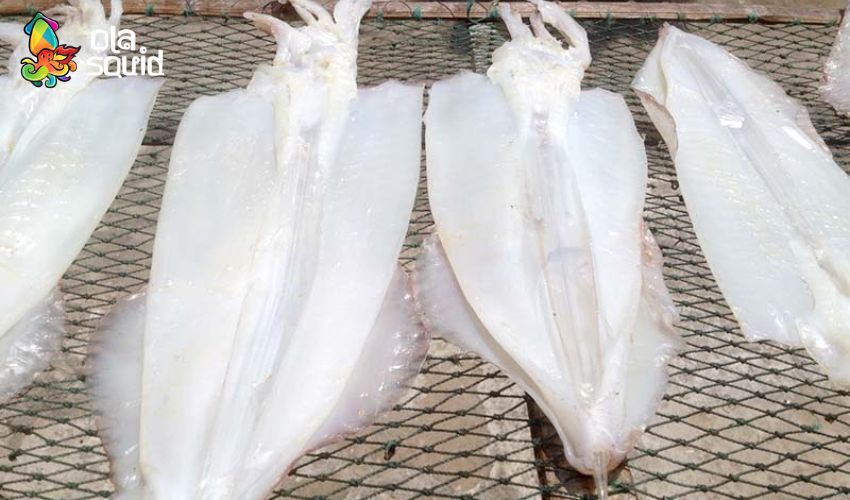
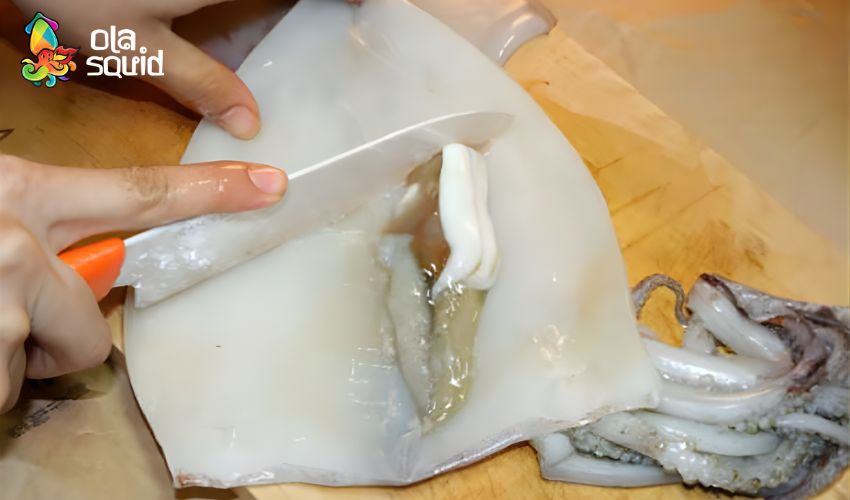
- Split the squid: Use a knife to split the squid body longitudinally in a straight line from top to bottom. For large squid (over 300g), you should score a few light diagonal lines on the inside so that the squid dries evenly and faster.
- Rinse again: Rinse thoroughly under cold water, especially the inside of the body, until the water is clear.
- Drain: Place the squid on a slanted tray or mesh rack for 15 – 20 minutes to drain completely before sun-drying.
Step 2: Choose the time and location for drying
The timing of drying directly affects the quality of the final product. Sun-dried squid reaches the highest quality when dried during the best sunny hours of the day.
Ideal timing:
- Start drying at 8 – 9 AM, when the sun is warm enough but not yet too harsh.
- Bring the squid in at 4 – 5 PM, before the humidity in the evening increases.
- Ideal total drying time: 6 – 8 hours in good sunny conditions with temperatures of 30 – 38°C.
Good drying location:
- Places with direct sunlight and good airflow like balconies, rooftops, or gardens are all suitable.
- Avoid drying near kitchen areas, vehicles, or dusty places.
- Place the drying rack at least 50cm above the ground to take advantage of the breeze and avoid ground insects.
Step 3: Proper squid drying technique
This is the step that many people often do wrong, leading to uneven drying or having one side hard and the other soft.
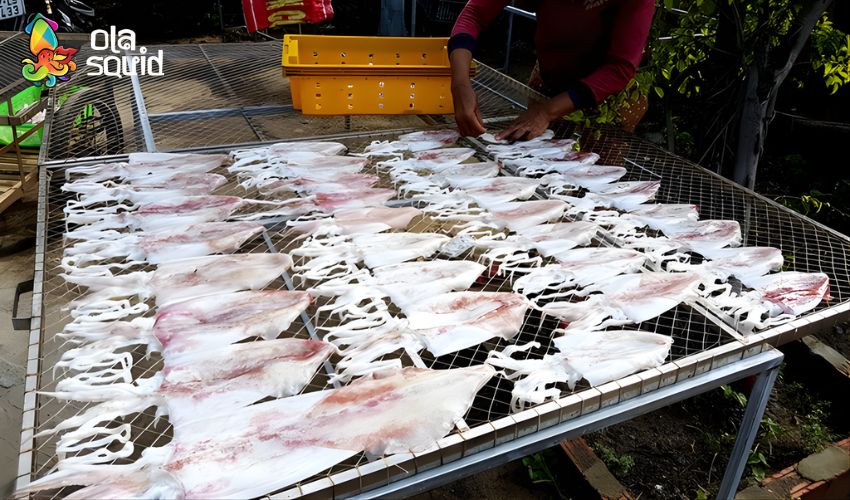
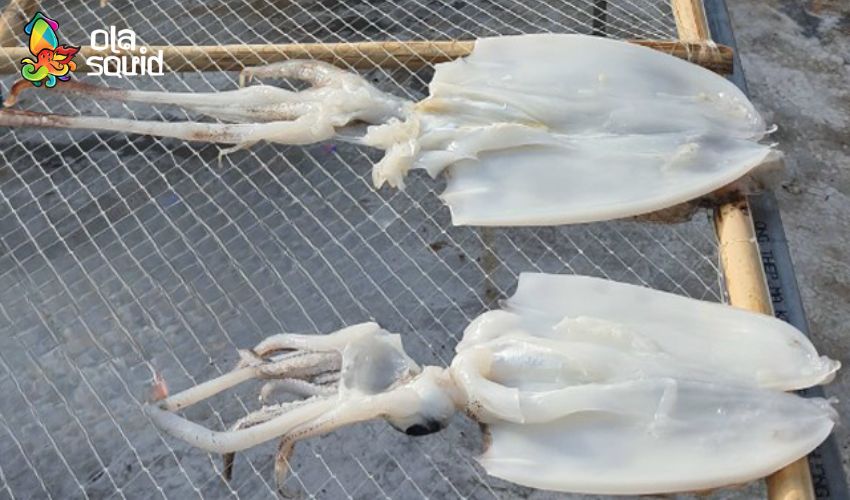
- Stretching the squid: Use bamboo skewers or small bamboo toothpicks to stretch the squid body, keeping it from curling up during the drying process. This technique helps the squid dry evenly and maintains a beautiful shape.
- Laying the squid flat: Arrange the squid on the mesh rack, with the inside facing up to catch direct sunlight for the first 2 – 3 hours.
- Turning the squid: After 2 – 3 hours, flip the squid so the skin side catches the sun, avoiding letting one side get too dry.
- Protecting from harsh sun: If the outdoor temperature exceeds 40°C, cover with a thin net to prevent the squid from becoming dry and hard on the surface while the inside has not yet released moisture.
- Checking dryness: The squid is ready when the surface feels slightly sticky to the touch, not wet, and the squid body is still soft and pliable when bent slightly without breaking.
Step 4: Collecting the squid and post-drying treatment
After drying for sufficient time, collect the squid during the cool afternoon; avoid leaving it outdoors when the sun has gone down because the increased humidity in the air will cause the squid to reabsorb moisture.
- Let the squid cool completely at room temperature for 30 – 60 minutes before putting it into a bag.
- Do not put warm squid into a sealed bag immediately because the heat will create condensation, causing mold.
- After cooling, the squid can be used immediately or stored in the refrigerator’s chiller.
How to store homemade sun-dried squid
Proper storage helps the squid retain its delicious flavor and prevents spoilage – this is especially important if you are making a large quantity or want to save it as a gift.
Short-term storage (under 1 week)
If you plan to use it within 3 – 5 days, you can store sun-dried squid in the refrigerator chiller by:
- Putting the squid in a zip bag or airtight plastic container, sucking out the excess air before closing.
- Not letting the squid come into direct contact with water or ice.
- Squid in the chiller can be kept for 5 – 7 days while still maintaining quality.
Long-term storage (up to 3 – 6 months)
For long-term storage, the freezer is the best choice; you should:
- Divide the squid into small portions sufficient for one meal before freezing, avoiding thawing and refreezing multiple times.
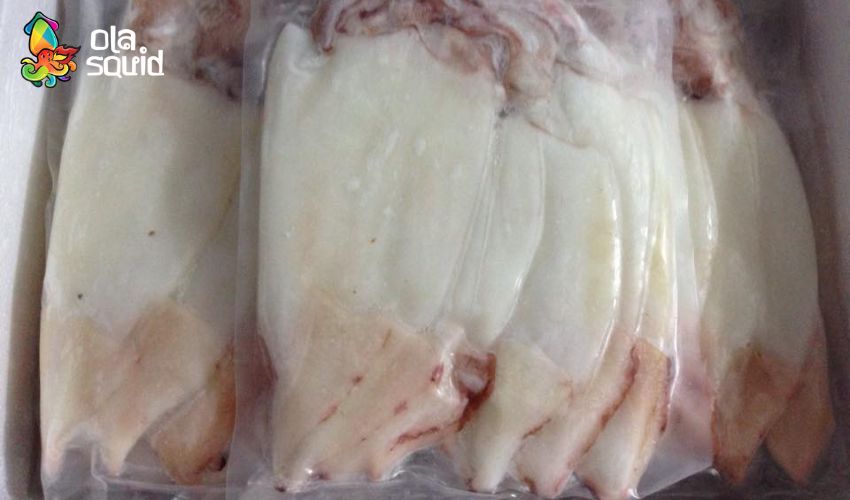
- Wrap the squid with plastic food wrap, then put it into a zip bag; vacuum seal if you have a machine.
- Write the production date on the bag to track the expiration date.
- Frozen squid can be stored for 3 – 6 months with almost no change in flavor.
- When ready to use, thaw in the chiller overnight; do not thaw at room temperature to prevent bacterial growth.
How to package homemade sun-dried squid as a gift
Homemade sun-dried squid is a unique and meaningful gift, especially for Tet holidays or for relatives living far away. To package it nicely, follow these steps:
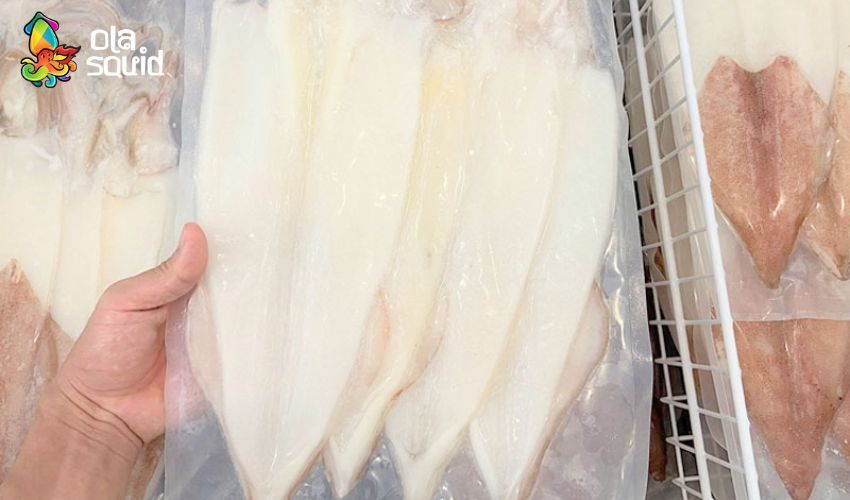
- Use a vacuum-sealed bag to extend shelf life and maintain the shape of the squid.
- Put the squid bag into a kraft paper box or small wooden box, including a silica gel desiccant packet.
- Attach a label clearly stating the product name, date made, storage instructions, and expiration date.
- If sending over long distances, include gel ice packs to keep the squid from spoiling during transport.
What are good dishes made with sun-dried squid?
Sun-dried squid is extremely versatile in food preparation and highly convenient. So, what are good dishes made with sun-dried squid? Below, we will introduce to you the most popular dishes made from sun-dried squid:
- Charcoal grilling or grid grilling: The most popular way to enjoy it. Charcoal-grilled sun-dried squid is fragrant and delicious, dipped in chili lime salt or chili sauce; its flavor is incomparable.

- Crispy fried squid: Sun-dried squid fried in hot cooking oil for about 2 – 3 minutes until evenly golden. The result is a dish that is crispy on the outside and chewy and sweet on the inside, perfect as a snack or beer side dish.
- Stir-fried with lemongrass and chili or stir-fried with garlic butter: Slice the squid into rings or bite-sized pieces, stir-fry quickly with lemongrass, chili, or garlic. A rich, flavorful dish that goes perfectly with rice and only takes 10 minutes to complete.
- Sun-dried squid salad: Combine thin slices of grilled squid with green mango, herbs, and roasted peanuts to create a refreshing, rich flavor.

- Steamed squid with ginger: Steam for about 5 – 7 minutes with ginger slices, drizzled with a ginger-scallion dipping sauce; this cooking method perfectly preserves the natural sweetness of the squid.
How to make sun-dried squid without sun
The weather is not always favorable, especially during the rainy season or on overcast days. Here are two effective alternatives for making sun-dried squid in conditions without sunlight.
Using a food dehydrator or dryer
A food dehydrator is the best solution when there is no sun, giving a finished product almost identical to outdoor drying but ensuring more hygiene.
- Drying temperature: Set at 55 – 65°C.
- Drying time: About 3 – 5 hours depending on the thickness of the squid and the capacity of the machine.
- Arrangement: Arrange the squid in a single layer on the drying tray, not overlapping, to allow hot air to circulate evenly.
- Inspection: After 3 hours, check the moisture by bending it slightly; the squid is ready when it is pliable and the outer surface is no longer wet.
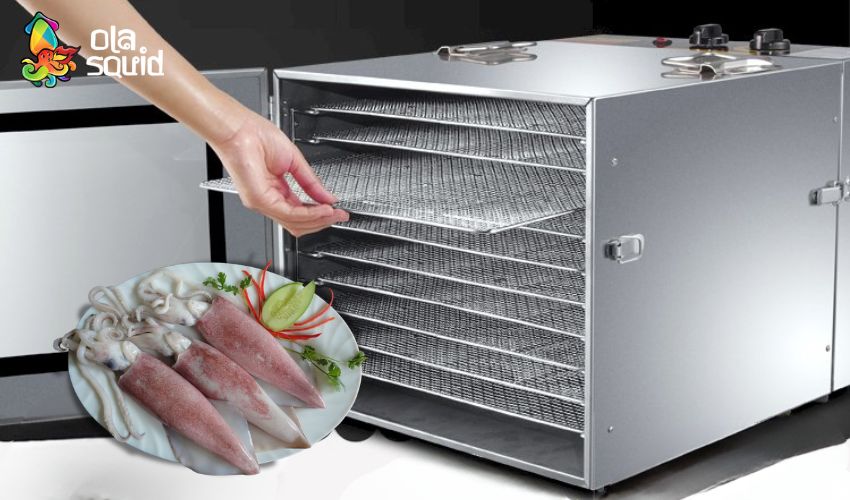
If using an oven as a substitute, set the temperature to 60°C and leave the oven door ajar by about 2 – 3cm to allow moisture to escape. This method is less effective than a dehydrator but still provides acceptable results.
Using an electric fan combined with light sunlight
On days with mild sunlight or good breezes, you can use this method:
- Place the squid rack in the windiest place, like a rooftop or a wind-facing balcony.
- Use an electric fan to blow lightly from a distance of 50 – 70cm to speed up moisture evaporation.
- The time required will be longer than usual, about 8 – 12 hours instead of 6 – 8 hours.
- The finished product is slightly less fragrant but still reaches the appropriate moisture level of sun-dried squid.
Common mistakes and notes when making sun-dried squid at home
Even though the process is not too complicated, many people still encounter some mistakes that prevent the final product from meeting the desired quality. Ola Squid has summarized the most common mistakes for you to avoid:
- Drying the squid before draining it: Excess moisture makes the squid take longer to dry, easily becoming slimy and smelly. Always drain for at least 20 minutes before drying.
- Not stretching the squid: The squid curling up during drying makes the folded parts dry unevenly, easily causing mold inside.
- Not using a fly screen: Flies landing on the squid while drying is not only unhygienic but also leaves eggs, causing the squid to spoil quickly.
- Collecting the squid too late: Leaving the squid outdoors after the sun sets causes it to reabsorb moisture, making the surface slimy.
- Storing while the squid is still warm: The heat trapped inside the sealed bag creates conditions for bacteria and mold to grow.
- Choosing squid that isn’t fresh enough: This is the number one reason for the unpleasant fishy smell even if the technique is followed correctly.
- Drying too long or under overly harsh sun: The squid becomes completely dry and hard, losing the characteristic chewy and pliable texture of sun-dried squid.
Frequently Asked Questions (FAQ) about how to make sun-dried squid
How long is enough to dry sun-dried squid?
In good sunny conditions (30 – 38°C, little cloud cover), sun-dried squid needs to be dried for 6 – 8 hours continuously. Signs to recognize it is ready: the surface is slightly sticky to the touch but not wet, the squid body is pliable when bent slightly, and it has a natural ivory color, not yellow or transparent.
Can you make sun-dried squid without strong sunlight?
Absolutely. You can use a food dehydrator at 55 – 65°C for 3 – 5 hours, or combine an electric fan with mild sunlight for 8 – 12 hours. The result may be slightly different in flavor (lacking that characteristic “sun-dried” smell), but the moisture and texture will still meet the standard for sun-dried squid.
Between squid (muc ong) and broad squid (muc la), which one makes better sun-dried squid?
Both are delicious but in different ways. Squid (muc ong) has thick, chewy, sweet meat, suitable for grilling and frying. Broad squid (muc la) has thinner, softer meat with a mild fatty taste, suitable for stir-frying and making salads.
Why does my homemade sun-dried squid become hard even though I only dried it for one day?
The most common reason is overly harsh sun (above 40°C), which makes the squid surface dry too fast, leading to the sudden hardening of the outermost protein layer while the inside has not yet released moisture.
In addition, losing too much water before drying is also a reason. Therefore, you should cover it with a thin net during peak sun hours (11 AM – 2 PM) and start drying later (9 AM – 10 AM).
How to make sun-dried squid is not complicated if you grasp the correct technique from selecting ingredients and processing to drying and storage. The key lies in three factors: high-quality fresh squid, appropriate drying time, and controlling the moisture of the final product. Do it right, and you will have a batch of fragrant, chewy, and naturally sweet sun-dried squid that is just as good as what you buy at the store, while being hygienic and saving significantly. If you are looking for high-quality seafood to prepare delicious dishes from squid, please browse the products at the Ola Squid store.