
 Tiếng Việt
 ไทย
ไทยMany passengers want to bring dried squid as a specialty gift but are concerned about aviation security regulations as well as the distinctive odor of this food. Is dried squid allowed on airplanes, and what should be noted to avoid being refused or confiscated by airport staff? The following article will help you clearly understand the regulations of both domestic and international airlines, while also guiding you on the best packing techniques to ensure a smooth journey with dried squid for both domestic and international flights.
Is dried squid allowed on airplanes?
This is a completely valid question, especially for those who love high-quality dried squid from famous coastal regions such as Quang Ninh dried squid, Phu Quoc, or Phan Thiet. Dried squid belongs to the group of dried, processed foods, not fresh food or liquids, so it is basically not prohibited on airplanes.
However, not being prohibited does not mean there are no limitations. Specific regulations depend on three main factors:
- Luggage type: carry-on or checked baggage.
- Flight type: domestic or international.
- Destination country: some countries have very strict animal and plant quarantine regulations.
If you are looking to buy quality dried squid to bring as a gift, Ola Squid is a reputable address with products that are vacuum-packed and meet food safety and hygiene standards, making them very convenient to carry on airplanes.
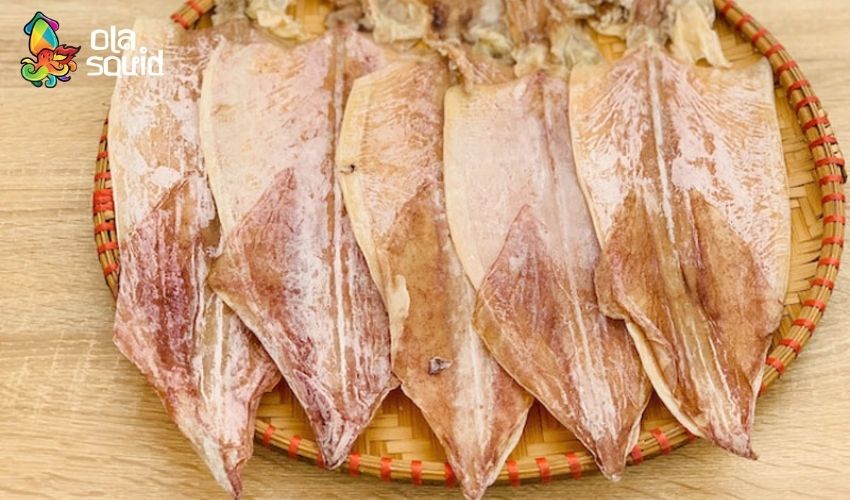
Regulations for carrying dried food on airplanes
Before going into specific airlines, it is necessary to understand the general regulatory framework. The Civil Aviation Authority of Vietnam and international aviation organizations categorize food based on risk levels. Dried foods such as dried squid, dried shrimp, and dried fish are usually classified as low-risk and are not on the list of prohibited or restricted goods.
The important thing to note is the regulation on odor and packaging. Dried squid has a quite distinctive smell if not packed tightly, which may affect surrounding passengers. Therefore, even if the regulations allow it, proper packaging is always the top priority.
Regulations of domestic airlines
Domestic Vietnamese airlines allow bringing dried squid on board, both for carry-on and checked baggage, as long as it is within the allowed baggage limit and properly packed.
Vietnam Airlines
- Allows carrying dried food in carry-on and checked baggage.
- Standard carry-on luggage: 1 piece, not exceeding 12kg (Economy class), maximum dimensions of 56 x 36 x 23cm.
- Food must be packed tightly to prevent odor or leakage.
- No specific limit on the weight of dried squid, provided the total baggage does not exceed the allowed limit.
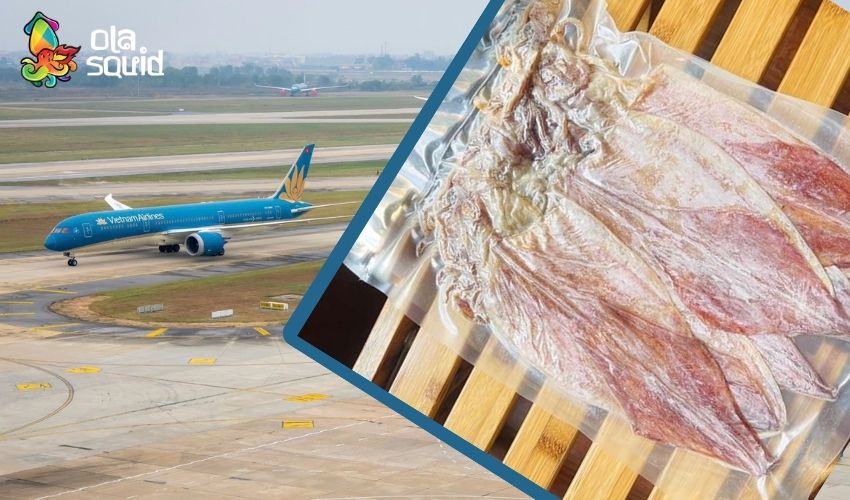
Vietjet Air
- Allows carrying dried food on board.
- Carry-on luggage: maximum 7kg, dimensions not exceeding 56 x 36 x 23cm.
- Recommendation: pack in zip bags or vacuum-seal to avoid odors.
- If you have a large quantity of dried squid, it should be checked in to avoid disputes at the security checkpoint.
Bamboo Airways
- Policy similar to Vietnam Airlines, allowing dried food that is not on the prohibited list.
- Carry-on luggage: up to 10kg depending on the ticket class.
- Strong-smelling food must be wrapped tightly in at least 2 layers.
- Checked baggage: no restrictions on types of dried food, as long as it is packed correctly.
Regulations of international airlines
For international flights, regulations are more complex and depend heavily on both the airline and the destination country. Most major international airlines such as Singapore Airlines, Thai Airways, Korean Air, and Japan Airlines allow carrying pre-packaged dried food in both carry-on and checked baggage.
However, there is a key point: even if the airline allows it, the customs of the destination country is the final authority. Some countries such as the USA, Australia, and New Zealand have extremely strict food quarantine regulations. Failure to declare or false declaration can lead to heavy fines or even denial of entry.
Some tips for international flights:
- Always declare honestly on the customs form when bringing food.
- Prioritize products with clear labels and industrial packaging instead of handmade packaging.
Can I bring dried squid as carry-on luggage?
The answer is yes, but you need to note some things to avoid being asked by airport security to remove it for inspection or having it confiscated.
In terms of aviation security regulations, dried squid is not categorized as dangerous goods or restricted liquids/gels in the cabin. However, if security staff detect strange objects or abnormal odors during X-ray screening, they have the right to request an inspection. This does not mean you are under suspicion, as it is just a standard procedure.
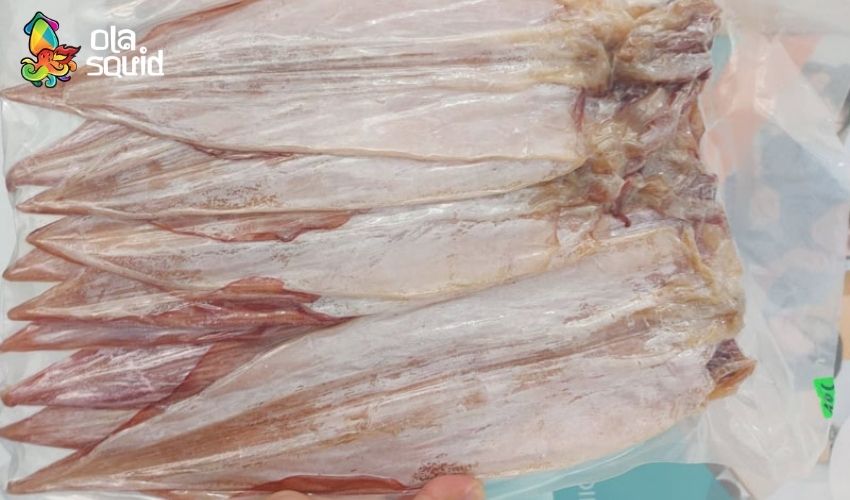
To carry dried squid as carry-on successfully, ensure the following factors:
- Weight: within the airline’s carry-on luggage limit (usually 7 – 12kg depending on the airline).
- Packaging: sealed zip bags or vacuum-sealed bags to prevent odor from spreading.
- Reasonable quantity: bringing too much may lead to questions about your purpose (personal or commercial).
- Keep separate from electronics: place separately in the bag for easy inspection if needed.
A small tip for frequent travelers carrying specialties: wrap the dried squid in a zip bag, then wrap it in another layer of plastic bag tied tightly before putting it in your carry-on suitcase. This method almost completely eliminates the odor, giving you more confidence when passing through the security gate.
Can I bring dried squid as checked baggage?
Checked baggage is a more comfortable option because you are not bound by cabin regulations such as odor or size, but you still need to note:
- Solid packaging: suitcase or tightly sealed carton to prevent the dried squid from being crushed during transport.
- Total weight: does not exceed the baggage allowance purchased or included in your ticket.
- Do not let dried squid come into direct contact with clothing: the squid smell can seep into fabric, which is very difficult to wash off.
- Label clearly: especially for international flights, clearly mark the product name on the outside of the packaging.
The biggest plus of checked baggage is that you don’t need to worry about the reaction of other passengers to the smell of dried squid, a practical issue that many people don’t think about when carrying it as a carry-on.
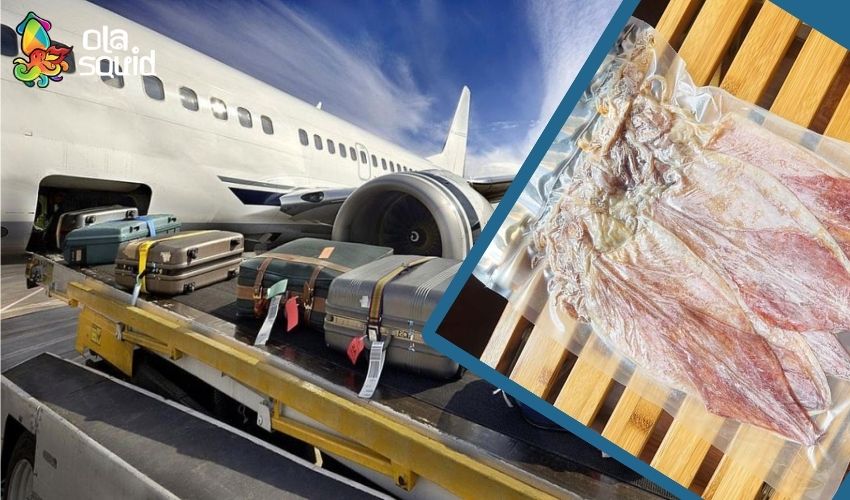
Notes when carrying dried squid on an airplane
Pack dried squid properly before boarding
Proper packaging determines whether or not you can get your dried squid on the plane smoothly. Dried squid has a strong, distinctive odor; this is both an attractive point of the product and a challenge when carrying it in an enclosed space like an airplane cabin.
Recommended packaging process:
- Step 1: Put the dried squid in a specialized zip bag, squeeze all the air out before sealing.
- Step 2: Wrap an additional layer of thick plastic bag on the outside, tie the opening tightly.
- Step 3: Place it in a carton or hard plastic container if checking in, to avoid crushing.
- Step 4: Affix a label with the product name (especially important for international flights).
It is best to choose dried squid that has already been vacuum-packed by the manufacturer, such as Ola Squid products – it ensures hygiene, avoids odor issues, and provides clear origin information to present when needed.
Maximum weight allowed
There is no specific regulation on the maximum weight for dried squid specifically; it all depends on the total baggage limit of the ticket you bought. However, there are some practical thresholds to keep in mind:
| Type | Recommended actual weight | Reason |
| Carry-on | Under 3kg of dried squid | Avoid exceeding the carry-on limit |
| Domestic checked | Under 10kg of dried squid | Reasonable for personal use |
| International checked | Under 5kg of dried squid | Avoid suspicion of commercial use by customs |
If you are carrying a large quantity for business, consider using a cargo shipping service instead of personal luggage. It is both safer and complies with regulations regarding commercial goods carried by a passenger.
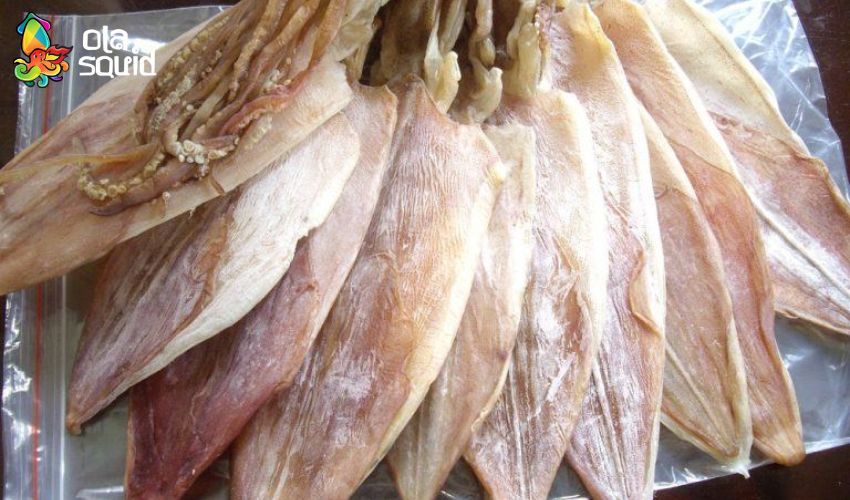
Will dried squid be confiscated by customs when going abroad?
This is a legitimate concern for many people. In reality, the destination country’s customs are the biggest barrier, not the airline. Each country has different food quarantine policies, and even processed dried squid can be thoroughly inspected in some places.
General overview by region:
- ASEAN (Thailand, Singapore, Malaysia, etc.): tightly packaged dried food is usually cleared easily.
- Korea, Japan: allowed but require declaration; products must have clear labels and not be carried in excess.
- Europe: relatively relaxed with processed dried food, but honest declaration is needed.
- USA (USDA): strict inspection; commercially packaged dried squid is usually allowed, but must be declared.
- Australia, New Zealand: extremely strict quarantine regulations, must declare 100%, may be confiscated if biological risks are suspected.
Practical advice: Always declare honestly to avoid fines or entry denial. Declaration does not mean automatic confiscation; customs officers will inspect and decide.
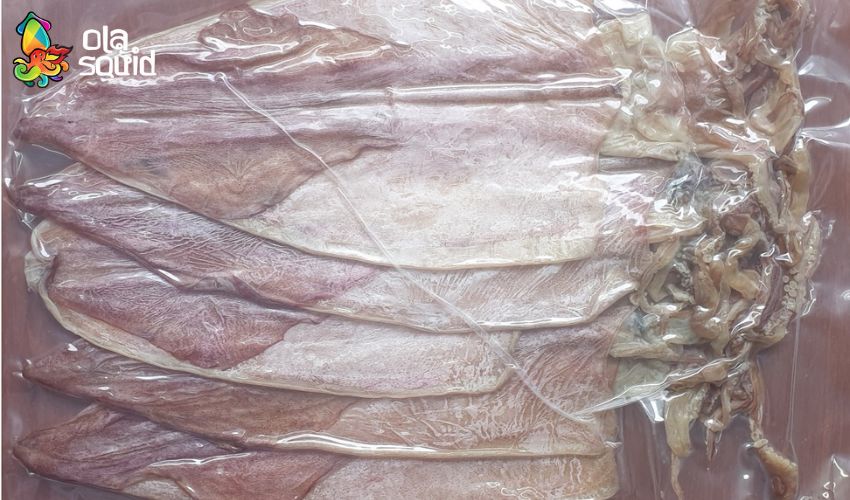
FAQ
Is dried squid confiscated at the airport?
At Vietnamese airports, dried squid is almost never confiscated because it is a legal food product not on the prohibited list. However, at international airports in some countries (especially Australia, New Zealand, USA), dried squid can be confiscated if not declared or if it does not meet quarantine standards. The best way is to choose commercially packaged products with full labels and always declare honestly.
Is there a fee for carrying dried squid on an airplane?
There is no separate fee for dried squid. You only pay the baggage fee according to the airline’s standard regulations if you exceed the allowed carry-on or checked baggage limit. If you have remaining baggage allowance, carrying dried squid is completely free.
Besides dried squid, are other types of dried seafood allowed on airplanes?
Yes. Other types of dried seafood such as dried shrimp, dried fish, dried scallops, and dried octopus are all allowed on airplanes under conditions similar to dried squid. That is, packed tightly, within the baggage limit, and declared according to regulations when flying internationally.
Can I bring dried squid from Vietnam to the US, Australia, or Japan?
- Japan: Allowed, requires declaration, and products must have clear labels.
- USA: Allowed if it is a commercially packaged product, must be declared to the USDA.
- Australia: Allowed but mandatory to declare, may be inspected thoroughly; products that do not meet quarantine standards will be confiscated and destroyed.
So the question is dried squid allowed on airplanes has a clear answer: absolutely yes, provided you understand the airline’s regulations, pack it properly, and declare it honestly when flying internationally. The key lies not in the type of goods but in how you prepare and follow the procedures.
To ensure your journey is truly smooth, choose dried squid that has been vacuum-packed with full labels instead of manual packaging. Ola Squid offers high-quality dried squid that is packed according to food safety standards – ideal for carrying on airplanes or sending as gifts to distant loved ones.