
 Tiếng Việt
 ไทย
ไทยAre you looking for a dish that is both novel and packed with fiber and protein for your family dinner? Stir-fried glass noodles with dried squid, with its perfect combination of chewy, soft mung bean vermicelli, savory dried squid, and fresh vegetables, is an excellent choice. With just a few simple preparation steps, you can easily elevate this dish to be as appetizing as those served in restaurants. Let Ola Squid guide you from A to Z on how to prepare this meal, from selecting high-quality ingredients to the best tips for achieving perfectly cooked, non-sticky stir-fried noodles. Visit our store page to get the best ingredients for your recipe.
Ingredients for stir-fried glass noodles with dried squid
To have a delicious plate of stir-fried glass noodles with dried squid, the preparation phase is the deciding factor.
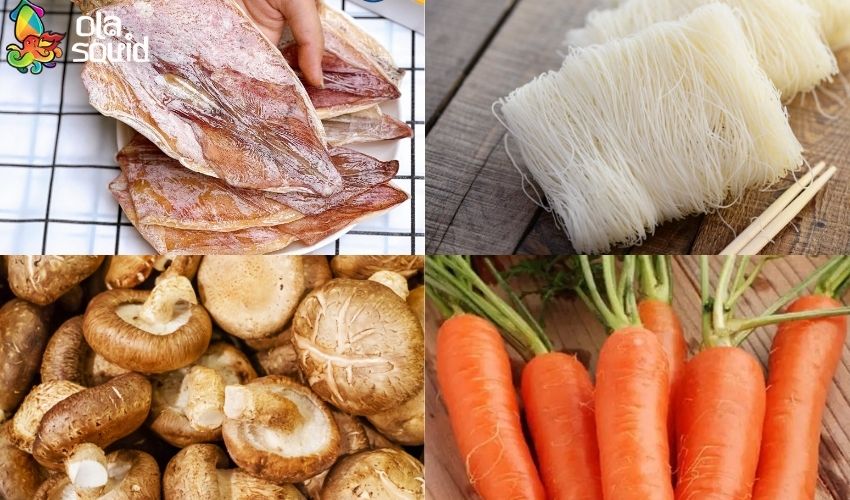
| Ingredients | Quantity |
| Dried glass noodles (mung bean or sweet potato starch) | 200g |
| Dried squid | 80 – 100g |
| Carrots | 1 small bulb |
| Napa cabbage or purple cabbage | 150g |
| Dried shiitake mushrooms | 5 – 6 caps |
| Onion | ½ bulb |
| Scallions, cilantro | 1 bunch |
| Garlic | 3 – 4 cloves |
| Cooking oil, sesame oil | 1 tablespoon |
| Seasonings: soy sauce, oyster sauce, salt, sugar, pepper | To taste |
| Fresh chili | 1 piece |
How to prepare dried squid before stir-frying
Most home cooks often skip or incorrectly perform the preparation step, which is why homemade dried squid dishes are often tough, fishy, or not as delicious as restaurant-made ones. Dried squid is naturally dried for preservation, so it requires preparation to make the meat tender, fragrant, and easier to eat. There are two common methods as follows:
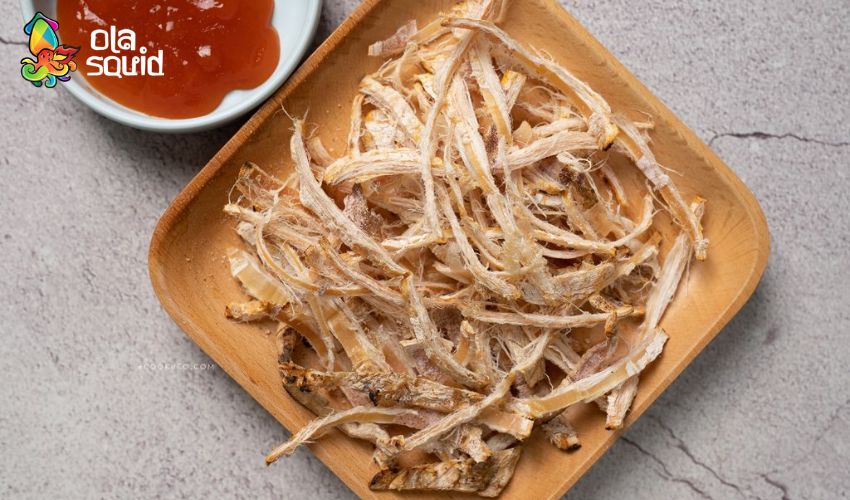
Method 1: Grilling, pounding, and shredding
This is the most traditional and popular method, resulting in dried squid with a distinct aroma, separated fibers, and a light crunchy texture.
Instructions:
- Step 1: Hold the dried squid over low heat or use a grill at 160 – 170°C for 3 – 5 minutes until it slightly curls and releases a pleasant aroma.
- Step 2: Use a knife handle or pestle to gently pound the squid body to loosen the meat fibers, making it easier to shred and absorb seasonings.
- Step 3: Shred the squid vertically into strips about 0.5 – 1cm thick. Do not shred too thinly as they will shrink when fried or stir-fried.
- Step 4: Soak the shredded squid in warm water mixed with a few drops of white liquor for about 5 – 10 minutes to reduce fishiness if needed, then drain well.
Method 2: Soaking in warm water or diluted liquor
The soaking method is more suitable if you want the squid strips to be tender, evenly seasoned, and have a certain level of moisture.
Instructions:
- Mix warm water at about 60 – 70°C (do not use boiling water as it will make the squid mushy and lose its natural sweetness) with a ratio of 1 tablespoon of rice liquor/white liquor for every 500ml of water.
- Soak the whole piece of squid in the solution for 15 – 20 minutes until it becomes slightly soft and swollen.
- Remove, pat dry with paper towels, then shred or slice as required.
Step-by-step guide to making stir-fried glass noodles with dried squid
After preparing all ingredients and treating the dried squid correctly, it is time to start cooking. Below are the detailed steps to help you easily cook this dish at home:
Step 1: Prep vegetables and other ingredients
Vegetables should be sliced evenly for consistent cooking; do not slice them too thin as they will become mushy.
- Mince the garlic and set aside for aromatic frying.
- Chop scallions and cilantro to garnish when finished.
- Prepare the sauce mixture: 1.5 tablespoons soy sauce + 1 tablespoon oyster sauce + ½ teaspoon sugar + ¼ teaspoon ground pepper.
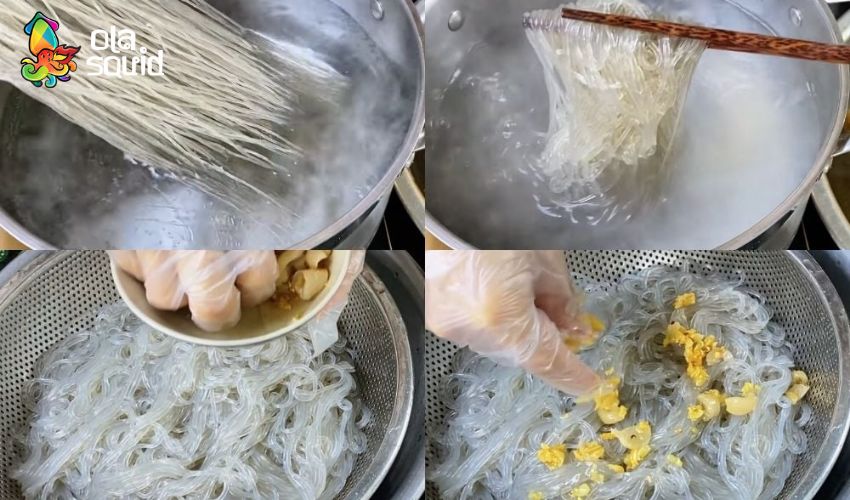
Step 2: Boiling the glass noodles correctly
This is where many people make mistakes, leading to mushy or clumpy noodles. For a great stir-fry, do not boil the noodles until fully cooked because they will continue to soften during the stir-frying process.
- Bring a large pot of water to a boil, drop in the noodles, and boil for 3 – 4 minutes until they are slightly soft but still firm in the center.
- Remove immediately and rinse under cold water to stop the cooking process.
- Drain completely, then toss lightly with 1 tablespoon of cooking oil or sesame oil to prevent the noodles from sticking together while waiting to be stir-fried.
- If the noodle strands are too long, use scissors to cut them shorter for easier mixing and eating.
Step 3: Frying the squid for a chewy-crunchy texture
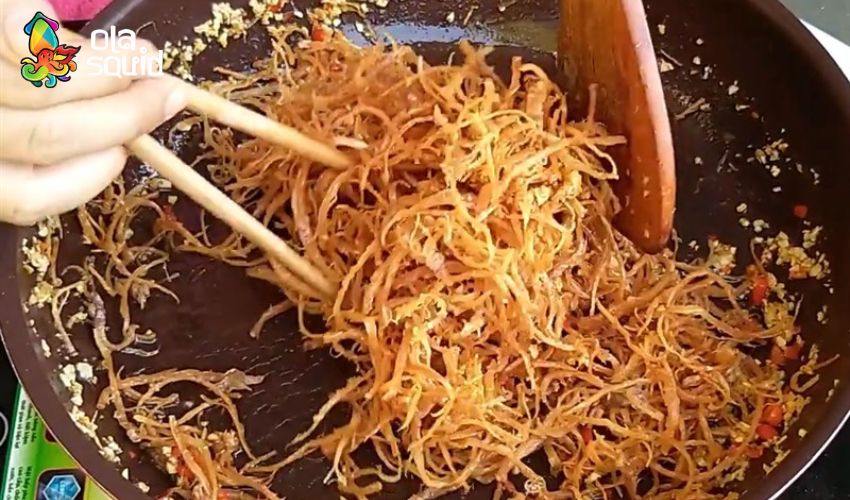
Instead of throwing the squid directly into the stir-fry, briefly fry it in hot oil to create a slightly crunchy outer layer. This ensures the squid remains chewy while having an interesting crispiness when mixed with the noodles.
- Heat 3 – 4 tablespoons of oil in a pan over medium-high heat.
- Add the drained squid strips and fry for 2 – 3 minutes, stirring constantly.
- Stir continuously until the surface is slightly golden and releases the characteristic aroma of grilled squid.
- Remove and set aside on paper towels. Do not fry too long, or the squid will become hard and dry.
Step 4: Stir-fry vegetables and add seasoning
Using the same pan, discard most of the oil, leaving about 1 – 2 tablespoons, and sauté the minced garlic over medium heat. When the garlic is aromatic and lightly golden, add the onions and stir for 1 minute, then add carrots, shiitake mushrooms, and Napa cabbage in turn.
- Stir-fry the vegetables over high heat for 2 – 3 minutes until just cooked through, while still maintaining their crunch.
- Pour in the pre-mixed sauce and stir well.
- Taste and adjust: add soy sauce if bland, or sugar if you prefer the slightly sweet Southern style.
Step 5: Combine noodles, squid, and vegetables
This is the final step and should be done gently to avoid breaking the noodles or crushing the vegetables.
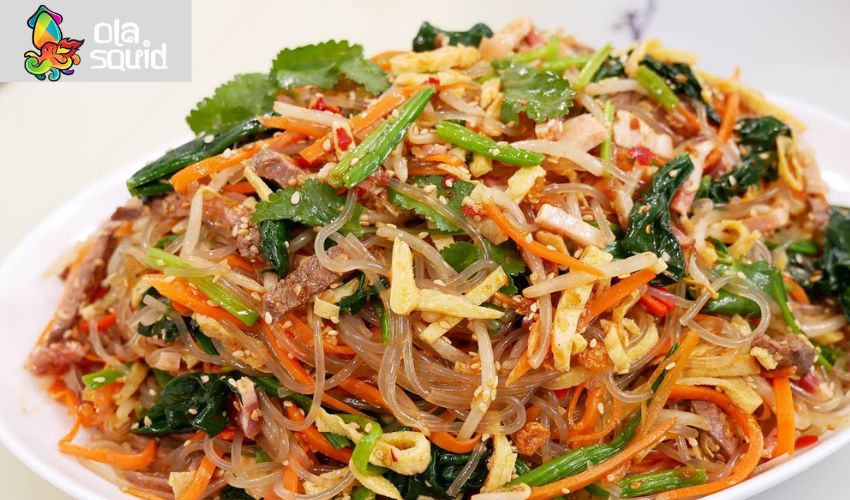
- Add the noodles to the hot vegetable pan, use long chopsticks or tongs to mix gently and evenly so the noodles absorb the sauce. Stir for another 1 – 2 minutes over medium heat.
- Add the fried squid and toss gently for about 3 minutes.
- Turn off the heat, sprinkle with scallions, cilantro, and ground pepper.
- Serve on a plate while hot. Stir-fried glass noodles with dried squid is best eaten immediately; avoid letting it cool, as the noodles will absorb the sauce and become sticky.
How to choose quality dried squid for stir-fried noodles
The quality of the dried squid accounts for 70% of the flavor of the stir-fried dish. Below are the criteria to keep in mind for an irresistible result:
Which type of dried squid should you choose?
Not all types of dried squid are suitable for stir-frying with glass noodles. Each type has its own characteristics:
- One-sun dried squid: Naturally dried for a short time, with thick meat, retaining natural sweetness and moderate moisture. This is the best choice for stir-fried glass noodles as it results in soft, fragrant, and deeply sweet squid strips.
- Broad-mantle squid (Mực lá): Large size, thick meat, broad shredded strips suitable for stir-frying and tossing.
- Dried squid tube (Mực ống): Most popular, easy to find in markets and supermarkets, reasonably priced. The meat is thinner than broad-mantle squid but still tastes delicious if the quality is right.
How to identify delicious dried squid
When buying, carefully check the following signs:
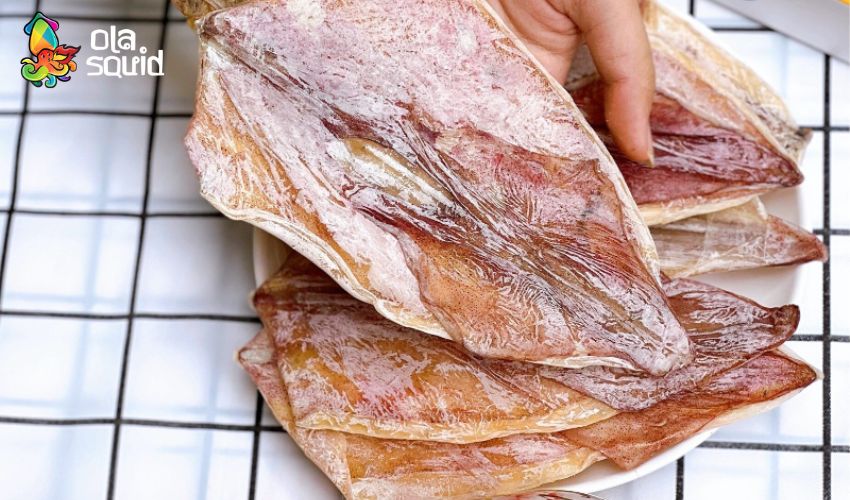
- Color: Good dried squid usually has a natural light yellow color on the body, covered with a thin layer of white powder. This is the salt and protein that crystallized naturally during the drying process, a sign of clean, chemical-free dried squid.
- Aroma: Characteristic seafood aroma, without the smell of ammonia, chemicals, or sour odors.
- Hardness: The squid is sufficiently dried but not rock-hard; when bent, it has a certain elasticity and does not crumble.
- Surface: No mold spots, not wet or slimy to the touch.
Signs of spoiled or fake dried squid to avoid
The dry seafood market is full of low-quality goods; here are signs that the squid has spoiled:
- Too white or too uniformly dark yellow: Extremely white squid may have been bleached with chemicals; unusually dark yellow squid may be moldy or oxidized due to poor storage.
- Ammonia or chemical smell: The most obvious sign of spoiled or preservative-treated squid.
- Slimy, moist surface: Improperly stored squid, with a high risk of bacterial contamination.
- Prices too cheap compared to the market: High-quality one-sun or broad-mantle squid cannot be suspiciously cheap. If the price is too low, consider carefully before buying.
Secrets to making stir-fried glass noodles with dried squid better than a restaurant
Here are the real secrets that make a difference, not the generic advice you can find in any recipe:
- Use sesame oil to sauté garlic instead of regular cooking oil: Sesame oil has a lower smoke point but creates a unique aroma that cannot be replaced.
- Do not stir-fry the noodles for too long: Noodles only need 1 – 2 minutes in the pan after being blanched. Overcooking makes the noodles mushy and sticky, reducing their quality.
- Add a little bone broth or mushroom broth: Instead of adding more salt when the noodles seem bland, add 2 – 3 tablespoons of broth; it helps the noodles absorb flavor evenly.
- Fry the squid separately before mixing: Briefly frying the squid not only makes it crunchier but also removes any fishiness after mixing with the noodles.
- Adjust seasoning for each type of squid: One-sun dried squid is naturally sweeter and less salty, so you can season it a bit more heavily. Dried squid tubes are usually saltier, requiring you to reduce the amount of soy sauce and oyster sauce.
- Sprinkle with a little sweet and sour chili sauce or fresh lime juice when eating: A few drops of lime juice or a little sweet and sour chili sauce right before eating makes the flavor of the stir-fried squid with noodles much more attractive.
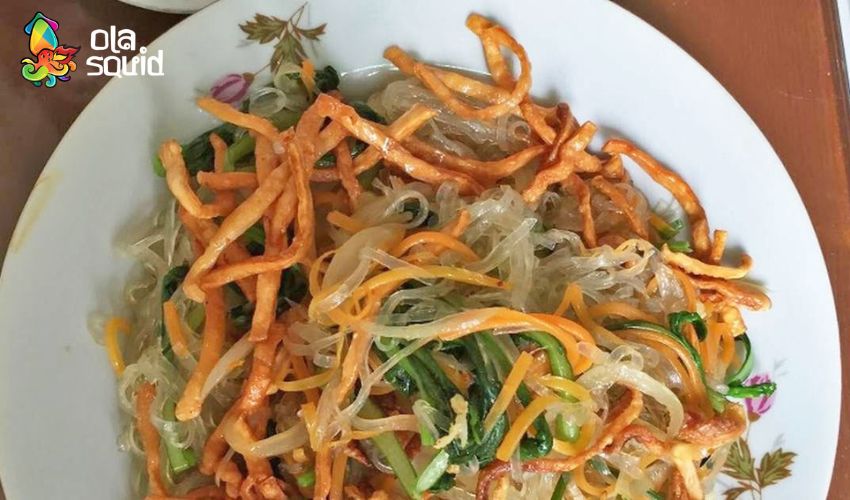
See more: 7 delicious stir-fried dried squid dish suggestions everyone loves
Nutritional value of stir-fried glass noodles with dried squid
Stir-fried glass noodles with dried squid is not only a delicious meal but also nutritionally valuable, especially when prepared with a variety of vegetables and appropriate amounts of oil.
Dried squid is a high-protein, low-fat source; 100g of dried squid contains about 60 – 70g of protein, along with important minerals like zinc, selenium, copper, and vitamin B12. These are essential nutrients for the nervous system, immune system, and metabolic processes.
Mung bean vermicelli mainly provides starch and energy, with lower calories compared to wheat noodles or rice noodles, at about 330 – 350 kcal/100g of dried noodles. Notably, glass noodles contain little gluten and are suitable for those sensitive to wheat gluten.
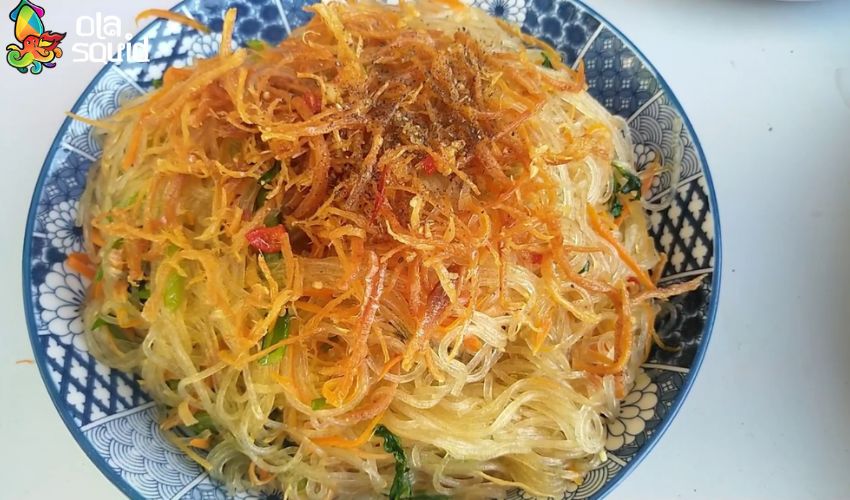
Note: Nutritional value may vary depending on the ingredient proportions and cooking method.
To make the dish healthier, you can increase the proportion of vegetables, reduce the amount of oil and soy sauce, or replace regular cooking oil with light olive oil for the vegetable stir-frying step. This is also a way to maximize the nutritional value of high-quality dried seafood in your daily meals.
FAQ
What type of glass noodles should be used for stir-fried dried squid?
Mung bean vermicelli is the best choice; the strands are chewy, translucent, less likely to become mushy when stir-fried, and hold their texture well. Sweet potato vermicelli is also a good alternative with a beautiful natural yellowish color. Avoid rice noodles (also known as dried rice vermicelli) because they easily break and are not suitable for high-heat stir-frying techniques.
Why do stir-fried noodles stick, and how to fix it?
Noodles stick usually due to being overcooked or not being tossed in oil after boiling. To fix:
- Boil the noodles to only 80% doneness, remove, and rinse under cold water immediately.
- Toss evenly with 1 tablespoon of cooking oil or sesame oil while still warm.
- Do not let the boiled noodles wait too long before stir-frying; it is best to stir-fry within about 15 – 20 minutes after boiling.
- When stir-frying, use high heat and stir quickly, not leaving the noodles stationary in the pan for more than 30 seconds.
Can fresh squid be used instead of dried squid?
Absolutely possible, but the final product will differ significantly in flavor and texture. Fresh squid provides a delicate sweetness, is softer, and contains more moisture. This creates a type of stir-fried glass noodle dish that leans towards being wetter and lighter in flavor. Conversely, dried squid provides a savory taste, characteristic aroma, and a chewy-crunchy texture that is hard to replace. This is precisely what makes the soul of traditional stir-fried glass noodles with dried squid.
If using fresh squid, slice it into strips or small rings, stir-fry directly over high heat, and there is no need for the preliminary frying step like with dried squid.
Stir-fried glass noodles with dried squid is not a overly complicated dish, but to make it truly delicious, every step requires attention: from the correct preparation of dried squid, boiling the noodles just right, frying the squid for crunchiness, to stir-frying vegetables at the proper temperature and harmoniously mixing the ingredients. When you master these principles, you can perfectly create a delicious, eye-catching, and flavorful plate of stir-fried noodles that exceeds any eatery. Don’t forget to follow our culinary corner to update more delicious dishes every day!