 Dried squid
 Flattened dried squid
 Seasoned Shredded Squid
 Dried squid snack
 Tiếng Việt
 ไทย
ไทยDried squid stir-fried with bamboo shoots is a dish that many people know by name, but not everyone knows how to prepare properly. Chewy and soft glass noodles blend with crunchy dried bamboo shoots, savory dried squid, and nutty shiitake mushrooms, all coming together to create a stir-fry dish with vibrant colors and irresistible layers of flavor.
The challenge of this dish lies in the preparation: dried bamboo shoots need proper processing to remove any acrid taste or toxins, and dried squid needs the right techniques to stay tender while retaining its signature chewy, aromatic quality. In this article, Ola Squid will guide you through the entire process, from choosing ingredients and prep work to every step of the perfect stir-fry.
Ingredients for stir-fried dried squid with bamboo shoots
For the dried squid stir-fried with bamboo shoots recipe, quite a few ingredients are required, but most are easily found at markets or supermarkets.
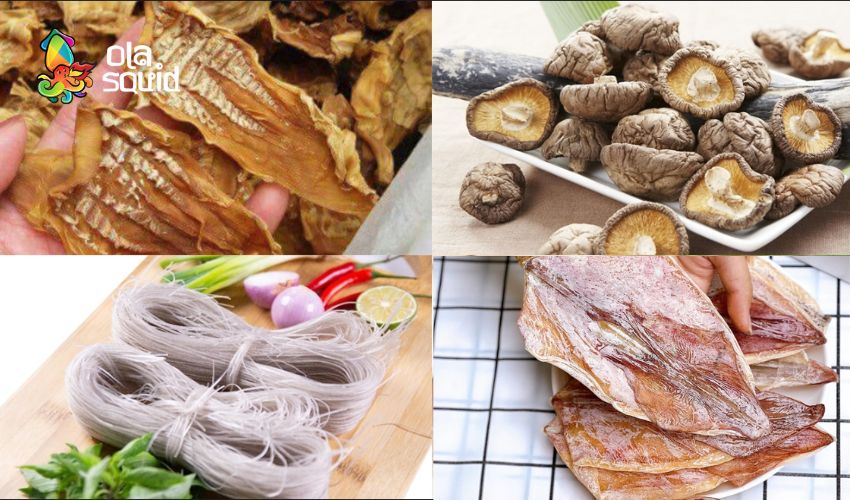
Below is the full ingredient list for 4 servings:
| Ingredients | Quantity |
| Dried squid | 70 – 80g |
| Dried bamboo shoots | 100g |
| Dried glass noodles (mung bean vermicelli) | 200g |
| Dried shiitake mushrooms | 6 – 8 caps |
| Dried wood ear mushrooms | 5 – 6 caps |
| Carrot | 1 small carrot |
| Onion | ½ onion |
| Vietnamese pork sausage (gio lua) | 100g |
| Chicken eggs | 1 – 2 eggs |
| Garlic | 4 – 5 cloves |
| Shallots | 2 bulbs |
| Cilantro, green onions | A small bunch |
| Oyster sauce | 1.5 tbsp |
| Fish sauce | 1 tbsp |
| Soy sauce | 1 tbsp |
| Seasoning powder | ½ tsp |
| Sugar | ½ tsp |
| Ground pepper | ¼ tsp |
| Cooking oil, sesame oil | As needed |
Tip: Prepare the seasoning mixture of oyster sauce, fish sauce, soy sauce, sugar, and seasoning powder in a small bowl before you start stir-frying to help season the dish quickly and evenly.
How to select ingredients
For dried squid stir-fried with bamboo shoots, the three ingredients that require the most attention during selection are the dried squid, dried bamboo shoots, and glass noodles, as these are the main components that determine the quality of the final dish. Below is a detailed guide on how to choose:
Selecting high-quality dried squid
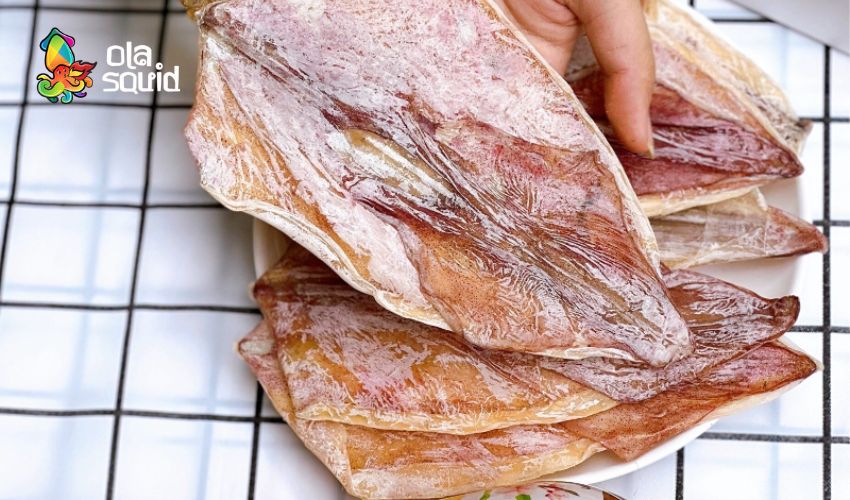
The best-dried squid for this stir-fry is jig-caught squid or one-sun-dried squid with thick meat, a naturally sweet taste, low saltiness, and the characteristic scent of the sea. Avoid trawled squid as the meat is thinner, tougher, and less fragrant when stir-fried.
When selecting dried squid, check the following:
- Color: Naturally light yellow with an even white powder coating on the surface; this is a sign of sun-dried squid without chemical additives.
- Smell: The characteristic aroma of dried seafood, without any ammonia or chemical odors.
- Texture: Not sticky or slimy, yet when bent slightly, it should have elasticity rather than breaking easily like grilled rice paper.
Choosing quality dried bamboo shoots (no toxins, no acrid odor)
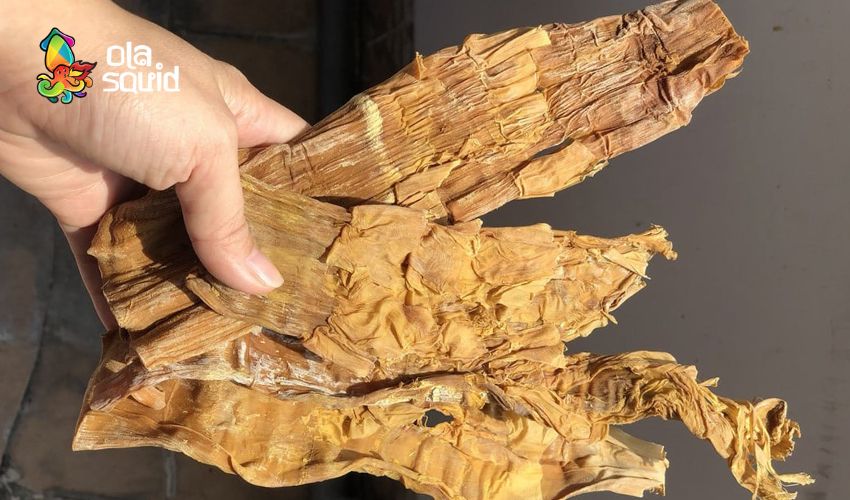
Dried bamboo shoots are an ingredient many people are hesitant to use due to concerns about toxins and acrid smells. However, by choosing the right type and preparing them correctly, these concerns can be completely eliminated.
- Color: Good dried bamboo shoots have a natural light yellow to light brown color, not overly bright or artificially yellow.
- Smell: A characteristic dried scent, slightly pungent.
- Origin: Prioritize purchasing from reputable food stores that clearly state the origin of the bamboo shoots, such as those from Yen Bai, Lao Cai, or the Northwest regions, which are generally of higher quality.
Choosing the right noodles – glass noodles (dong) or rice vermicelli?
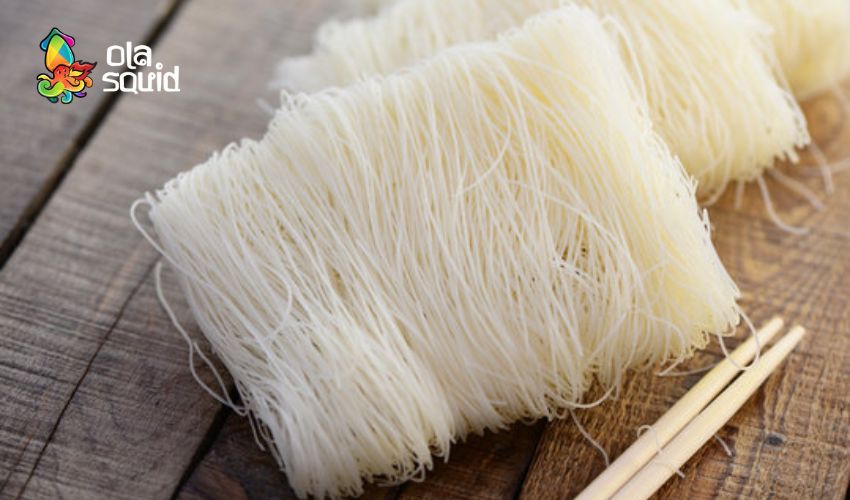
The answer is to use glass noodles (made from canna starch) for this stir-fry.
- Glass noodles: Have a chewy, translucent texture and do not become mushy when stir-fried at high heat.
- Rice vermicelli: Generally softer and prone to becoming mushy or sticking when exposed to heat and oil for long periods.
- Sweet potato starch noodles: A great alternative if you don’t have glass noodles. They have a naturally purplish or light yellow hue, are chewy, and look visually appealing when stir-fried.
How to properly process dried bamboo shoots before stir-frying
This is the most important step in the entire process. If not processed thoroughly, dried bamboo shoots will retain an acrid smell and may contain trace amounts of natural cyanide, affecting both food safety and taste. Follow this preparation process:
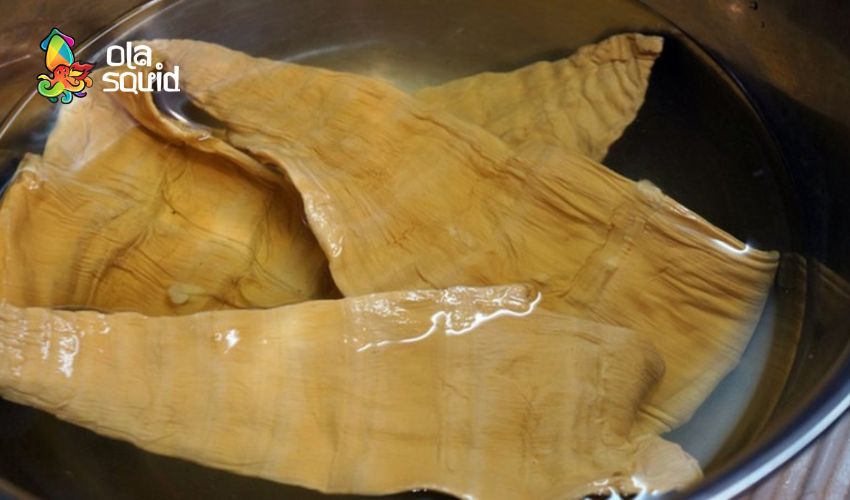
Step 1: Soak the dried bamboo shoots
Soaking is the first essential step to soften the bamboo shoots and begin the process of removing natural cyanide.
- How long to soak: At least 24 hours, ideally 48 hours. The longer you soak, the softer the bamboo will be, and the acrid smell will be significantly reduced.
- What to soak in: Regular cold water is sufficient. Change the water 2 – 3 times throughout the process to remove the dissolved compounds.
- Ratio: Use 4 – 5 times the amount of water relative to the volume of bamboo, as they will expand significantly.
- Temperature: Soak at room temperature; no warm water is needed. If the weather is hot, you can soak them in the refrigerator to prevent fermentation.
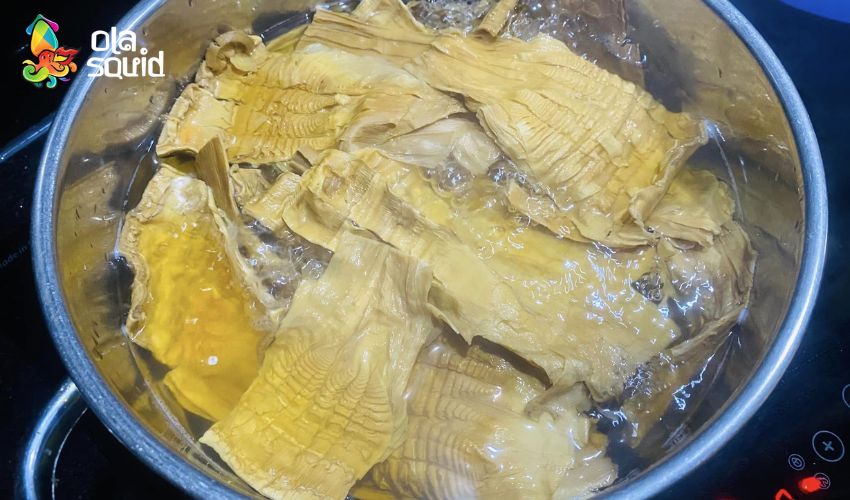
Step 2: Boil bamboo shoots to remove toxins
After soaking, the bamboo shoots still need to be boiled to ensure all residual cyanide is removed and the characteristic acrid smell is gone.
- How many times to boil: At least 2 times, preferably 3 times.
- How to boil: For each cycle, put the bamboo in a pot of cold water, bring to a boil, and cook for 15 – 20 minutes. Then discard the water, replace it with fresh water, and repeat.
- Sign of success: After sufficient boiling, the acrid odor should disappear, and the shoots should be soft yet retain a bit of chewiness without being mushy.
- Added tip: You can add a few slices of fresh ginger to the final boiling stage to help eliminate odors more effectively.
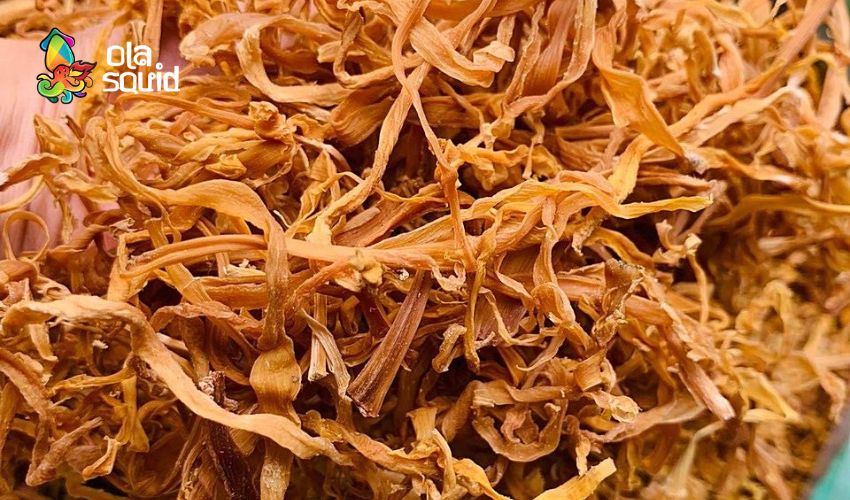
Step 3: Shred the bamboo shoots
Once boiled and cooled, proceed to shred or cut the bamboo:
- Use your hands to tear the bamboo along the grain into long strips, about 0.5 – 1cm thick. Do not make them too thick, or the seasoning won’t penetrate.
- If the strips are too long, use scissors to cut them into 5 – 7cm lengths.
- After shredding, squeeze gently to drain completely before stir-frying; excess water will cause the pan to splatter and make it difficult to get a dry, crisp stir-fry.
How to process dried squid before stir-frying
There are two common methods for processing dried squid:
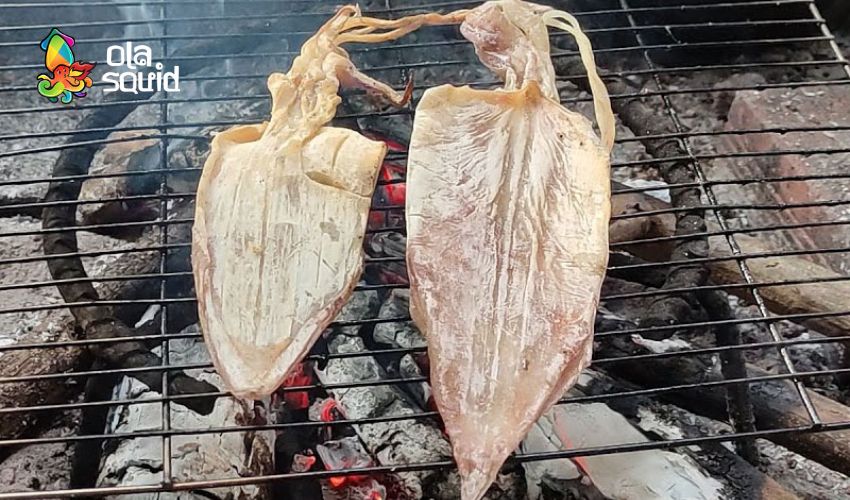
Method 1: Grilled, then pounded soft and shredded
This is the traditional method, producing grilled squid with a characteristic aroma, where the smoky flavor blends with the natural sweetness of the sea.
- Step 1: Briefly grill the squid over low heat or in a grill at 160 – 170°C for 3 – 5 minutes until it slightly curls and emits a distinct aroma.
- Step 2: Use a knife handle or mortar pestle to gently and evenly pound the squid so the fibers loosen.
- Step 3: Tear the squid into strips along the grain, about 0.5 – 1cm thick. Don’t tear them too thin, or they will shrink too much during stir-frying; don’t tear them too thick, or they will be hard to chew and won’t absorb flavor.
- Step 4: Soak the shredded squid in a mixture of warm water and a few drops of white rice wine for 5 – 10 minutes if you want to further reduce the fishy smell, then remove and pat dry.
Method 2: Soaked in warm water then sliced
Suitable if you prefer softer textures, similar to fresh squid, or if you prefer less chewy squid in your stir-fry.
- Prepare warm water at about 60 – 70°C (avoid boiling water to keep the squid from becoming mushy) with a ratio of 1 tablespoon of rice wine per 500ml of water.
- Soak the whole squid for 15 – 20 minutes until slightly softened and puffed.
- Remove, pat dry with paper towels, then slice into pieces or strips as desired.
- Do not soak too long, or the squid will absorb too much water, losing its bold flavor and becoming less crisp when stir-fried.
See more: Comprehensive guide on how to soak dried squid until tender while keeping its flavor
Step-by-step guide to stir-frying dried squid with bamboo shoots
The entire stir-frying process after ingredient preparation should take about 20 – 25 minutes. The secret to a delicious, harmonious stir-fry is cooking each component separately according to the sequence.
Step 1: Prep all ingredients
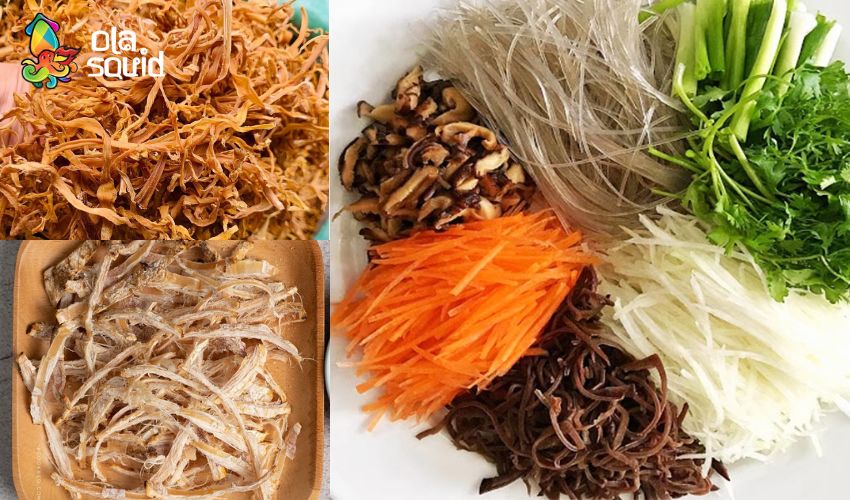
Before turning on the stove, ensure all ingredients are ready:
- Processed and shredded dried squid, drained.
- Soaked, boiled, and shredded dried bamboo shoots, drained.
- Rehydrated shiitake and wood ear mushrooms, squeezed dry and julienned.
- Thinly sliced carrots; wedge-cut onions; minced garlic and shallots.
- Julienned pork sausage, beaten eggs.
- Seasoning mixture prepared in a small bowl.
- Pre-boiled glass noodles.
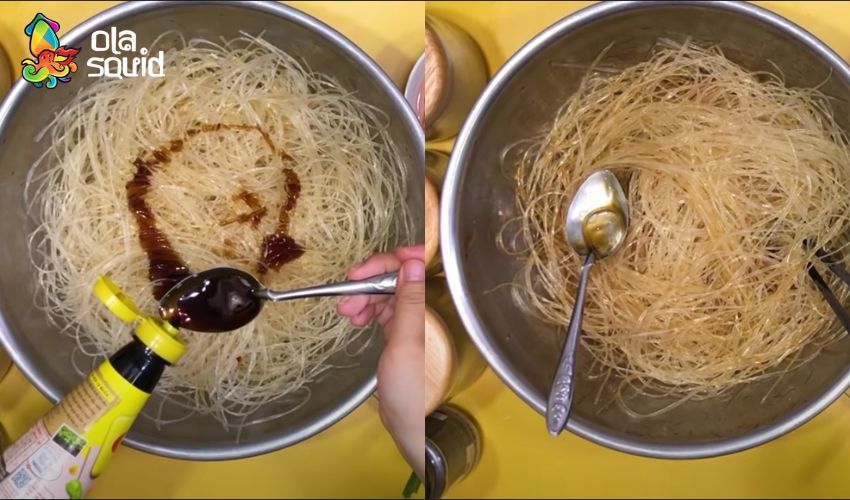
Step 2: Season the noodles before stir-frying
This is one of the lesser-known secrets: marinating the noodles before adding them to the pan helps them absorb the seasoning from within, rather than just coating the outside.
- Put the boiled noodles in a large bowl.
- Add: 1 tbsp soy sauce + ½ tbsp oyster sauce + ¼ tsp seasoning powder.
- Pour in the beaten eggs and mix well so the eggs coat the noodles. When stir-fried, the eggs create a thin layer around the noodles, preventing them from sticking and giving them a beautiful golden color and signature aroma.
- Mix gently and marinate for 10 – 15 minutes while preparing the other steps.
Step 3: Stir-fry the dried squid separately
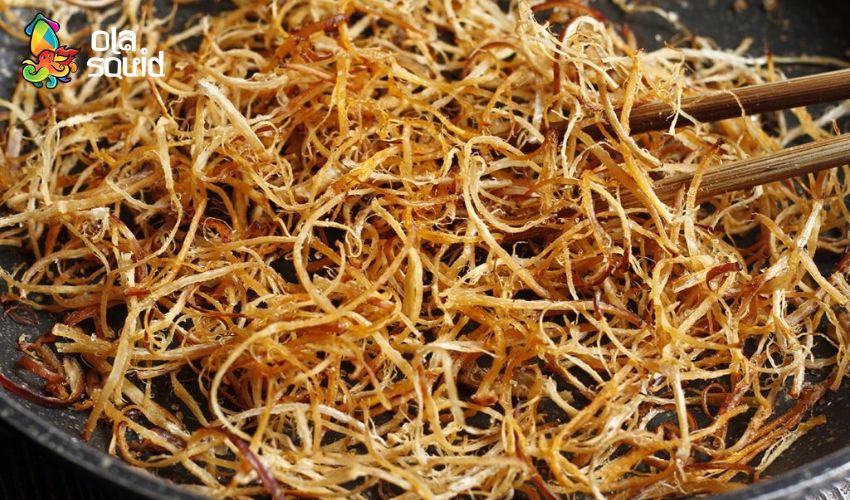
Stir-frying the squid separately rather than all at once ensures the texture is crisp on the outside and tender on the inside, preventing it from becoming tough or rubbery.
- Heat 3 tablespoons of cooking oil in a pan over medium-high heat.
- Add the squid strips and stir-fry for 2 – 3 minutes until fragrant and lightly golden.
- Add a bit of minced garlic at the end, stir for 30 seconds, then remove the squid to a separate plate.
- Do not overcook, or the squid will shrink and turn hard, losing its elasticity.
Step 4: Stir-fry bamboo shoots, mushrooms, and vegetables
Using the same pan as the squid, sauté the minced garlic and shallots over medium heat. When they are lightly golden and fragrant, add ingredients in the following order:
- Add onions first and stir-fry for about 1 minute.
- Add carrots and processed bamboo shoots, stir-frying over high heat for 2 – 3 minutes.
- Add shiitake and wood ear mushrooms immediately after.
- Season with: 1 tbsp oyster sauce + ½ tbsp fish sauce + ¼ tsp sugar, stirring well.
- Taste and adjust; the vegetables should be cooked just right, with the bamboo shoots remaining slightly crunchy.
- Remove the mixture to a separate plate.
Step 5: Stir-fry the noodles
This step requires high attention, as improper technique will result in sticky, mushy, or bland noodles.
- Add 1 – 2 tbsp of cooking oil to the pan and heat over high heat.
- Add the marinated noodles and stir continuously and quickly with long chopsticks over high heat for 2 minutes.
- To prevent the noodles from drying out and ensure even seasoning, add 2 – 3 tablespoons of a mixture made from oyster sauce and water (ratio 1:3).
- Stir for another minute until the noodles reach a light golden brown color, the signature hue from the oyster sauce.
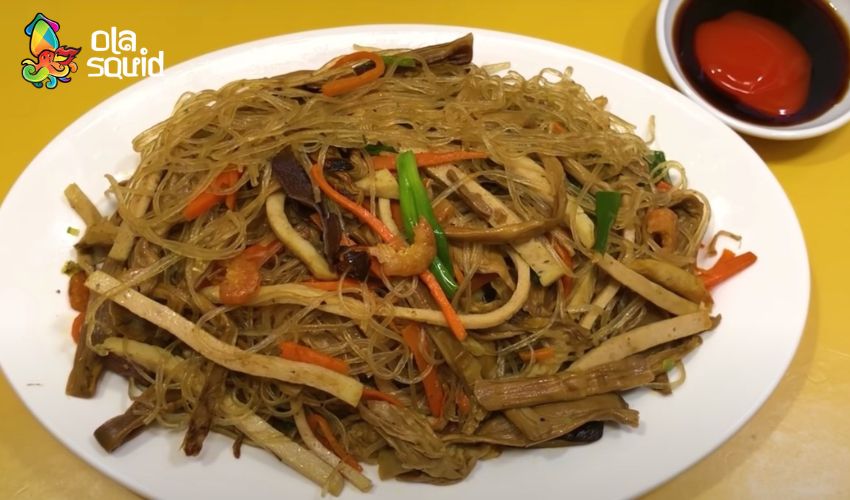
Step 6: Combine everything, season, and finish
This is the final and most important step determining the final quality of the dish.
- Add the cooked vegetable and bamboo shoot mixture to the pan of noodles, mixing gently with long chopsticks.
- Add the stir-fried dried squid and mix once more.
- Taste again: add fish sauce if bland, sugar if you prefer more sweetness, or pepper for a slight spicy kick.
- If using pork sausage, add it during the seasoning step, stir for 30 seconds, and turn off the heat.
- Serve on a plate, garnish with chopped green onions, cilantro, and ground pepper.
- Drizzle a few drops of sesame oil right before serving to add fragrance to the dish.
Tips for making delicious stir-fried dried squid with bamboo shoots
Here are the expert secrets for making incredibly delicious stir-fried bamboo shoots based on practical experience.
Why should you mix eggs into the noodles before stir-frying?
When eggs are mixed into the noodles and allowed to absorb before cooking, they create a thin protein layer around each strand. When they hit the hot oil in the pan, this layer sets immediately, preventing the noodles from sticking, giving them a beautiful yellow color, and significantly enhancing the aroma.
Secrets to ensure bamboo shoots are not acrid and have the perfect softness
- Do not shorten the soaking time; 24 hours is the minimum, 48 hours is ideal.
- Change the water at least twice during the soaking process.
- Boil at least 2 – 3 times, each time with fresh water.
- Add fresh ginger to the last boil to help neutralize odors.
- After boiling and shredding, if a slight acrid smell remains, you can stir-fry the bamboo separately with a little oil and garlic before mixing it in, which will significantly reduce the odor.
Stir-fry the squid separately first – don’t let it get tough and lose flavor
If added from the beginning and subjected to long cooking times, the dried squid will shrink, harden, and become unpleasantly chewy. Stir-frying the squid separately in hot oil for a short time creates a surface reaction that allows the squid to retain its natural elasticity and aroma without degradation.
Add diluted oyster sauce during stir-frying to prevent noodles from drying out
This is an important technique: dilute the oyster sauce with water in a 1:3 ratio, then slowly drizzle it into the pan while stir-frying. The water creates steam that circulates in the pan, softening the noodles and helping the seasoning absorb evenly, while the oyster sauce adds a beautiful golden-brown color and a distinct bold flavor.
Variations of the stir-fried dried squid with bamboo shoots dish
Once you’ve mastered the original recipe, you can easily get creative to match your personal taste or nutritional needs. Here are two versions highly popular in Vietnamese family meals.
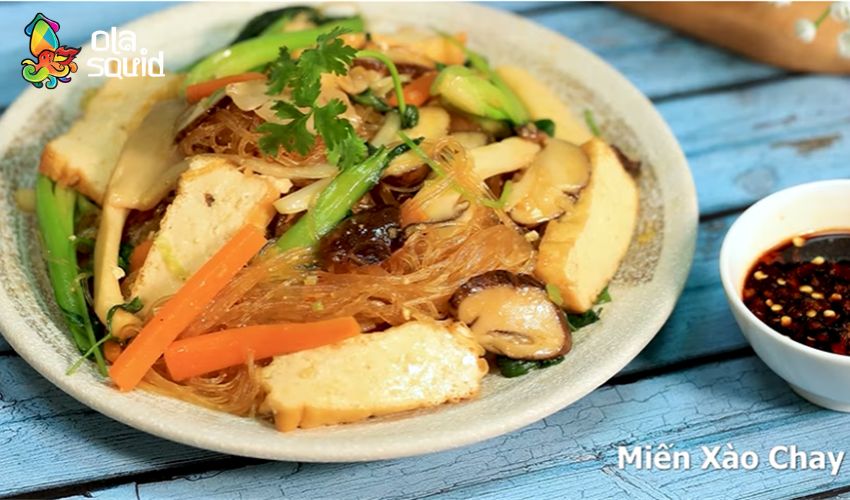
Vegetarian stir-fried dried squid with bamboo shoots
The vegetarian version of the dried squid stir-fried with bamboo shoots is perfect for the first and fifteenth days of the lunar month or simply when you want a lighter meal.
- Replace dried squid with firm tofu, cut into small squares, and fry until golden before mixing in.
- Add green beans or baby corn for natural sweetness.
- Replace fish sauce with soy sauce and salt to maintain a strict vegetarian standard.
- Increase the amount of sesame oil and pepper to compensate for the lost squid aroma.
- The vegetarian version is actually quite easy and often faster, as the squid processing step is skipped.
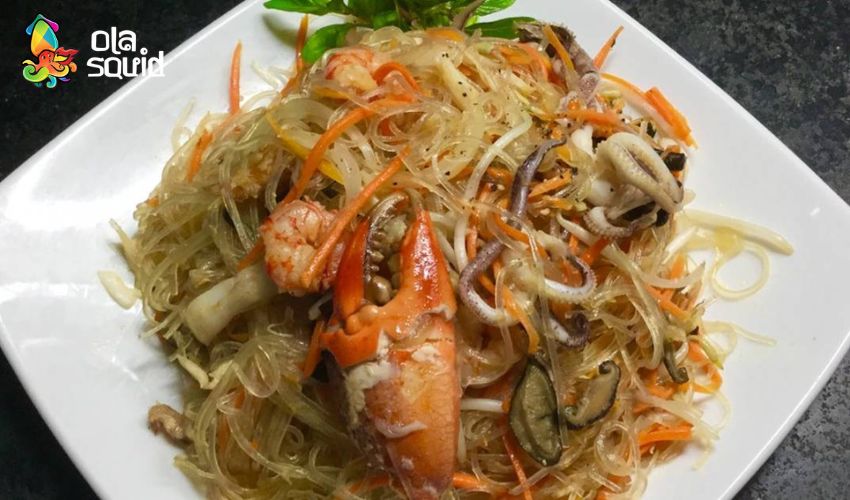
Stir-fried mixed glass noodles with dried squid
This is another version with more protein.
- Combine dried squid, dried shrimp, pork sausage, and eggs, all stir-fried separately before being mixed into the noodles.
- Add purple cabbage or Napa cabbage to increase color and crunch.
- You can add toasted cashews or peanuts on top when serving to create an interesting texture.
- The mixed version allows for free creativity as long as you maintain the rule of stir-frying each component separately before mixing at the final step.
See more: 7 suggestions for delicious dried squid stir-fry dishes everyone loves
FAQ
Can I use fresh bamboo shoots instead of dried ones?
Absolutely. Fresh bamboo shoots have a milder taste and require less preparation time; just boil 1 – 2 times to remove toxins, no long soaking required. The texture of fresh bamboo shoots in a stir-fry is also softer and lacks the characteristic chewiness of the dried variety. If using fresh, slice them thinner and reduce the stir-fry time so they don’t become mushy.
Which type of dried squid is best for stir-frying with bamboo shoots?
Medium-sized jig-caught squid (9 – 12 pieces/kg) is the optimal choice; the meat is thick enough for nice shreds, and the natural sweetness pairs well with the bold flavor of dried bamboo and oyster sauce at a more accessible price point. One-sun-dried squid is also a great option if you want softer squid strips that require less processing.
Dried squid stir-fried with bamboo shoots is a dish that requires patience in the preparation phase, especially in processing the dried bamboo shoots. From how to soak and boil the bamboo to remove toxins, processing the dried squid to keep its aroma, to the secret of mixing eggs into the noodles and the oyster sauce technique during stir-frying, every small detail contributes to a more complete dish.
Discover high-quality dried squid products at Ola Squid, a reliable source of ingredients for stir-fried dried squid with bamboo shoots and dozens of other delicious seafood dishes. Order today for nationwide delivery.
“