
 Tiếng Việt
 ไทย
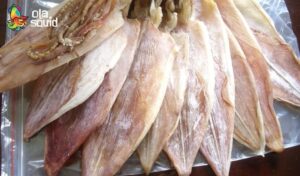
ไทยGrilled dried squid is not only an appealing snack but also an incredibly rich source of protein, even surpassing beef or chicken. However, how many calories are in grilled dried squid, and does its cholesterol content affect your health? Let’s explore the detailed nutritional profile, ways to enjoy grilled dried squid without worrying about weight gain, and important advice from nutrition experts below.
How many calories are in grilled dried squid?
To answer this question accurately, we need to consider standard units of measurement such as weight and size.
How many calories are in 100g of grilled dried squid?
On average, 100g of grilled dried squid provides approximately 291 – 300 kcal. This is a relatively high calorie count compared to many other protein-rich foods, but it must be viewed in the right context: dried squid is a concentrated food, so 100g of dried squid is equivalent in nutritional value to nearly 400 – 450g of fresh squid.
More specifically, in 100g of grilled dried squid:
- Calories: ~291 kcal
- Protein: ~60 – 62g
- Fat: ~4 – 5g
- Carbohydrates: ~4 – 5g
- Cholesterol: ~600 – 700mg
How many calories are in 1 grilled dried squid? (by large / medium / small size)
In reality, few people weigh every gram of squid while eating. Therefore, converting by squid size is much more practical. Below is a reference table:
| Size | Estimated Weight | Estimated Calories |
| Large dried squid (Type 1) | ~100g | ~291 kcal |
| Medium dried squid (Type 2) | ~50g | ~145 kcal |
| Small dried squid | ~24 – 30g | ~70 – 87 kcal |
Example: If you choose a medium-sized dried squid to enjoy with friends, you are consuming approximately 145 kcal, equivalent to a small bowl of rice or a large apple. Thus, it can be seen that how many calories are in grilled dried squid depends heavily on the size of the squid you choose for each meal.
Why does dried squid have more calories than fresh squid?
Many are surprised to learn that dried squid has significantly higher calories than fresh squid, even though they come from the same source. The reason lies in the drying process, which removes most of the moisture from the squid.
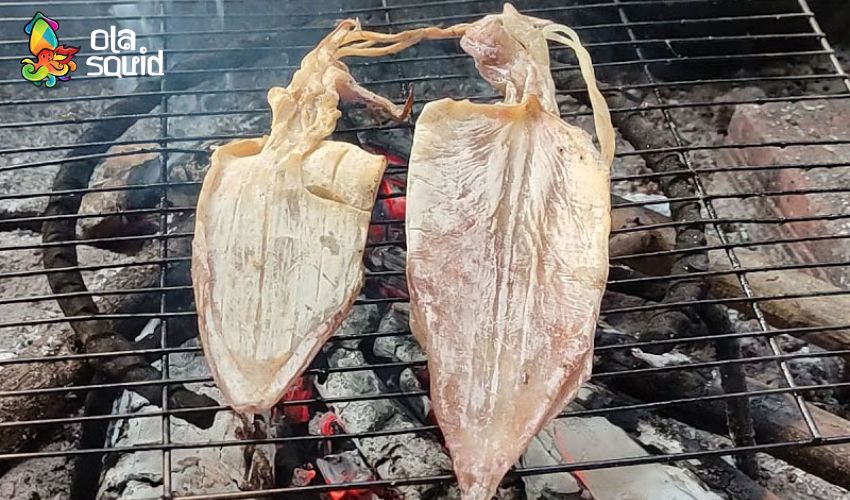
Specifically: to produce 1kg of dried squid, it takes 4 – 4.5kg of fresh squid. All the nutrients from protein, fat, and minerals are concentrated into a much smaller mass, while the water almost completely disappears. As a result:
- Fresh squid: ~92 kcal / 100g
- Grilled dried squid: ~291 kcal / 100g
In other words, when you eat 100g of dried squid, you are consuming an amount of nutrients equivalent to eating over 300g of fresh squid. That is why dried squid is richer, tastier, and easier to consume in large quantities without realizing it.
However, this difference does not mean that dried squid is less healthy. On the contrary, it demonstrates the efficiency of providing essential nutrition without needing to consume a large volume of food.
Full nutritional composition of 100g of grilled dried squid
Besides the question of how many calories are in grilled dried squid, we need to care about the nutritional value this food provides.
Protein – a superior source of protein compared to beef and chicken
In 100g of dried squid, there is about 60g of protein, a figure twice as high as beef (approx. 26g/100g) and chicken (approx. 27g/100g). Protein in dried squid is a complete protein, containing all the essential amino acids that the body cannot synthesize on its own.
For gym-goers, those in a muscle-building phase, or people needing to supplement protein without consuming too many calories from red meat, grilled dried squid is a worthy option to consider. Protein in seafood is easy to absorb and helps maintain a feeling of fullness for a long time, supporting a more robust metabolism.

Fat & Omega-3 are good for heart and brain health
Grilled dried squid has a relatively low fat content (~4 – 5g/100g), but that fat contains Omega-3, a type of unsaturated fatty acid beneficial for heart health, reducing inflammation, and supporting brain function.
However, also note: dried squid has high cholesterol (~600 – 700mg/100g), exceeding the daily recommended limit for some people with blood fat disorders. This does not mean it must be avoided completely, but eat it in moderation.
Vitamins & minerals – B2, B12, iron, zinc, calcium, magnesium
Dried squid is a rich source of B-group vitamins, especially B2 (Riboflavin) which helps reduce migraines, and B12 which is good for the nervous system. Below is the summarized nutritional table for 100g of grilled dried squid:
| Component | Amount in 100g |
| Energy | ~291 kcal |
| Protein | ~60 – 62g |
| Fat | ~4 – 5g |
| Carbohydrates | ~4 – 5g |
| Cholesterol | ~600 – 700mg |
| Calcium | ~150mg |
| Iron | ~9 – 10mg |
| Zinc | ~3 – 4mg |
| Magnesium | ~60mg |
| Vitamin B2 (Riboflavin) | ~0,7mg |
| Vitamin B12 | ~3 – 5µg |
| Sodium | ~1.500 – 2.000mg |
Note: The sodium content in dried squid is quite high; this is a factor to pay attention to for people with high blood pressure or kidney disease.
Comparing calorie counts of grilled dried squid with other preparation methods
With the same dried squid ingredient, different preparation methods create significantly different calorie counts. Especially for those on a diet, choosing the right preparation method can save dozens to hundreds of calories per meal.
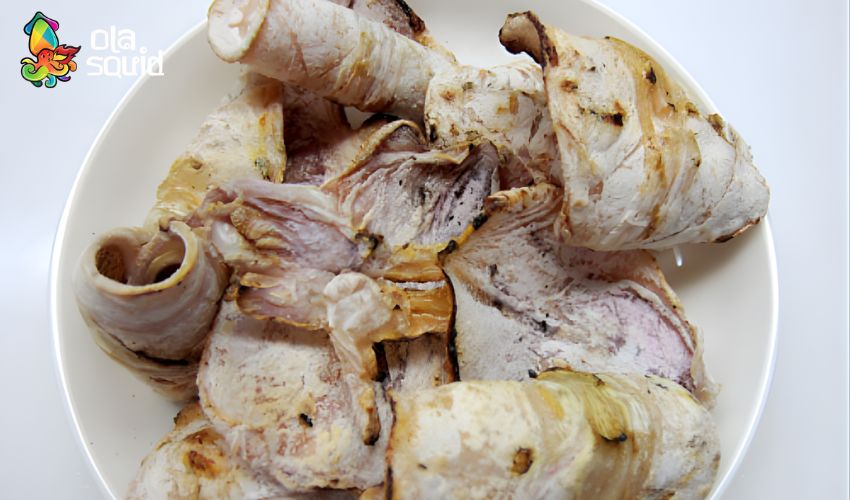
Below is a comparison table of calories between popular preparation methods:
| Preparation Method | Estimated Calories / 100g | Nutritional Characteristics |
| Grilled dried squid (no seasoning) | 291 kcal | Original, lowest fat content. |
| Butter garlic fried dried squid | 450 – 500 kcal | Very high calories due to butter and oil. |
| Sweet and sour stir-fried dried squid | 350 – 400 kcal | Increased calories due to sugar and spices. |
| Stir-fried dried squid with glass noodles | 350 – 400 kcal | Quite high in calories due to oil, butter, and mushrooms. |
Based on the comparison table above, it can be seen that grilled dried squid is the best choice for dieters. Fried or stir-fried methods, while more stimulating to the palate, cause an excess of energy and bad fats from cooking oils and added ingredients when preparing the dish.
Is eating grilled dried squid fattening? Does it cause weight gain?
This is a question that many people, especially women, worry about whenever eating squid. The answer is: Eating grilled dried squid does not cause weight gain if you control the total calories consumed and the way you enjoy it.
Dried squid calories versus daily body needs
An average adult needs about 2,000 – 2,200 kcal/day (depending on gender, activity level). With 100g of grilled dried squid providing ~291 kcal, this portion only accounts for about 13 – 15% of the total daily caloric needs.
This means: if you eat 50 – 100g of grilled dried squid as a snack during the day, and the rest of your diet is reasonably controlled, you absolutely do not need to worry about weight gain.
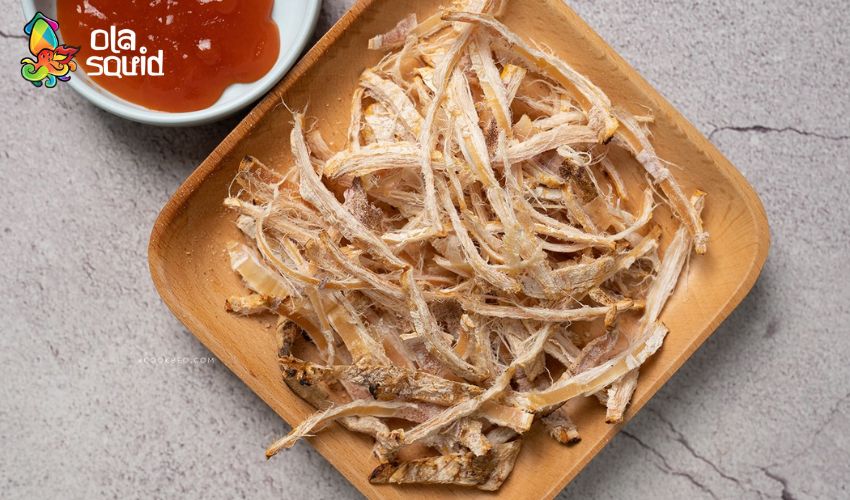
When does eating grilled dried squid easily cause weight gain?
The problem is not the dried squid itself, but your eating habits. Dried squid only truly becomes a culprit for weight gain when you fall into the following situations:
- Eating with beer or alcohol: Beer provides 40 – 50 kcal/100ml. A drinking session can easily make the total calories from squid combined with beer exceed 600 – 800 kcal.
- Dipping in oily sauces, mayonnaise, or sugary chili sauce: Each spoonful of sauce can add 50 – 100 kcal to the portion.
- Eating too much, without portion control: Dried squid is delicious, chewy, and easy to eat continuously, meaning 3 – 4 large pieces in one evening is equivalent to nearly 1,000 kcal just from the squid.
- Eating late at night after 9 – 10 PM: Calories consumed when the body is less active and metabolism is slower are more likely to be stored as fat.
Ways to eat grilled dried squid without worrying about weight gain
The good news is: you don’t need to give up grilled dried squid to have a fit figure. Just by following some simple principles, this can absolutely be a healthy snack in your weekly menu.
How many grams of grilled dried squid should you eat per day?
According to advice from nutritionists, a reasonable amount of dried squid for a normal person is about 50g – 100g per time, and you should only eat it 2 – 3 times per week.
- For those losing weight: Only eat about 50g of grilled squid (1/2 of a large piece) and combine it with lots of green vegetables.
- For those maintaining weight: You can eat 100g/time but need to reduce the amount of protein from meat and fish in your main meals.
- For gym-goers: Dried squid is an excellent source of post-workout protein; you can eat 100g to support effective muscle growth.
What to eat with it to balance nutrition & control calories?
Grilled dried squid is rich in protein but low in fiber and vitamins from vegetables. To make the meal more balanced, combine it with:
- Raw vegetables, cucumber, tomatoes: Supplement fiber, increase satiety, and add vitamins with almost no extra calories.
- Low-sugar fresh fruits (guava, dragon fruit, pomelo): Balance the saltiness of the squid, supplement vitamin C.
- Water or unsweetened tea: Replace beer and soft drinks to save hundreds of calories per session.
- Dip with a little chili sauce or mustard: Instead of mayonnaise or high-sugar sauces.
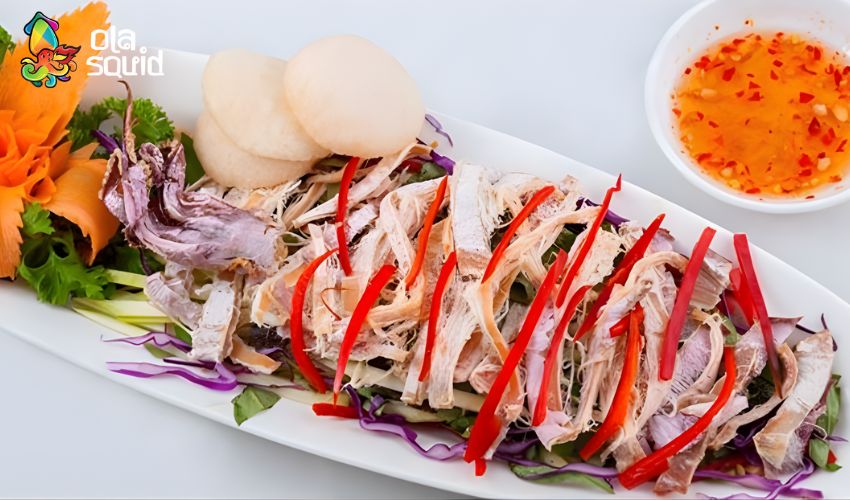
These small changes may sound simple, but they can help you cut 200 – 400 calories in a squid-eating session.
Who should not eat grilled dried squid (or needs to limit it)?
Although nutritious, grilled dried squid is not suitable for everyone. Some groups need to be cautious or consult a doctor before eating it regularly:
- People with high blood fat (high LDL cholesterol): The cholesterol content in dried squid (~600 – 700mg/100g) exceeds the daily recommended level (~300mg). Eating a lot can exacerbate lipid metabolism disorders.
- People with cardiovascular disease: Need to strictly control sodium and cholesterol, both of which are present in significant amounts in dried squid.
- People with chronic kidney disease: High sodium (~1,500 – 2,000mg/100g) puts pressure on the kidneys, causing the body to retain water and increase blood pressure.
- People allergic to seafood or mollusks: Squid is a marine mollusk and can cause allergic reactions ranging from mild to severe.
- Pregnant women: Need to eat well-cooked seafood, limit processed dried squid which may contain a lot of salt and preservatives.
Health benefits of grilled dried squid
If consumed correctly, dried squid brings more significant benefits than many think, specifically:
- Support muscle growth and post-workout recovery: The complete protein content of ~60g/100g is superior to most common protein sources. This is why grilled dried squid is gradually appearing in the diets of many athletes and bodybuilders.
- Good for the brain and nervous system: Vitamin B12 in dried squid plays an important role in maintaining nerve function, supporting DNA synthesis, and preventing anemia.
- Natural supplement of iron and zinc: Iron (~9 – 10mg/100g) in dried squid exceeds red meat in content, supporting red blood cell production and preventing iron-deficiency anemia. Zinc (~3 – 4mg/100g) is essential for the immune system and reproductive function.
- Fewer calories than you think when eaten in the right amount: A 50g portion (~145 kcal) is a long-lasting, protein-rich, low-fat snack that is much better than a bag of potato chips or cakes with the same calorie count.
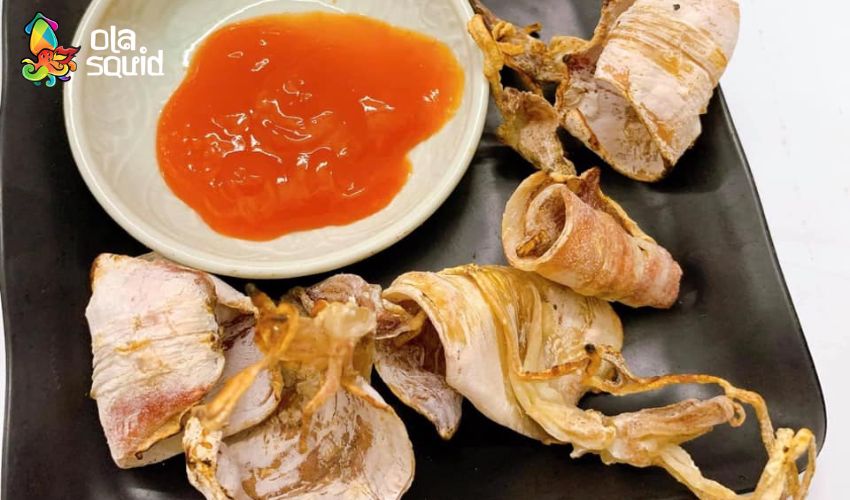
At Ola Squid, we specialize in providing high-quality grilled dried squid products, from one-sun-dried squid to ready-to-eat dried squid, selected from reputable fishermen and produced according to strict quality control processes.
In summary, understanding how many calories are in grilled dried squid will help you turn this dish into part of a healthy diet. Dried squid is not just for drinking; it is a protein-rich, low-fat, and mineral-full food if you know how to control your portions.
Hopefully, the article has provided you with a comprehensive and in-depth view of the value of dried squid. Don’t forget to choose reputable dried squid suppliers to ensure food hygiene and safety to protect the health of yourself and your family. If you found this article helpful, please share it with friends and follow Ola Squid to update more of the latest culinary knowledge.