

 Tiếng Việt
 ไทย
ไทยMany people think that dried squid only needs to be hung in a dry place to be used for a long time. However, if stored improperly, the squid can easily become damp, lose its natural aroma, or even grow moldy even if it hasn’t been stored for very long. So, should dried squid be kept in the fridge or freezer to maintain its best quality for the longest time? The following article by Ola Squid will help you clearly understand the proper way to store dried squid to always maintain the delicious flavor as if it were just purchased.
1. Should dried squid be kept in the fridge or freezer?
If you want to store dried squid for a long time while keeping it delicious, the freezer (~18°C) is the best choice. In this condition, the squid can be stored from 6 months to 1 year while still retaining its natural sweetness, minimizing the risk of mold or rancidity.
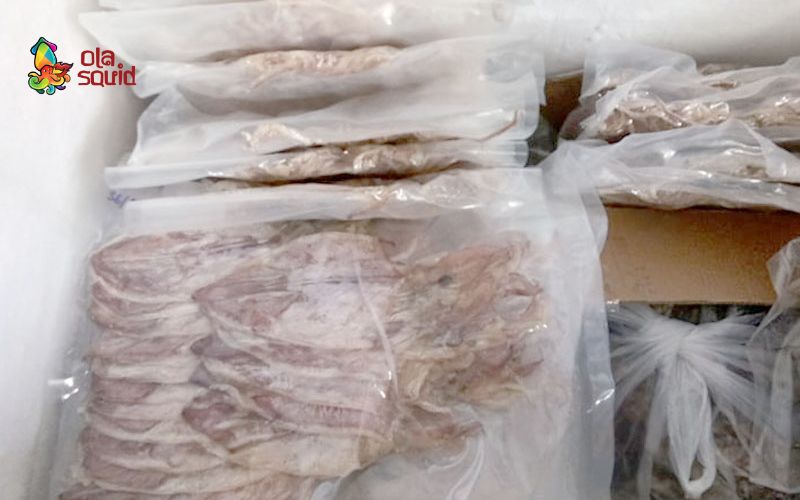
The reason is that the extremely low temperature in the freezer helps almost completely inhibit the growth of bacteria and mold, while slowing down the oxidation of fats in the squid – the cause of the squid becoming rancid and losing its aroma after a long period of storage.
Meanwhile, the fridge is only suitable for short-term use, about 1-2 months. Since the fridge still has a certain level of humidity, if the squid is not wrapped tightly, moisture will seep in, making it soft, susceptible to mold, or having an strange smell after just a few weeks.
Why is the freezer better for storing dried squid than the fridge?
At a fridge temperature of about 2-4°C, bacteria and mold only slow down but do not stop completely. If the humidity in the fridge increases slightly or the packaging is not sealed, the dried squid can become moldy after 3-4 weeks. Meanwhile, the freezer temperature of about -18°C causes microorganisms to almost completely cease activity, thus the squid maintains its quality almost intact for a long time.
Furthermore, the natural fats in dried squid, especially omega-3, are very easily oxidized at positive temperatures, creating an unpleasant rancid smell. Storing in the freezer will significantly slow down this process. A special point is that dried squid has a very low water content, so when kept in the freezer, it will not freeze solid like fresh food. When you need to use it, you can take it out and cook it immediately without needing to thaw.
How to properly wrap and store dried squid in the refrigerator
To ensure the dried squid stays delicious for a long time without getting moldy or absorbing other food odors, proper wrapping and storage are crucial. In this regard, freezer storage is still the recommended method as it helps maintain the best quality of the squid for many months.
Storage in the freezer (recommended)
- Step 1: First, wrap the squid in 2-3 layers of clean newspaper. The newspaper acts as a mild moisture absorbent, limits the squid smell from spreading, and helps prevent the squid from direct contact with the cold air.
- Step 2: Place the wrapped squid into a thick plastic bag or a zip-lock bag, squeezing out all the air before sealing tightly to limit humidity and the oxidation process.
- Step 3: Store the squid in the middle of the freezer and do not place it near the walls, as temperatures in the corners are often less stable than in the central area.

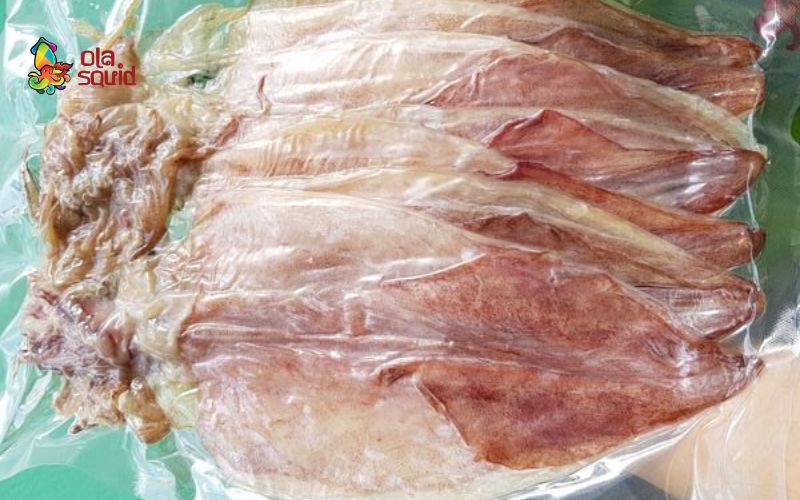
If you have a vacuum sealer, you should use vacuum bags instead of newspaper. This method helps preserve the squid for 9-12 months while still maintaining its dryness, sweetness, and natural aroma.
When using, you should take out the exact amount needed. The remainder should be tightly wrapped and put back into the freezer immediately; avoid leaving the squid at room temperature for more than 30 minutes before returning it to the fridge as this can easily make the squid absorb moisture and degrade in quality.
Storage in the fridge (short-term use)
The squid still needs to be wrapped tightly just like when putting it in the freezer to limit moisture absorption. During storage, you should check the squid weekly for early signs of mold or strange odors.
Also, avoid keeping the dried squid near fresh food like meat, fish, or vegetables because the squid can easily absorb cross-odors. Especially, you should not keep the dried squid in the same compartment as fruit because water vapor and ethylene gas from fruit can make the squid go soft quickly and reduce its quality.
How to store dried squid without a refrigerator
In cases where there is no refrigerator, dried squid should be kept in a dry, cool place, away from direct sunlight and areas with high humidity. You should wrap the squid in newspaper and then place it in a plastic bag or a tightly sealed container to prevent humid air from coming into contact with the squid.

Additionally, every 2-3 weeks, you should take the squid out for 10-15 minutes in mild sunlight to kill surface mold and release some moisture. After sun-drying, let the squid cool down completely before wrapping it up again to prevent heat from creating moisture inside the bag.
With this storage method, dried squid usually maintains its quality for about 1-2 months, depending on the initial dryness of the squid and the weather conditions of the storage location.
See more: Tips for proper dried squid storage for long-term use
Storage time for dried squid according to type and conditions
The storage time for dried squid varies and depends on its dryness, meat thickness, and storage method. The higher the moisture content in the dried squid, the shorter the shelf life, and the more it needs to be stored in the freezer.
- Dried squid (Loligo): Thin meat and low moisture mean it can be stored for quite a long time. If kept in the freezer properly, it can be kept for 8-12 months, while in the fridge, it should be used within 4-6 weeks.
- Dried cuttlefish /mahogany squid: Thicker meat holds more moisture than squid (Loligo). This type is suitable for freezer storage for up to 6-8 months, while in the fridge, it should only be stored for 2-3 weeks to avoid softening and flavor loss.
- Sun-dried squid (one-night squid): This is the type that hasn’t been completely dried, so the water content is still quite high. Sun-dried squid must be kept in the freezer, and only stored in the fridge for a maximum of 3-5 days. If frozen properly, it can be used for about 3-4 months.
- Industrially vacuum-packed squid: The shelf life is usually printed on the packaging. However, after opening the bag, the squid should be used within 2-3 days or wrapped tightly and transferred immediately to the freezer to avoid moisture absorption and bacterial contamination.
Signs that dried squid has spoiled and should not be used
During storage, if the dried squid shows the following abnormal signs, you should not continue to use it to avoid affecting your health:
- Strange odor: Spoiled dried squid often has a faint sour smell, ammonia smell, or a rancid fishy oil smell instead of the characteristic aroma of dried seafood. This is a clear sign that the squid has degraded.
- Color change: If black spots, moss green, or strange color patches appear on the body or tentacles of the squid, it is very likely that the squid has grown mold or deteriorated due to improper storage.
- Damp, slimy texture: Good quality squid is usually dry and firm. If it feels soft, damp, or slimy to the touch, you should not continue to use it.
- Distinguishing the white powdery layer: The thin white powdery layer evenly covering the surface of the squid is a natural salt crystallization phenomenon, which is completely normal. Conversely, if patchy white cotton, fuzzy, or clumping substances appear, that could be mold.
- When in doubt about spoilage: You should not try grilling and smelling it to check. If the squid has abnormal signs in smell, color, or dryness, it is best to discard it to ensure health safety.
You may be interested in: 7 ways to properly store already grilled dried squid and how to reheat it
Hopefully, the detailed information provided above has helped you answer the question “should dried squid be kept in the fridge or freezer?”. However, the initial quality of the squid is the decisive factor for its storage life and final flavor. If you want to choose high-quality dried squid sourced correctly, dried using proper techniques, with standard moisture levels and airtight packaging for easier home storage, don’t forget to visit olasquid.com to check out our premium dried squid products.