
 Tiếng Việt
 ไทย
ไทยSalmon is considered one of the “golden” foods for a healthy diet due to its rich nutritional profile and ease of preparation. However, many people still wonder how many calories are in salmon, whether eating it causes weight gain, and if it is suitable for those on a weight-loss journey. To answer these questions in detail, let’s follow this article from Ola Squid!
1. How many calories are in 100g of salmon?
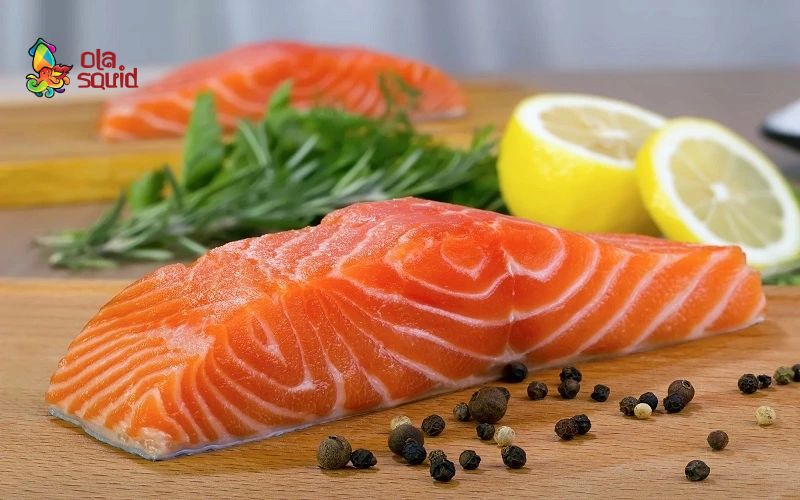
Salmon is a highly nutritious food that also provides a well-balanced level of energy for the body. On average, 100g of fresh salmon contains approximately 208 calories, along with a rich supply of protein and omega-3s.
Depending on the specific part and the method of preparation, the calorie count in salmon will vary:
- Salmon head: about 460 calories/100g
- Belly portion (fatty meat): ranges from 400 – 800 calories/100g
- Salmon fillet/loin: about 200 calories/100g
- Salmon fins: about 210 calories/100g
- Prepared salmon (pan-seared, sashimi): about 198 calories/100g
2. Does eating salmon make you gain weight?
Eating salmon does not cause weight gain if you consume it correctly in reasonable portions. With an energy level of about 208 calories/100g, salmon is considered a nutritious food that is not excessively high in calories, making it very suitable for a healthy diet.
What’s special is that salmon is packed with protein and omega-3s, which help the body boost metabolism and burn energy more effectively. Protein also promotes a feeling of fullness, reducing the urge to snack, thereby helping to control your daily calorie intake.
Additionally, the omega-3s in salmon play a role in supporting fat loss, especially belly fat, while helping to regulate blood sugar and limit the accumulation of excess fat. Therefore, adding salmon to your menu does not cause weight gain and actually contributes to maintaining a balanced physique.
However, for the best results, you should prioritize low-fat cooking methods such as steaming, grilling, or light pan-searing and combine it with green vegetables in your meals.
>>> SEE NOW:
- 7 delicious pan-seared salmon recipes you will fall in love with
- 5 simple and nutritious orange sauce salmon recipes for the family
3. Nutritional value of salmon
Salmon is not only famous for its delicious flavor but also offers many health benefits for all ages, specifically:
- Rich in protein: Supports muscle building, body recovery after physical activity, and maintaining muscle mass, making it especially suitable for those who exercise or are trying to lose weight.
- Good for brain health and memory: The omega-3s in salmon play a crucial role in brain structure, helping to improve memory, slow down cognitive decline, and support mental stability.
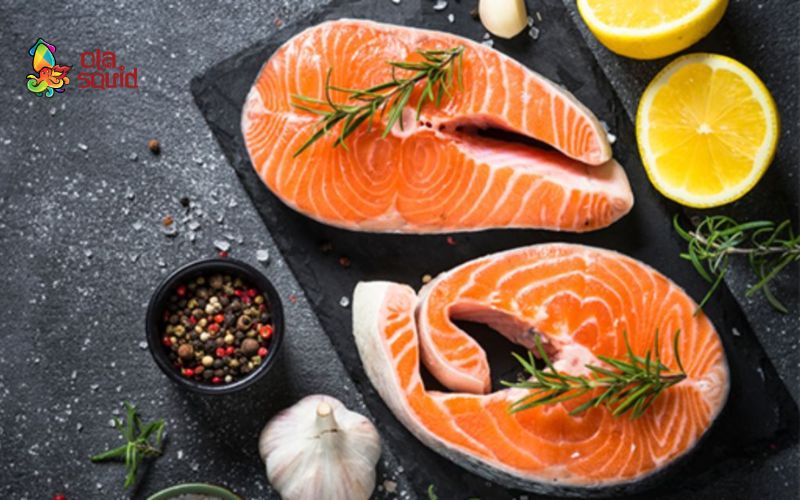
- Abundant in omega-3s (EPA & DHA): Helps protect cardiovascular health, lowers bad cholesterol, supports blood circulation, and reduces the risk of stroke.
- Provides B vitamins and minerals: Supports energy metabolism, reduces inflammation, boosts immunity, and maintains stable bodily functions.
- Supplements vitamin D and calcium: Helps strengthen bones, increases calcium absorption, and prevents bone and joint issues.
- Enhances vision and protects eyes: Antioxidants like astaxanthin help reduce eye strain and limit age-related eye diseases.
- Beauty benefits for skin and hair: Protein combined with vitamin D and fatty acids helps stimulate collagen production, improve skin elasticity, and keep hair strong and shiny.
See more: How many calories in 100g of shrimp? Does it cause weight gain?
4. Salmon dishes for weight loss
Salmon is an ideal ingredient for a weight-loss menu due to its high protein content, healthy fats, and ease of preparation in many healthy ways. Below are some delicious salmon dish suggestions that you shouldn’t miss:
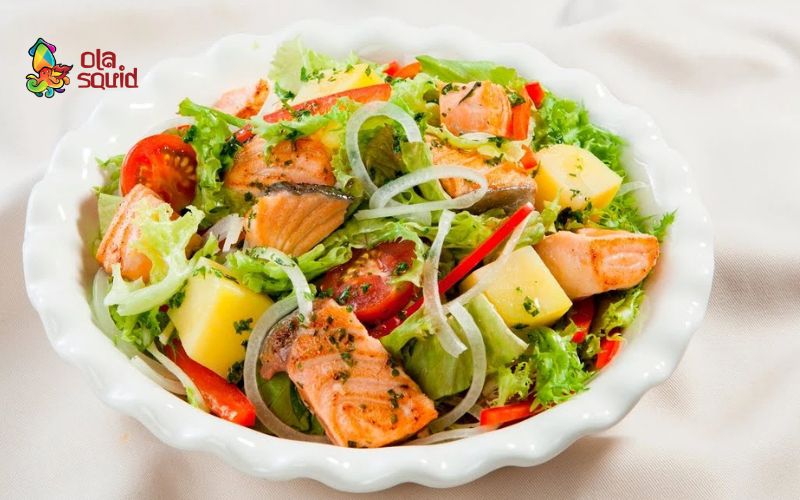
4.1. Salmon salad
Ingredients:
- 300g salmon
- 1 head of lettuce, 1 cucumber
- 1/2 purple cabbage, 1 lemon
- Seasonings: olive oil, vinegar, sugar, salt, pepper, seasoning powder, dill
How to make salmon salad:
- Step 1 – Preparation and cooking: Lightly season the salmon with salt and pepper, then pan-sear with a little olive oil until golden on both sides. Let it cool, then shred into bite-sized pieces.
- Step 2 – Preparing vegetables: Wash the cucumber and slice moderately. Thinly shred the purple cabbage, chop the lettuce; rinse everything well and let dry.
- Step 3 – Mixing the salad: Place all the vegetables and salmon in a large bowl. Add vinegar, lemon juice, a pinch of sugar, salt, and pepper, then toss gently to combine.
- Step 4 – Serving: Platter the salad, you can sprinkle some dill to enhance the flavor. This dish is fresh, low in calories, yet full of nutrition, perfect for a weight-loss menu.
4.2. Salmon sushi
Ingredients:
- 500g salmon fillet
- 200g Japanese rice (optional)
- Cucumber, white radish
- Seaweed sheets, carrots
- Seasonings: Japanese vinegar, salt, wasabi, sugar, sesame oil, soy sauce

Steps to prepare salmon sushi:
- Step 1: Clean the salmon, pat dry, and use a sharp knife to cut into thin, bite-sized slices. Cutting against the grain helps the fish stay tender and look beautiful.
- Step 2: Wash the Japanese rice, cook it, then mix with a blend of vinegar, sugar, salt, and a little sesame oil for the characteristic mild sour taste.
- Step 3: Peel and clean the cucumber, carrot, and white radish; cut them into strips or long sticks as preferred.
- Step 4: Arrange the salmon on a plate with the vegetables and seaweed. When eating, dip in soy sauce and wasabi to enhance the flavor. Salmon sushi features vibrant colors, soft, buttery meat that melts in the mouth.
4.3. Salmon with lemon sauce
Ingredients:
- Salmon cut into bite-sized portions
- 2 lemons
- Minced garlic and shallots
- Rosemary, parsley
- Seasonings: olive oil, fish sauce, seasoning powder, pepper
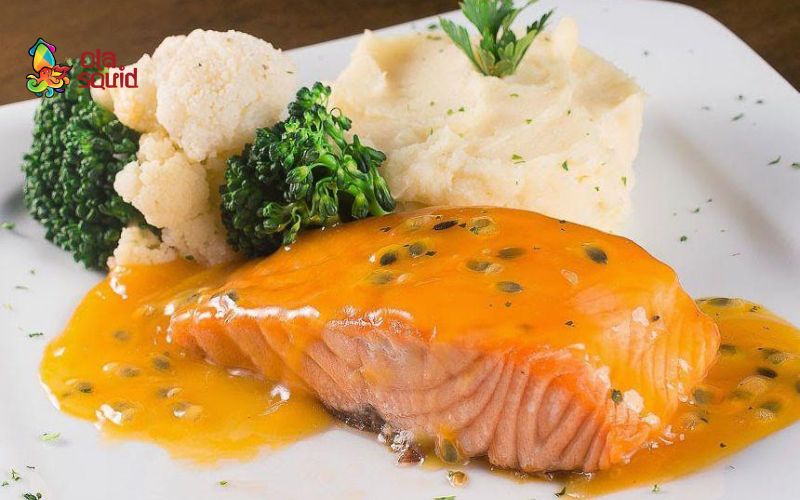
Instructions for making lemon sauce salmon:
- Step 1: Squeeze the lemons for juice and grate the zest thinly for fragrance. Mix the minced garlic, shallots, olive oil, lemon juice, zest, parsley, and chopped rosemary together.
- Step 2: Clean the salmon, pat dry, and marinate with seasoning powder, fish sauce, and pepper for about 10 minutes. Drizzle the lemon sauce evenly over the fish, add some lemon slices, and wrap tightly in foil for 20 minutes to allow the flavors to penetrate.
- Step 3: Preheat the oven and bake the fish at approximately 200°C for 25-30 minutes until tender. Salmon with lemon sauce has a gentle herbal aroma and a tangy citrus flavor that perfectly complements the natural richness of the fish. The meat is tender, flavorful, and perfect for a light yet nutritious meal.
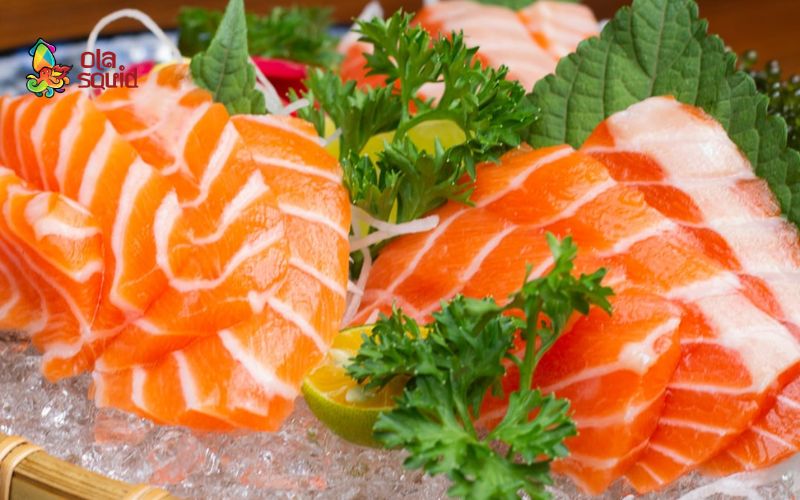
4.4. Salmon sashimi
Ingredients:
- 100g fresh salmon
- 200g white radish
- A little ginger, perilla leaves
- Soy sauce and wasabi to serve

How to make salmon sashimi:
- Step 1: First, remove the fish skin, wash, and slice into thin, bite-sized pieces.
- Step 2: Peel and clean the white radish, then julienne it. Wash the perilla leaves and let them dry.
- Step 3: Arrange the salmon on a plate with the radish and perilla for a beautiful presentation. Dip in soy sauce mixed with wasabi to fully enjoy the fresh, buttery flavor.
4.5 Salmon brown rice porridge
Required ingredients:
- 50g crushed brown rice
- 100g minced salmon
- Shiitake mushrooms
- Seasonings: salt, fish sauce, MSG, sesame oil
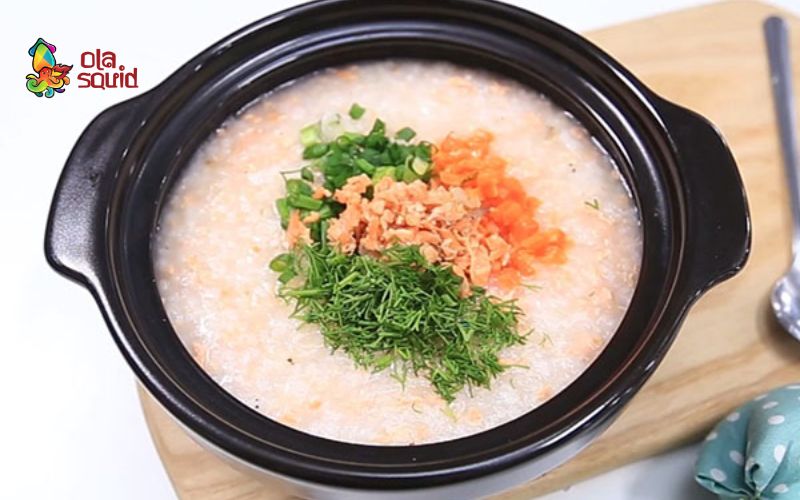
How to cook salmon brown rice porridge:
- Step 1 – Cooking porridge: Wash the brown rice, soak in warm water for about 1 hour to soften, then cook until the grains expand and the porridge is smooth and thick.
- Step 2 – Preparing and stir-frying salmon: Sauté minced garlic until fragrant, add the minced salmon, and stir-fry briefly; season with a little fish sauce. Wash and chop the shiitake mushrooms, then stir-fry with the fish to enhance the flavor.
- Step 3 – Completing: When the porridge is nearly cooked, add the salmon and mushrooms, stir gently, and cook for a few more minutes to meld the flavors. Finally, add a few drops of sesame oil, turn off the heat, and enjoy while hot.
See more: What can you make with salmon? 15 unmissable delicious dishes
5. Is it good to eat a lot of salmon?
5.1 Who should avoid eating salmon?
Although salmon is highly nutritious, not everyone should consume it frequently. Those who eat too much salmon may face the risk of mercury accumulation, which can affect long-term health. Additionally, because salmon contains relatively high levels of fat and cholesterol, excessive consumption may not be suitable for those dealing with high blood lipids or blood sugar issues.
For pregnant women, salmon remains a good food choice but must be cooked thoroughly to avoid the risk of parasite infection. At the same time, portion control is recommended, limiting intake to about 560g of salmon per week to ensure safety for both mother and baby.
5.2 How often should you eat salmon per week?
Even though salmon offers many health benefits, you should only consume it in moderation—about 2-3 times per week, with 100g per serving—which is enough to supplement omega-3s and other essential nutrients.
Eating too much salmon in a short period can lead to excessive protein and fat intake, increasing the risk of obesity, gout, or cardiovascular problems. Therefore, you should combine salmon with a balanced diet, alternating with green vegetables and other food groups to achieve the best health and weight management results.
6. Important notes when eating salmon
Below are some important points to keep in mind when preparing and enjoying salmon:
- Choose fresh, traceable fish: Prioritize fish with bright color, firm flesh, and no strange odors to ensure safety and preserve maximum nutrition.
- Proper preparation: Wash the fish with diluted salt water or vinegar to remove the fishy smell and any impurities before cooking.
- Do not marinate too early or too long: Season just before cooking to prevent the fish from drying out, losing moisture, and reducing its natural deliciousness.
- Sensible cooking: Prioritize methods like steaming, pan-searing, or grilling to retain the maximum amount of omega-3s and limit deep-frying.
- Proper storage: Salmon must be kept refrigerated and used shortly after purchase; do not refreeze after thawing.
- Eat in moderation: Only consume about 2-3 meals per week to avoid nutritional excess and limit the risk of heavy metal accumulation.
- Limit raw consumption: Raw salmon can harbor bacteria, which may cause digestive issues if hygiene is not guaranteed.
- Warning for those with allergies: If you have a history of seafood allergies, you should not eat salmon to ensure your health safety.
We hope the detailed information above has helped you answer the question of “how many calories are in salmon and does it cause weight gain” at the beginning of this article. If you want to explore more engaging articles about culinary knowledge, delicious recipes, or experiences in selecting quality fresh seafood, visit the Ola Squid Blog now.
If you are looking for premium dried snacks to complement your healthy lifestyle, check out our selection at our official store.