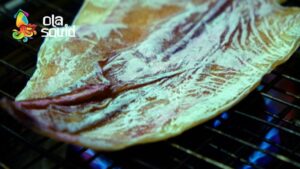
 Dried squid
 Flattened dried squid
 Seasoned Shredded Squid
 Dried squid snack
 Tiếng Việt
 ไทย
ไทยPurpleback flying squid is a large marine squid species, commonly known by names such as ghost squid, oceanic squid, or giant purpleback squid. Compared to squid, cuttlefish, or bigfin reef squid, purpleback flying squid has a darker color, thicker body, and a more accessible price. So what is purpleback flying squid, is it edible, why is purpleback flying squid cheap, and how much does purpleback flying squid cost per kg? Join Ola Squid to learn the details before choosing to buy this type of squid.
What is purpleback flying squid? Distinguishing it from other squids
Purpleback flying squid is a marine squid species belonging to the oceanic squid group, scientifically named Sthenoteuthis oualaniensis, belonging to the family Ommastrephidae. Purpleback flying squid is widely distributed in tropical and subtropical waters of the Indo-Pacific region, including the waters of Vietnam.
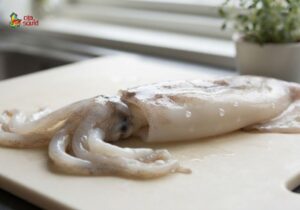
In folk terminology in Vietnam, purpleback flying squid is also known as ghost squid or oceanic squid. Due to its large size, quite dark skin color, and being harvested in offshore waters, purpleback flying squid has a distinct appearance compared to other types of squid at seafood markets.
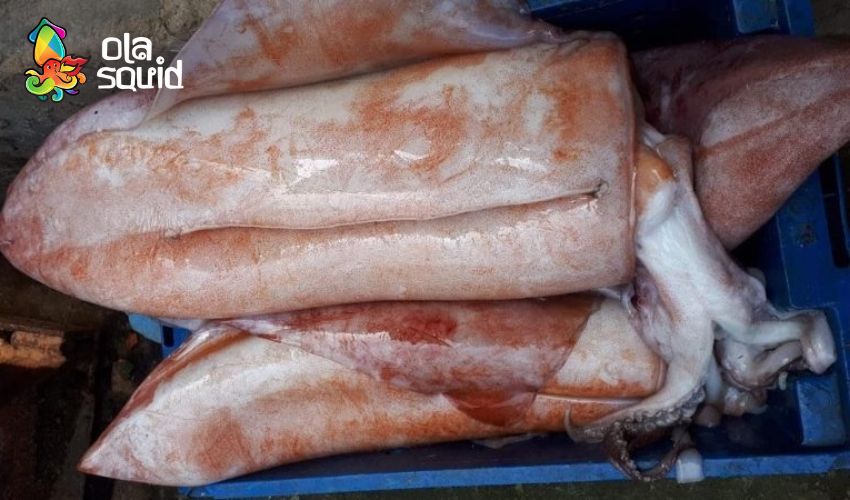
What are the characteristics of purpleback flying squid?
To recognize purpleback flying squid, you can observe several prominent characteristics regarding shape, color, and habitat. Specifically:
- Large size: Purpleback flying squid has a larger size and weight compared to many popular squids. Some large individuals can reach a body length of several dozen centimeters and a weight of many kilograms.
- Thick body: The body part is relatively thick, with firm flesh and clear muscle fibers.
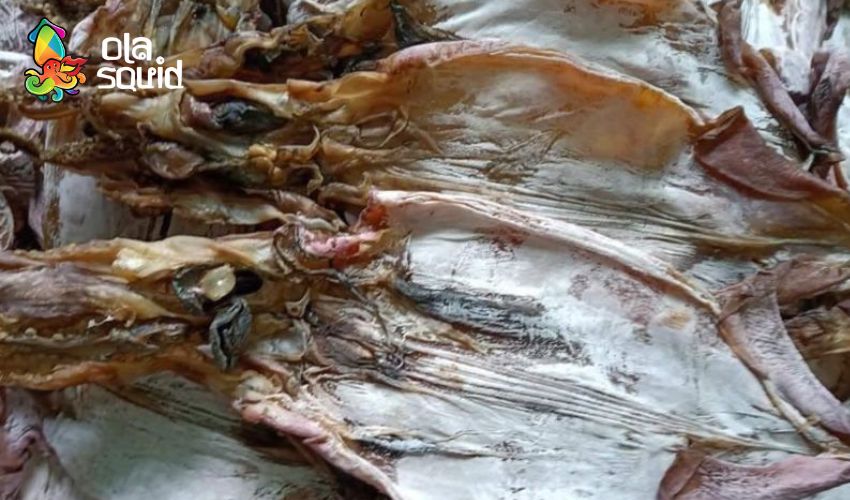
- Dark color: Fresh squid is reddish-brown, purple, or dark purple; after being dried, the color may turn into a darker black.
- Fins concentrated at the tail: Purpleback flying squid has short fins concentrated in the rear body area instead of extending along both sides of the body like bigfin reef squid.
- Living offshore: Purpleback flying squid is an oceanic squid species with the ability to move in depth. Some documents record that purpleback flying squid can appear at a depth of hundreds of meters and has the habit of moving to shallower water layers at night to forage.
In the waters of Vietnam, purpleback flying squid is heavily exploited in the offshore areas of the Central region. The harvesting season is from around mid-December to the end of September of the following year, depending on the fishing ground and weather conditions of each year.
How to distinguish purpleback flying squid from other squids
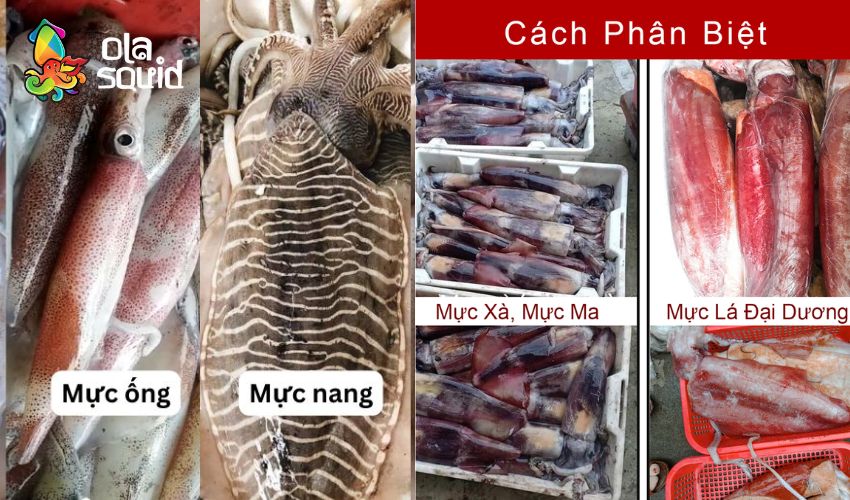
Quite a few people mistake oceanic purpleback flying squid for bigfin reef squid because both have large sizes. However, just by observing the fins, color, and meat characteristics, you can distinguish them relatively easily.
| Criteria | Purpleback flying squid | Squid | Cuttlefish | Bigfin reef squid |
| Size | Large, some weigh several kg | Small to medium | Thick body, diverse size | Usually large, raft-like body |
| Color | Purple, reddish-brown, or dark colored | Transparent white, light pink when fresh | Grayish brown or yellowish brown | Pinkish red, pinkish purple |
| Body characteristics | Thick body, fins concentrated towards the tail | Tubular body | Raft-like body, thick | Raft-like body, fins running along the body |
| Chewiness | Quite chewy, clear muscle fibers | Crispy, chewy depending on type | Crispy, firm | Chewy and crispy, thick meat |
| Flavor | Less sweet than premium squids | Usually sweet, crispy when fresh | Sweet, crispy | Thick meat, deep sweet taste |
| Selling price | Lower | Depending on size and source | Higher than purpleback flying squid | Higher than purpleback flying squid |
The above table is for reference only because actual quality and selling price also depend on size, harvesting season, freshness, preparation method, and product form.
See more: How to distinguish bigfin reef squid and squid? Which one should you choose?
Is purpleback flying squid toxic? Is it edible?
Purpleback flying squid is not toxic and is used as food when properly harvested, prepared, processed, and preserved. Purpleback flying squid is a commercially harvested squid species and is used to process many products, most commonly dried purpleback flying squid.
Many people hesitate when first seeing purpleback flying squid because this type of squid has a large size, dark skin color, and a quite distinct shape compared to familiar squid or cuttlefish. The name ghost squid can also cause buyers to mistakenly think that this is an unsafe type of squid.
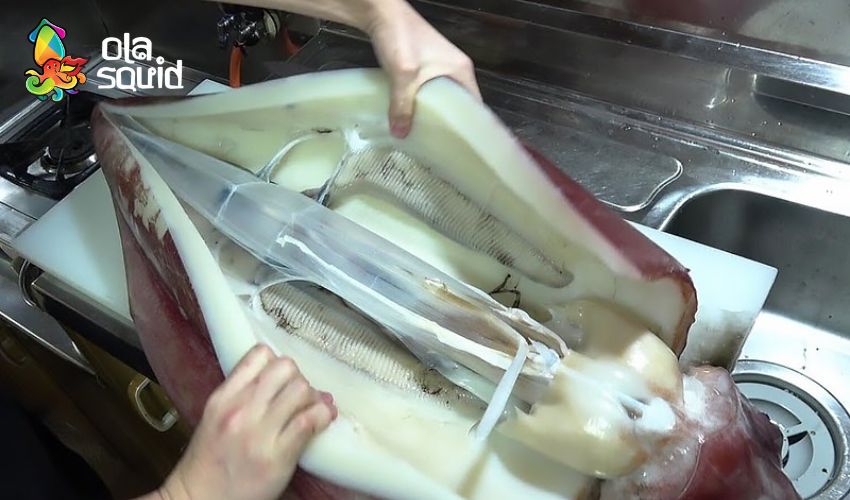
In fact, what makes purpleback flying squid different lies mainly in its meat characteristics and habitat. Because it is usually harvested offshore and has to be transported over long distances, fresh purpleback flying squid is usually chilled or frozen for preservation. Therefore, the meat quality after preservation may not achieve the crispiness and sweetness of fresh squids just caught near the shore.
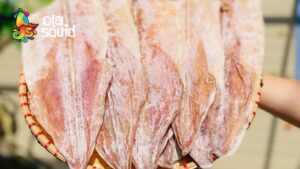
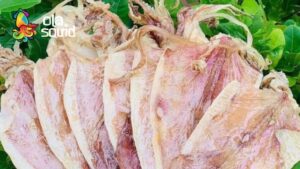
When dried, purpleback flying squid has quite thick and chewy meat suitable for grilling dishes or shredded with chili sauce, helping the squid maintain its firmness and not easily crumble during processing.
See more: Is dried purpleback flying squid edible? How much does it cost?
How much does purpleback flying squid cost per kg? Why is purpleback flying squid cheap?
If you are looking for how much purpleback flying squid costs, the price will depend on the product form, squid size, dryness, and quality of each batch. For dried purpleback flying squid, the reference market price can range around 60,000 – 130,000 VND/kg; the actual price may change according to timing and product specifications.
So why is purpleback flying squid cheaper than many other squids despite its large size? There are several main reasons:
- Relatively abundant squid source: Purpleback flying squid is one of the squid species with large reserves and wide distribution in tropical and subtropical waters.
- Lower sensory value than some premium squids: Purpleback flying squid meat is chewier and less sweet than cuttlefish, bigfin reef squid, or fresh delicious squid. This affects the price consumers are willing to pay.
- Suitable for processing into dried squid: Purpleback flying squid has a thick body and firm meat, so it is prepared and sun-dried right on the boat or after bringing it ashore. This is one of the popular product forms of this squid type.
- Not belonging to the high-priced specialty squid group: Purpleback flying squid is chosen when consumers prioritize reasonable prices and large meat volume over the characteristic sweetness and crispiness of premium squids.
Therefore, how much purpleback flying squid costs should not be used as the sole criterion to evaluate quality. With dried squid, buyers should pay more attention to size, dryness, color, smell, cleanliness, and product origin.
Delicious dishes prepared from purpleback flying squid
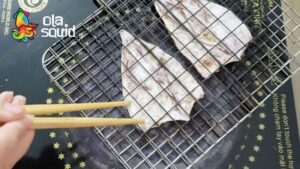
Purpleback flying squid has quite thick and chewy meat, so it is suitable for high-temperature cooking methods or using bold spices. With dried purpleback flying squid, before processing, you should grill or soften it depending on the dish, then shred or cut it into pieces so that spices can easily absorb.
Delicious grilled dishes from purpleback flying squid
Grilling is a familiar cooking method that helps purpleback flying squid release its characteristic aroma. When grilled, the squid meat tightens, has moderate chewiness, and the more you chew, the more you clearly feel the natural sweetness.
- Grilled purpleback flying squid with satay: Spicy and fragrant satay helps balance the salty taste and low sweetness of purpleback flying squid. This dish is suitable to eat hot with Vietnamese balm, cucumber, or dipping in chili sauce.
- Grilled purpleback flying squid with salt and chili: Salt, chili, and a little sugar create a bold spice layer on the outside. This is a suitable choice if you like the spicy and salty taste and want to enjoy grilled squid with beer or snacks.
- Plain grilled purpleback flying squid: Without marinating too many spices, the squid is grilled directly to keep its characteristic aroma. When the squid is cooked, you just need to shred it and dip it in chili sauce or green chili salt to enjoy.
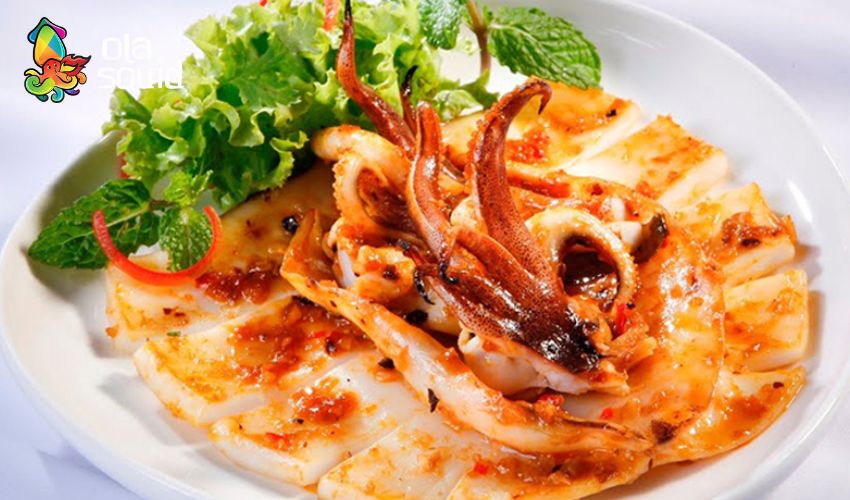
Similar delicious dishes you may be interested in:
- How to make aromatic, standard restaurant-style spicy satay grilled squid
- How to make delicious, chewy, and sweet authentic plain grilled squid at home
Delicious fried dishes from purpleback flying squid
Besides grilling, purpleback flying squid is also suitable for fried dishes. The crispy and fragrant outer crust combined with the chewy meat makes the dish feel more appealing.
- Crispy fried, breaded purpleback flying squid: Squid is cut into bite-sized pieces, coated with a layer of flour, and quickly fried in hot oil. The finished product has a crispy outside while the inside meat still retains its chewiness.
- Purpleback flying squid fried with fish sauce: After frying, the squid is quickly tossed with fish sauce, sugar, garlic, and chili. The evenly coated sweet and salty sauce makes the dish bold in flavor and easy to eat with rice.
- Purpleback flying squid fried with garlic butter: Fragrant butter combined with golden fried garlic gives the squid dish a more appealing smell. You can add a little chili if you like spicy flavor.
- Purpleback flying squid fried with salt and kumquat: Crispy fried squid is coated with a mixture of salt, chili, and kumquat. The salty, spicy taste mixed with a little sour and fragrant flavor helps the dish become less greasy and suitable as a drinking snack or snack.
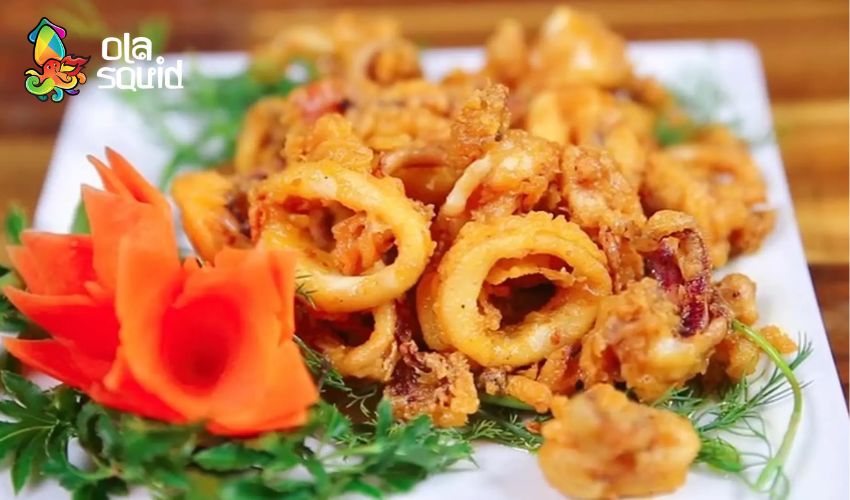
Similar delicious dishes:
- How to make amazingly delicious crispy fried, breaded squid at home
- How to make bold fish sauce-fried squid, crave at first bite
- Revealing how to make fragrant garlic butter fried squid, everyone loves it
Frequently asked questions about purpleback flying squid (FAQs)
What is purpleback flying squid in English?
Purpleback flying squid is called Purpleback Flying Squid in English, with the scientific name Sthenoteuthis oualaniensis. This is a squid species belonging to the family Ommastrephidae, widely distributed in tropical and subtropical waters of the Indo-Pacific region.
Are “purpleback flying squid” and “oceanic purpleback flying squid” the same?
In common terminology, purpleback flying squid and oceanic purpleback flying squid are used to refer to the same type of squid. The name “oceanic squid” emphasizes the offshore habitat of this squid species, while “ghost squid” is another folk name.
However, buyers should not mistake oceanic purpleback flying squid for bigfin reef squid. These are two different types of squid and have dissimilar characteristics in shape, fins, and meat quality.
How much does dried purpleback flying squid cost per kg?
The price of dried purpleback flying squid on the market can range around 250,000 – 350,000 VND/kg depending on size and product quality.
If buying at Ola Squid, you should check the price according to each period because dried squid products can be classified by size, packaging specifications, and squid quality. You should not rely solely on the price/kg to evaluate whether the squid is delicious or not.
How long can purpleback flying squid be preserved?
Dried purpleback flying squid, if dried to required standards and properly preserved, can maintain quality for a relatively long time. After opening the packaging, you should put the squid into a tight bag or box, limit contact with air and moisture, and then store it in the refrigerator compartment or freezer compartment depending on the manufacturer’s instructions.
During preservation, if the squid appears with a strange smell, slime, mold, or unusual color change, you should not continue to use it. With pre-packaged dried squid, you should prioritize checking the expiration date and preservation instructions printed on the packaging.
Through the information Ola Squid has just shared above, it can be seen that purpleback flying squid is a large oceanic squid species with thick meat and is often called ghost squid or oceanic purpleback flying squid. This squid type is non-toxic and commonly used to process food, especially dried squid.
The fact that purpleback flying squid is cheaper than many familiar squids mainly comes from relatively abundant supply, lower sensory value than some premium squids, and meat characteristics suitable for dried products. Therefore, if you prioritize reasonably priced dried squid with thick, chewy meat suitable for grilling or processing bold dishes, purpleback flying squid is a worth-considering choice.
When buying, instead of just caring about how much purpleback flying squid costs, you should pay attention to origin, size, dryness, color, natural aroma, and packaging to choose a suitable product.
Hopefully through this article, you have clearly understood what purpleback flying squid is, its characteristics, and how to process it for the most delicious taste. Although purpleback flying squid is not a premium squid, if you know how to handle and combine appropriate spices, you can completely turn them into bold, delicious, and cost-saving dishes.