

 Tiếng Việt
 ไทย
ไทยKing crab is a premium seafood highly favored for its enormous size, sweet, rich meat flavor, and exceptional nutritional value. Due to its rarity and quality, the price of king crab is always a top concern for consumers, especially during holidays, Tet, or luxurious parties. So, how much does a king crab cost per kilogram? Let’s explore the details with Ola Squid in this article!
1. How much does a king crab cost per kilogram?
King crab prices are currently not fixed but fluctuate based on many factors such as species (red, blue, golden), weight, origin, and storage condition. Below is the detailed king crab price list:
| King crab type | Current price (VND/kg) |
| Red king crab (live) | 1,800,000 – 3,200,000 |
| Red king crab (dead/chilled) | 1,100,000 – 1,600,000 |
| Golden king crab (live) | 1,300,000 – 1,800,000 |
| Golden king crab (dead/chilled) | 900,000 – 1,300,000 |
| Blue king crab (live) | 1,500,000 – 2,300,000 |
| Blue king crab (dead/chilled) | 1,000,000 – 1,400,000 |
Note: The above king crab price ranges may vary depending on the season, supply, and specific sales regions, so the actual price may differ at any given time. Besides, if you are looking for premium seafood alternatives, check out our delicious dried squid snacks.
2. Learning about king crab
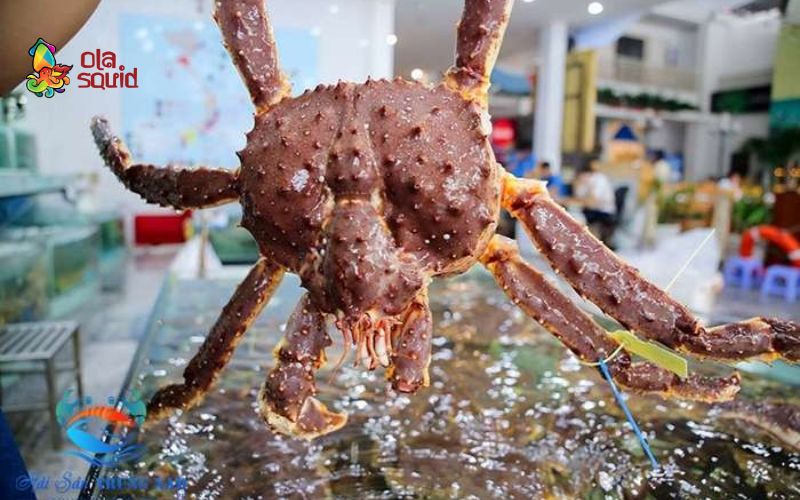
King crab, also known as Alaska crab, is a high-value sea crab species. They typically inhabit deep, cold waters such as Alaska (USA) and the Russian Far East. The harsh environmental conditions with low temperatures are considered the ideal factor helping the crab develop firm, distinctively delicious meat.
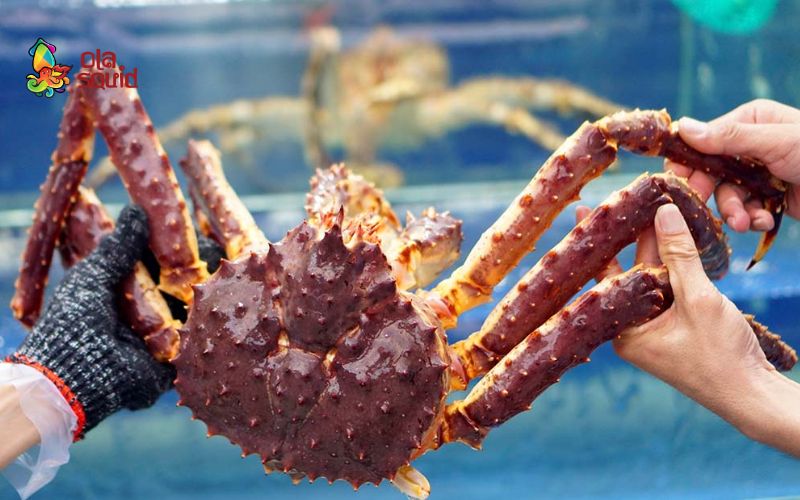
This crab species stands out for its superior size compared to regular crabs. An adult crab can weigh from 2 – 4kg, or even more, with a sturdy shell covered in sharp spines. The crab meat is concentrated mainly in the legs, having a natural sweetness, firmness, and being rich in nutrients like protein and calcium, which is very good for health.
3. Nutritional value of eating king crab
King crab is not only attractive for its natural sweet and fatty flavor but is also highly regarded for its nutritional content. Once cooked, the crab meat has a distinct aroma, thick, firm, and full meat fibers, providing a delicious sensation from the very first bite.

This premium seafood contains abundant protein, along with many essential minerals such as calcium, iron, phosphorus, magnesium, and folate,… which are great for the development of children, the elderly, and people needing nutritional recovery. Especially, king crab is low in saturated fat, suitable for people on a diet or following a healthy nutrition regimen. Additionally, the high-quality protein in crab meat also supports physical strength and vitality, especially for men. Visit our shop for more premium products.
4. Guide to buying quality king crab
To choose fresh, meaty king crab that ensures nutritional value, you can refer to some of the following purchasing tips:
- Prioritize live crabs: You should choose healthy crabs with flexible legs and claws, and quick reflexes. Weak or inactive crabs are often kept for a long time and the meat is less delicious.
- Check meat firmness: When holding the crab, it should feel heavy; lightly squeezing the legs or body should feel firm, indicating plenty of meat. Soft and spongy crabs usually have less meat.
- Observe the crab shell: Quality crabs have a hard shell, natural dark color, and sharp, clear spines on the carapace. Avoid choosing crabs with shells that are too pale or too shiny, as they might be recently molted crabs with less firm meat.
- Choose the right season: King crab is best from November to March, when the meat reaches its peak thickness and sweetness.
- For frozen crab: Select crabs with uniform color, no strange odors, black spots, or signs of improper thawing.
- Buy from reputable addresses: Finally, you should prioritize seafood stores with clear origins to ensure quality and food safety.
5. How to store king crab
King crab is a premium seafood with high value, so proper storage helps retain its fresh flavor and avoids unnecessary waste. Depending on the condition of the crab when purchased, you can apply the following storage methods:
- Storing live crab: Keep the crab in a cool, humid environment at a low temperature (about 0-4°C), and avoid direct contact with freshwater to prevent the crab from going into shock and dying quickly.
- Do not stack crabs on top of each other: This prevents broken legs and bruised bodies, which affects meat quality.
- Store frozen crab properly: If buying frozen crab, maintain deep-freeze temperatures, avoid thawing with hot water or in a microwave and refreezing multiple times, as this will make the crab meat mushy and cause it to lose its sweetness.
- Seal tightly before freezing: It is recommended to wrap the crab in a vacuum-sealed bag or a tightly sealed container to prevent odor absorption and maintain freshness.
- Distinguish when storing: Avoid confusing king crab with other types like spiny crab (huỳnh đế) due to differences in shape and meat quality.
6. Distinguishing king crab from spiny crab
On the market, many people often confuse king crab and spiny crab due to their similar names and the fact that both belong to the premium seafood segment. However, these two types of crabs have many clear differences:
- Origin: King crab is mainly harvested in the cold waters of Alaska (USA), while spiny crab is common in temperate seas and the Southeast Pacific region.
- Crab meat: King crab meat is concentrated mainly in the legs, with firm fibers and deep sweetness. Spiny crab also has delicious meat but less quantity, mainly in the body, with a lighter sweetness and softer texture.
- Size and shape: King crab has a small body but very long, thick legs with many sharp spines; overall, it looks like a giant spider. Conversely, spiny crab is smaller with a large body, short legs, and a shape similar to a sea bug.
- Selling price: Due to its large size, meat quality, low harvest yield, and high transportation costs, the selling price of king crab is usually much higher than that of spiny crab.
>>> Refer to similar delicacies:
- What to cook with soft-shell crab? 10 easy delicious dishes and tips for selecting fresh crabs
- What to cook with rock crab? 10 delicious dishes from rock crab to conquer every palate
- 5 ways to cook authentic, flavorful field crab hotpot at home
Through the above article, we hope you have clearly understood the king crab price as well as how to select and store crabs, thereby making suitable purchasing decisions that ensure both food quality and cost optimization. If you want to learn more useful information about seafood and preparation tips for delicious dishes, don’t forget to visit the Ola Squid homepage to explore our whole dried squid or other seafood products!