 Dried squid
 Flattened dried squid
 Seasoned Shredded Squid
 Dried squid snack

 Tiếng Việt
 ไทย
Fried squid paste is a dish loved by many families thanks to its crispy golden crust, chewy and soft interior, and the natural sweetness of squid. The recipe is not too complicated, but to prevent the squid paste from becoming crumbly, dry, or losing its chewiness, you need to pay close attention from selecting and preparing the squid to grinding, shaping, and adjusting the oil temperature when frying. Below is a guide on how to make fried squid paste at home from fresh or frozen squid, with simple, easy-to-follow steps.
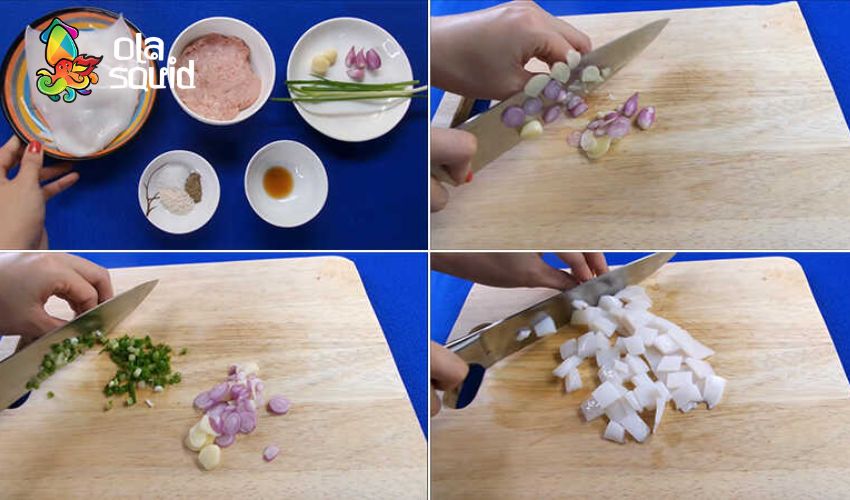
Preparing Ingredients for Fried Squid Paste
For the squid paste to have a naturally delicious chewiness, the most important ingredient is highly fresh squid. You can use cuttlefish or loligo squid, among which cuttlefish yields paste with a crispier, chewier texture and firmer meat.
Ingredients + Quantities Table
The recipe below is suitable for about 3–4 people. The amount of seasoning can be adjusted according to your family’s taste, but you should not add too much fish sauce or liquid ingredients as it can make the squid mixture watery and difficult to shape.
| Ingredients | Quantity |
| Fresh cuttlefish or loligo squid | 500 g |
| Pork belly or raw sausage paste (giò sống) | 50–80 g, optional |
| Shallots | 1–2 bulbs |
| Garlic | 2 cloves |
| Ground black pepper | ½ tsp |
| Fish sauce | 1–1.5 tsp |
| Sugar | ½ tsp |
| Tapioca starch | 1 tsp, optional |
| Cooking oil | Sufficient amount for frying |
If you prefer the original flavor of squid paste, you can omit the pork belly and only use squid. A small amount of meat can help make the paste softer, richer, and more savory, but you should not add too much to avoid reducing the characteristic sweet taste of squid.
How to Choose Fresh Cuttlefish and Squid
Fresh squid is the deciding factor for the quality of squid paste. The fresher the squid and the firmer its meat, the better natural chewiness it provides for the paste.
When choosing squid, you should prioritize those with firm, elastic bodies, natural colors, and no unusual strong fishy smell. Some signs you can refer to include:
- Cuttlefish: Choose ones with thick bodies, firm meat, and shiny skin that is not mushy or slimy. When gently pressing with your finger, the meat should show good elasticity.
- Squid: Prioritize ones with intact bodies, shiny skin, firm meat, and heads that are still relatively tightly attached to the body.
- Odor: Fresh squid has a characteristic seafood scent, without any unusual sour, foul, or strong fishy odors.
- Eyes and skin: The squid’s eyes should be clear and bright; the skin layer should be intact, without scratches or unusual discoloration.

Notes When Buying Frozen Squid
When fresh squid is unavailable, you can use frozen squid to make the paste. However, the quality of the squid after thawing depends significantly on the previous storage process.
You should choose tightly packaged squid with no signs of repeated thawing and refreezing. Avoid packages with large ice crystals or dehydrated meat.
Before processing, transfer the squid from the freezer to the refrigerator compartment to thaw. Once the squid is soft, pat it completely dry with a paper towel before grinding or pounding. Avoid soaking squid in hot water to thaw because it can easily become too soft, making the final paste less chewy.
See more: What delicious dishes can be made from frozen squid?
Guide on How to Make Crispy and Chewy Fried Squid Paste at Home
After preparing all the ingredients, you can start frying squid paste in 4 simple steps.
Step 1 – Prepare squid and eliminate fishy odor
After purchasing, the squid needs to be thoroughly cleaned to remove the ink sac, eyes, cuttlebone, and remaining internal organs. For loligo squid, gently pull the head away from the body, remove the ink sac and pen, then wash thoroughly.
Do not soak squid for too long in water or use too much alcohol, as this can cause the squid meat to lose its natural sweetness. After preparation, you can put the squid in the refrigerator for about 20–30 minutes to make the meat cold and firmer.

Step 2 – Grind and Pound Squid into a Smooth Paste
Put the squid in a grinder and grind it finely. Next, add the raw sausage paste, seasoning powder, sugar, pepper, and fish sauce. Grind once more until the squid filling mixture blends together, becomes smooth, and achieves a certain level of stickiness.
After grinding, transfer the filling to a bowl, cover tightly with plastic wrap, and place it in the refrigerator for about 15 minutes. Cooling helps the squid filling firm up, making it easier to shape and giving it a better chewiness when cooked.
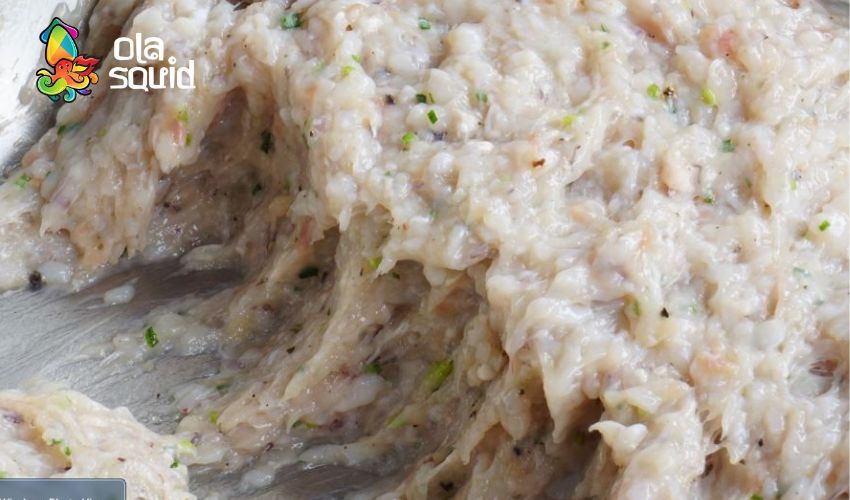
To ensure the squid paste has a crispy and chewy texture, you should not turn the squid into a completely smooth paste like raw sausage. The ideal mixture is smooth, flexible, and cohesive, but still retains some small bits of squid fiber.
Some tips to help the paste achieve a better texture:
- Keep the squid cold during the grinding and pounding process.
- Avoid grinding continuously in the machine for a long time.
- Do not add too much water or liquid seasoning.
- Stir/paste the mixture in one direction for a few minutes to increase stickiness.
- You can add a little lard or pork belly if you want the paste to be softer and richer.
- After mixing, leave the mixture in the refrigerator for about 20–30 minutes before shaping.
Step 3 – Shaping the Squid Paste Beautifully
Once the squid mixture has reached a sticky consistency, take bite-sized portions and roll them into balls. Apply a thin layer of oil to your hands so the mixture doesn’t stick, then gently flatten them into round, flat patties.

You should divide the mixture into portions of relatively equal weight so that the patties cook evenly. Each patty can be about 1–1.5 cm thick; do not press them too thin, as they can easily dry out after frying.
When shaping, you can do the following:
- Apply a very thin layer of oil on your palms.
- Take a sufficient amount of squid paste and gently roll it into a ball.
- Press flat from the center outward so the patty has a uniform thickness.
- Adjust the edges for a nice round shape.
- Arrange the patties on a plate lined with parchment paper or plastic wrap to prevent sticking.
If making a large quantity, you can shape all the patties first before starting to fry. This method helps control the frying time better and avoids having to pause mid-frying to shape more patties.
Step 4 – Frying Squid Paste Golden Crispy and Delicious
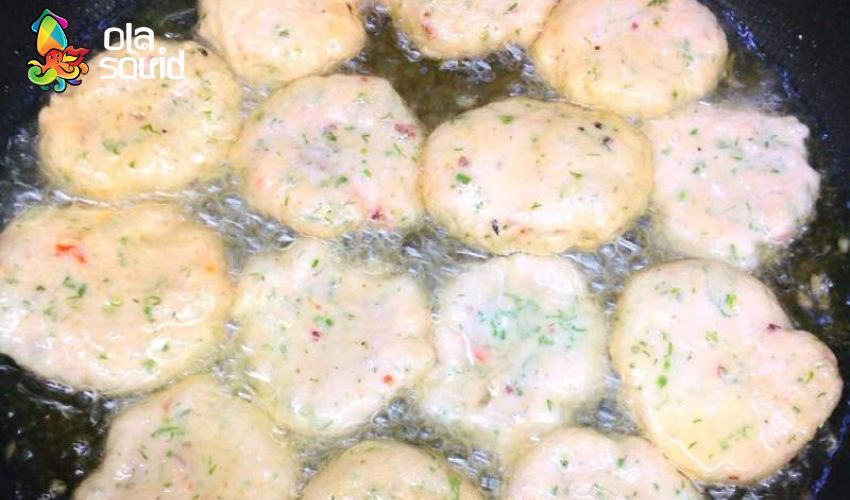
Heat the oil to about 160–170°C, then gently slide each patty in. Do not crowd the pan with too many patties at once because the oil temperature will drop quickly, causing them to absorb more oil and struggle to brown evenly.
Fry each side for about 3–4 minutes, depending on the thickness of the patty. Once the surface turns golden, the edges firm up, and the paste emits a distinctive fragrant aroma, they can be removed.
So how long does it take to fry squid paste? For a patty about 1–1.5 cm thick, the frying time is around 6–8 minutes. However, the actual time may vary depending on the patty size, the amount of oil, and the stove temperature. Do not rely solely on time; instead, observe the color and internal doneness.
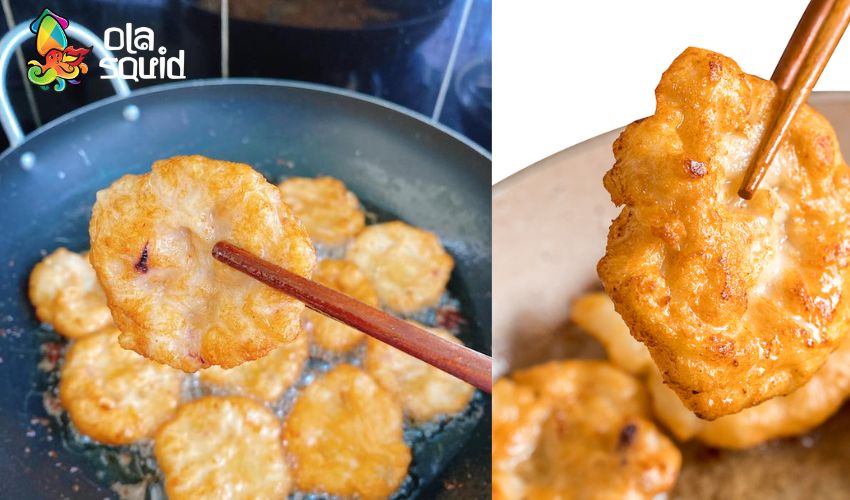
After removing, place the patties on paper towels or a cooling rack to drain excess oil. The squid paste should be enjoyed while hot to fully appreciate the lightly golden exterior, chewy-soft interior, and the natural sweetness of the squid.
See more:
- What delicious dishes can be made from squid paste? Top appealing dishes made from squid paste
- Simple yet delicious recipe for squid paste in tomato sauce
Tips for Achieving Perfect Fried Squid Paste
To ensure the fried squid paste gets a beautiful golden color, a lightly crispy exterior while remaining chewy and soft inside, you should pay attention to everything from seasoning to oil temperature. Some tips below will help the final product retain the natural sweetness of squid and limit the paste from becoming dry, crumbly, or absorbing too much oil.
- Season moderately: Squid naturally possesses a sweet and slightly savory flavor, so there is no need to add too much seasoning. For 500 g of squid, you can use about 1–1.5 teaspoons of fish sauce, combined with a little sugar, pepper, shallots, and garlic. Season moderately because after frying, the flavor of the paste will taste richer than the initial squid mixture.
- Do not use too many liquid ingredients: Using too much fish sauce, water, or other liquid seasonings can make the squid mixture watery, difficult to shape, and less chewy. If you want to enhance the flavor, prioritize dry seasonings or use a moderate amount of liquids.
- Keep the squid mixture cold: During grinding and pounding, the heat generated can warm up the squid, affecting the cohesion of the mixture. Therefore, keep the squid in the refrigerator before processing and grind in short bursts.
- Control oil temperature when frying: The oil should be heated to around 160–170°C before adding the patties. If the oil is too cold, the patties will absorb more oil and take longer to brown, while oil that is too hot can burn the outer layer quickly before the inside can cook through.
- Do not fry too many patties at once: Crowding the pan with too many patties causes a sudden drop in oil temperature, making the paste take longer to brown and easily become greasy. Fry in moderately sized batches so each piece has enough space for heat to distribute evenly.
- Flip at the right time: Only flip when one side has firmed up and turned a light golden color. Flipping too frequently can break the patties and prevent the exterior from browning evenly.
- Pat dry the squid paste before frying to limit oil splattering: After prepping, use paper towels to dry the squid. Once shaped, if there is any moisture on the patty surface, pat it gently before putting it into the pan.
- Lower patties into the oil slowly: When starting to fry, use tongs or chopsticks to hold each piece and lower it slowly into the pan, avoiding dropping it forcefully which causes hot oil to splatter.
- Let the paste drain after frying: Once the paste turns golden, remove it and place it on a cooling rack or paper towels to drain excess oil and keep the outer crust drier.
See more: What delicious dishes can be made from squid paste? Top appealing dishes made from squid paste
Variations of Fried Squid Paste to Enrich Your Meals
Once you master the basic fried squid paste recipe, you can adapt the formula to create various dishes with different flavors and textures. This is also a great way to utilize squid paste for family meals, small parties, or snacks.
Crispy Breaded Fried Squid Paste
In the crispy breaded fried squid paste recipe, shape the paste into bite-sized pieces, then dredge them sequentially through all-purpose flour, beaten eggs, and panko breadcrumbs. Then, fry at around 170°C until the outer coating is evenly golden.
With a ultra-crispy breadcrumb crust, the inner squid paste still retains its sweetness and chewiness. Breaded fried squid paste can be served with chili sauce, mayonnaise, or sweet and sour sauce.

Squid Paste with Green Rice Flakes
Squid paste with green rice flakes is a beautiful variation, suitable when you want the dish to have extra color and crunch. After shaping the paste, you can coat it with a layer of young green rice flakes (cốm) and then fry over medium heat.
Pay close attention to the oil temperature because green rice flakes can brown much faster than the inner squid paste. Once you notice the rice flakes turning slightly golden and adhering firmly to the patty, remove them to prevent burning.

In addition to squid, you can combine shrimp or a small amount of pork belly to change the texture.
- Squid + Shrimp: Shrimp adds extra sweetness and a firm texture to the mixture.
- Squid + Pork Belly: Creates a richer and juicier mouthfeel for the patty.
- Squid + Shrimp + Pork: Perfect if you want a savory paste with rich ingredients, but the ratios must be balanced so squid remains the primary flavor.
Whichever way you choose to adapt it, you should keep the proportion of squid dominant so the dish still retains the signature flavor of squid paste.
How to Store Pre-made Fried Squid Paste
If you prepare more squid paste than needed for one meal, you can store the leftovers for later use. However, the paste needs to be properly cooled down before packaging to prevent steaming, softening of the crust, or rapid quality deterioration.
Storage in Freezer and Refrigerator: If you plan to eat them within a short period, fried squid paste can be placed in an airtight container and kept in the refrigerator compartment. When storing, ensure the patties have cooled down completely before packaging, and consume them soon to guarantee quality.
For longer storage, you can divide the patties into small portions, wrap them tightly, or place them in specialized freezer bags/containers and keep them in the freezer. Dividing them into single-use portions avoids the need for repeated thawing.
Avoid refreezing thawed paste unnecessarily, as this process can degrade the texture and overall quality of the dish.

How to Reheat to Make It as Crispy as Newly Fried: To ensure the squid paste maintains a fragrant exterior without becoming too oily, you can reheat it using an air fryer or an oven. If using an air fryer, preheat the appliance first and then heat the paste at around 170–180°C for 5–8 minutes, depending on the size and state of the patties.
If the paste is frozen, you should thaw it in the refrigerator compartment before reheating so that heat distributes evenly. For paste that has already been fried and refrigerated, the reheating time will be shorter. Do not reheat repeatedly, as the paste can become dry, tough, and lose its flavor.

See more: Where to buy delicious, authentic, and well-priced Ha Long squid paste?
Frequently Asked Questions About Fried Squid Paste (FAQs)
How many calories are in fried squid paste?
On average, 100g of fried squid paste provides about 250 – 300 calories. Therefore, if you are monitoring your caloric intake, you can opt to fry squid paste with less oil or use an air fryer.
Why does fried squid paste become crumbly and lose its crispy, chewy texture?
Squid paste becomes crumbly due to various reasons, the most common being that the squid is not fresh enough, the mixture contains too much water, or the grinding process causes the squid to warm up.
Some common causes include:
- The squid has been thawed multiple times or is of poor quality.
- The squid was not thoroughly dried before grinding.
- Grinding the squid for too long, which heats up the mixture.
- Adding too much water or liquid seasonings.
- Not stirring/pasting the mixture sufficiently to create stickiness.
- Using too much starch or meat compared to the proportion of squid.
- The oil was not hot enough when starting to fry.
To fix this, keep the squid cold, grind in short intervals, mix the paste until sticky, and fry at a stable heat level.
Can I make fried squid paste using an air fryer?
Yes. An air fryer can be used to make squid paste with less oil compared to deep-frying. However, the final product will have a less shiny crust and a different crispiness compared to the traditional way of frying squid paste.
How to Fry Frozen Squid Paste to Make It Crispy and Delicious
For pre-shaped and pre-frozen squid paste, you should not drop a large amount of still-frozen patties directly into hot oil because the ice and moisture on the surface can cause severe oil splattering.
A safer method is to thaw the patties in the refrigerator, then use paper towels to dry the surface before frying. Heat the oil to around 165–175°C, add the patties, and fry over medium heat until both sides are evenly golden.
If you need to fry directly from frozen, check the storage instructions of the product and handle carefully to minimize splattering. For homemade paste, slow thawing in the refrigerator helps control quality and frying temperature better.
With straightforward ingredients, you can easily make fried squid paste at home and adjust the flavors to your family’s preferences. If you want a more diverse menu, you can try breaded fried squid paste, green rice flake squid paste, or incorporate shrimp and pork belly.
In addition to fresh squid used for cooking, dried squid is also a convenient ingredient to enjoy in various ways. For dried squid products, you should prioritize choosing items with clear origins, proper preparation, and storage to ensure quality during use.