
 Dried squid
 Flattened dried squid
 Seasoned Shredded Squid
 Dried squid snack
 Tiếng Việt
 ไทย
ไทยSalmon porridge is a nutrient-rich, easy-to-digest dish suitable for both adults and young children. With the natural mild richness of salmon combined with smooth, soft porridge, the dish not only helps nourish health but also supports brain development and boosts immunity. In this article, Ola Squid will share details from selecting the fish, preparation, to the how to cook salmon porridge for babies in a scientific way that preserves all nutrients and is easy to perform right at home.
Ingredients for salmon porridge
To successfully apply the how to cook salmon porridge method, ingredients are a factor that cannot be overlooked. For porridge intended for babies, the top criteria are fresh, clean, easy to digest, and limited spices. Salmon naturally has a rich flavor, so combining it skillfully is delicious enough without the need for complex seasoning.
Basic ingredients for 2–3 portions of porridge:
- Fresh salmon fillet: 80-120g
- Good quality white rice: 50g (can add 10g of glutinous rice for a smoother consistency)
- Filtered water or vegetable broth: 700-900ml
- Fresh ginger: 1 small piece
- Purple onion: 1 small bulb (only for babies over 1 year old, can be omitted)
- Weaning cooking oil or olive oil: 1-2 teaspoons
- Spices for babies: very little mild salt or fish sauce for children over 1 year old

In addition, to diversify the flavors of salmon porridge, you can prepare extra pumpkin, carrots, sweet potatoes, Malabar spinach, or kale. However, the principle is to cook each vegetable separately, not mixing them from the start to avoid confusing the flavors and making the porridge difficult for the baby to eat.
How to cook salmon porridge without a fishy smell
The fishy smell is the biggest “fear” when it comes to how to cook salmon porridge for babies. In reality, salmon is not fishy at all if prepared and cooked correctly. The problem usually lies in the cleaning step and when to add the fish to the porridge.
Step 1: Wash and soak the rice
- Wash the rice gently 1–2 times to remove dirt without losing nutrients.
- Soak the rice in clean water for about 20–30 minutes to help the grains expand evenly, making the porridge cook faster and become smoother.
Step 2: Cook the porridge base
- Add the soaked rice to a pot with an appropriate amount of water.
- Bring to a boil over medium heat, then lower the heat and simmer.
- During cooking, stir periodically to prevent the porridge from sticking to the bottom and to achieve the desired creamy consistency.
Step 3: Prepare the salmon to eliminate fishy odor
- Rinse the salmon quickly under cold running water.
- Soak the fish in unsweetened fresh milk for about 5 minutes or rub it gently with minced ginger to effectively neutralize the fishy smell.
- Then rinse the fish again with clean water and let it drain.
Step 4: Steam the salmon
- Place the salmon in a steamer, add a few slices of ginger, and steam for 5–7 minutes until just cooked.
- Do not boil directly as it will cause the fish to lose its natural sweetness and reduce its nutritional value.
Step 5: Shred the salmon
- When the fish is cooked, let it cool slightly and then remove all skin and bones.
- Mash or shred the fish depending on the age and chewing ability of the baby.
Step 6: Finish the salmon porridge
- When the porridge is soft and smooth, add the salmon to the pot and stir gently to mix the fish evenly with the porridge.
- Cook for an additional 2–3 minutes over very low heat, avoiding long cooking times that make the fish dry and fishy.
Step 7: Add weaning oil and serve to the baby
- Turn off the stove, add appropriate weaning oil, and stir well.
- Let the porridge cool to a safe temperature before serving to the baby.

This method helps the how to cook salmon porridge process retain its natural flavor, resulting in a creamy, smooth, and mildly aromatic porridge with absolutely no unpleasant fishy smell.
See more:
- What to cook with salmon for babies? Revealing 19 nutritious, easy-to-make dishes
- Suggestions for 5 simple yet nutritious orange sauce salmon recipes for the family
- 5 delicious and simple garlic butter salmon recipes at home
How to choose fresh and delicious salmon
The quality of the fish determines 70% of the success of how to cook delicious salmon porridge. Fresh salmon is not only tastier but also safer, richer in nutrients, and easier to prepare for young children.
Some criteria for choosing salmon:
- Flesh color: bright pinkish-orange, with clear white fat marbling, not dull.
- Elasticity: gently pressing the fish flesh should feel firm and return to its original state quickly.
- Smell: fresh salmon only has a light sea scent, with no pungent fishy smell.
- Origin: prioritize Norwegian salmon or salmon with food safety certification, stored properly under cold conditions.
If using frozen salmon, choose quick-frozen varieties with intact packaging. Defrost slowly in the refrigerator, do not defrost with hot water to avoid making the fish mushy. Fresh and properly handled fish will help salmon for porridge achieve the best flavor and safety for babies.
Nutritional value of salmon for babies
It is no coincidence that how to cook salmon porridge for babies is always recommended by nutritionists. Salmon is one of the high-quality animal protein sources, very suitable for young children in the developmental stage.
Outstanding benefits of salmon:
- High Omega-3 (DHA, EPA) content, supporting brain development, vision, and memory capabilities.
- Rich in easy-to-digest protein, helping babies gain weight healthily and develop muscles.
- Provides vitamin D, vitamin B12, selenium, and calcium, contributing to enhancing immunity and the skeletal system.
- Few small bones, easy to process, and much safer than many other types of fish when used for children.
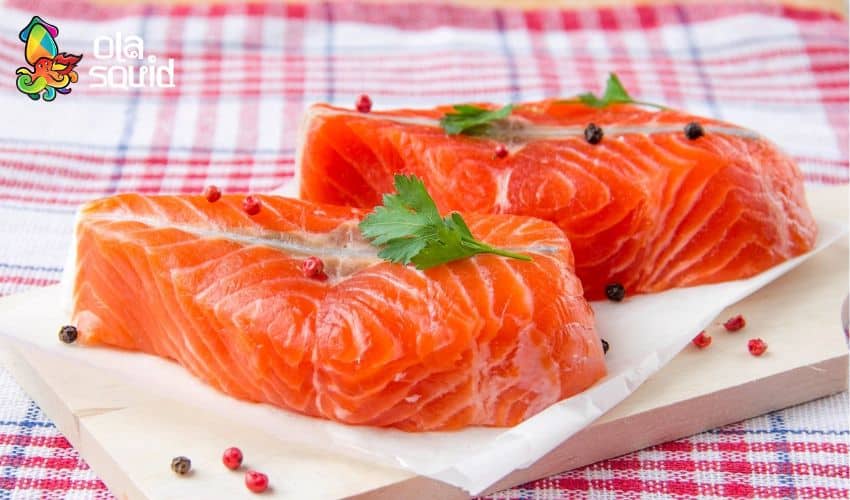
When applying the right how to cook salmon porridge, these nutrients are maximally preserved, turning a small bowl of porridge into a “nutrient store” that helps the baby develop comprehensively in both physical and intellectual aspects.
Notes when feeding babies salmon porridge
Even if the how to cook salmon porridge is standard, parents still need to keep in mind some important principles to ensure safety for the baby.
Points to remember:
- Only feed the baby salmon porridge when the digestive system is ready, usually from 7 months of age onwards.
- Start with a very small amount, observing the baby’s reaction for 24 hours to detect signs of allergies early.
- Do not use many spices, especially avoid salt and fish sauce for babies under 1 year old.
- Do not feed the baby salmon porridge too many times per week, ideally 1–2 meals to balance nutrition.
- Porridge should be eaten within the day, do not reheat repeatedly as it will lose quality and easily develop odors.
Adhering to these notes will help how to cook salmon porridge for babies become safe, effective, and bring a positive eating experience for the child.
See more:
- 8 simple, nutritious squid porridge recipes for weaning babies
- What vegetables to cook shrimp porridge with for a delicious, easy-to-eat, and nutritious meal for babies?
Hopefully, with this article, you have understood and feel more confident when performing how to cook salmon porridge, from selecting the fish, preparing, to cooking it so that it is not fishy and is nutrient-rich. Salmon porridge is not only an ideal weaning dish for babies but also a good choice for the whole family when needing a light, easy-to-digest meal. If you love seafood dishes and want to explore more recipes or quality products like our dried squid, don’t forget to follow the Ola Squid Culinary Corner to update more culinary knowledge and choose seafood with peace of mind for every meal.