

 Tiếng Việt
 ไทย
ไทยWhen mentioning refreshing soups for hot days, squid sour soup is always a popular choice for many families thanks to its gentle, appetizing sourness, naturally sweet broth, and the attractively crunchy squid. Not as elaborate as many other seafood dishes, the method for cooking squid sour soup is quite simple, but a few small secrets are still needed to ensure it is not fishy, not chewy, and that the broth has a balanced sweet and sour flavor. If you are looking to change up your family meals with a dish that is both delicious and easy to cook, check out the detailed guide in this article right away!
Ingredients for squid sour soup
To cook a delicious pot of squid sour soup with a balanced, refreshing acidity while keeping the squid naturally crunchy and sweet, you need to prepare the following ingredients:
- Fresh squid: 300-400g
- Tomatoes: 2 (cut into wedges)
- Pineapple: 1/2 fruit (sliced)
- 50g bean sprouts, chili
- 2-3 shallots
- Ripe tamarind: 1 small handful (or 2 tablespoons of ready-made tamarind concentrate)
- 1 stalk of elephant ear (taro stem), accompanying herbs
- Seasonings: MSG, soup seasoning, bouillon powder, pepper

How to choose fresh ingredients for squid sour soup
To ensure the sour soup has a natural sweetness and is not fishy, selecting the ingredients is a crucial factor. Especially with a seafood soup like squid sour soup, the fresher the squid, the clearer the broth and the crunchier and tastier the squid meat will be after cooking.
Which squid should be chosen for sour soup? How to choose fresh squid
To ensure the squid sour soup has a natural sweet and refreshing taste and the squid remains crunchy and delicious after cooking, you should prioritize choosing very fresh squid.
- For this dish, you can use various types of squid such as tube squid, cuttlefish, or baby squid depending on your preference; however, tube squid is often preferred because the meat is sweet, tender, and cooks quickly.
- Prioritize choosing squid with bright, shiny skin, a shimmering fresh color, firm body, and no scratches. These are often signs of fresh squid that retains its natural sweetness.
- Press lightly on the squid’s body; if the meat is firm, elastic, and leaves no indentations, that is fresh squid. Avoid choosing squid that is soft or has peeling meat.
- Observe the eyes of the squid; fresh squid will have clear, bright eyes with a visible pupil. If the eyes are cloudy or have a white film, the squid has been stored for a long time and its quality has decreased.
- Check the tentacles; fresh squid tentacles usually cling tightly to the head, and all tentacles are present without falling off. The more tentacles that are attached, the fresher the squid.
- Do not choose squid with a strong fishy odor or strange smell, as this is a sign that it is no longer fresh, which will cause the soup broth to lose its naturally refreshing delicious flavor.
How to choose fresh pineapple and tomatoes
To ensure the squid sour soup has a naturally refreshing and sweet taste along with an attractive color, selecting fresh pineapple and tomatoes is also very important.
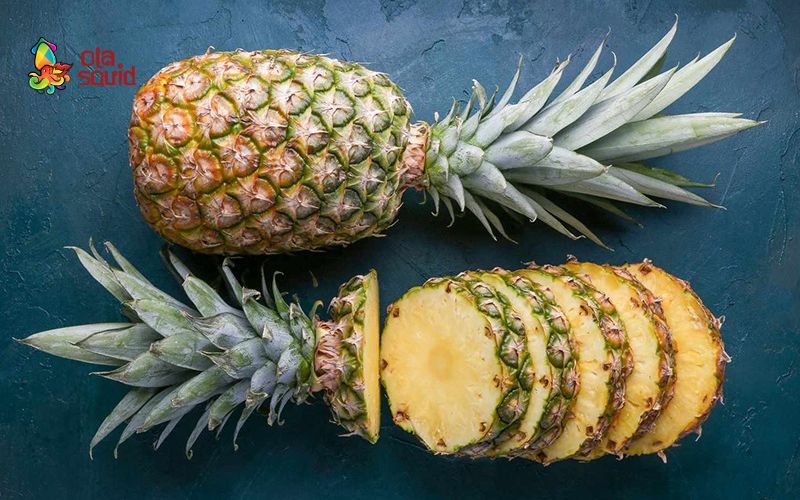
- How to choose delicious pineapple:
- You should choose pineapples that are bright yellow from the stem to the body or mixed with a little light green, which is a sign the pineapple is perfectly ripe with a harmonious sweet flavor.
- Prioritize pineapples with a short, round, even body as they are usually meatier, less fibrous, and sweeter than the long varieties.
- Observe the pineapple eyes: large, sparse, and even eyes usually indicate a delicious pineapple that is easier to peel.
- When smelled, it should have a characteristic mild fragrant scent, and when held, it should feel firm and heavy, indicating it is still fresh.
- Do not choose green pineapples because they are very sour, or deep yellow ones turning orange with black spots because they are usually old, prone to rotting, and lose their delicious flavor.
- How to choose fresh tomatoes:
- Choose tomatoes with a natural bright red color, tight, shiny, and evenly colored skin.
- When held, they should feel firm, slightly heavy, and have a moderate hardness, indicating they are new.
- Naturally vine-ripened tomatoes usually have a mild natural fragrance, with green stems attached tightly to the fruit.
- Prioritize tomatoes of moderate size, not too large, as they are usually less pithy inside.
- Avoid buying soft, bruised, rotting tomatoes or those with a strange smell because they will easily make the soup broth turn harsh and less delicious.
How to cook refreshing squid sour soup
Preparing ingredients
First, you need to thoroughly prepare the ingredients:
- Processing fresh squid: After buying, remove the head, ink sac, eyes, and beak of the squid, then peel off the outer skin. Wash several times with clean water to remove slime and fishy smell. Then soak the squid with a little vinegar, white wine, or diluted salt water for about 10 minutes before rinsing again to clean completely.
- Marinating the squid for rich flavor: Drain the squid, cut it into bite-sized pieces or split it in half depending on the size. Marinate with a little bouillon powder, pepper, and chopped scallions for about 10-15 minutes so the squid absorbs the flavors and is more fragrant when cooked.
- Processing tomatoes and pineapple: Wash the tomatoes, cut into wedges. Peel the pineapple, remove the eyes, then cut into bite-sized pieces to create a natural sweet and sour flavor for the soup broth when cooked.
- Processing accompanying vegetables: Pick and clean the bean sprouts, elephant ear, paddy herb, and saw-leaf herb, wash thoroughly, then drain. The elephant ear stem should have its outer skin peeled so it does not cause itching when eaten.
- Preparing tamarind and spices: Soak ripe tamarind in boiling water, mash to extract the tamarind pulp, and discard the seeds. Finely chop shallots to sauté until fragrant, and slice chili to enhance the flavor of the squid sour soup.
Detailed steps for cooking squid sour soup
- Quickly stir-fry the squid: First, place a pan on high heat, add cooking oil, then add the marinated squid and stir-fry quickly for about 1-2 minutes until just firm, then remove to a separate plate.
- Creating the soup base: Using the same soup pot, sauté the shallots until fragrant, then add the tomatoes and stir until slightly soft and they release a beautiful color. Then add the pineapple and stir-fry together for about 1 minute to create a natural sweet flavor.
- Cooking the soup broth: Pour about 1.2–1.5 liters of water into the pot, bring to a boil, then add the filtered tamarind. Season with fish sauce, sugar, and bouillon powder so the soup flavor is balanced between sour, sweet, and slightly salty.
- Adding vegetables: Add okra and elephant ear stem first because they take longer to cook, then add bean sprouts. Cook for another 2-3 minutes until the vegetables are just cooked.
- Adding the squid last: Add the stir-fried squid into the pot when the soup is boiling, wait for the water to boil again, then turn off the heat immediately to keep the squid crunchy, sweet, and not chewy.
- Finishing the dish: Sprinkle paddy herb, saw-leaf herb, and a few chili slices on top to enhance the attractive aroma. Squid sour soup is best enjoyed hot with white rice or eaten with fresh vermicelli on hot summer days.

See more delicious dishes: How to cook delicious squid bamboo shoot soup with traditional flavors
Mistakes to avoid when cooking squid sour soup
Here are some common mistakes when cooking squid sour soup that you should keep in mind to avoid:
- Adding squid too early while the soup is still cooking: This is a very common mistake that causes the squid to become chewy, shrink, and lose its natural sweetness. Squid should only be added in the final step, when the soup broth is finished and simmering lightly.
- Seasoning too much tamarind from the beginning: If you add too much tamarind or sour concentrate, the soup will have a harsh flavor and overpower the natural sweetness of the squid. It is best to season with small amounts and adjust gradually according to your taste.
- Adding all vegetables at the same time: Each type of vegetable has a different cooking time. If added all at once, the okra and elephant ear stem might not be soft yet while the bean sprouts are already mushy, losing their natural crunch.
- Using frozen squid but not thawing it properly: Squid that is still frozen or thawed for too long at room temperature will easily become mushy, fishy, and release a lot of water when cooked. You should thaw it slowly in the refrigerator or under cold running water to maintain its freshness.
Some variations of delicious squid sour soup
Besides the traditional version of squid sour soup with tamarind and pineapple, you can also vary this dish in many different ways to change up your family meals. Each recipe will bring a unique flavor but still retain the natural sweetness and characteristic crunch of fresh squid.
How to cook squid sour soup with pickled mustard greens
Squid sour soup with pickled mustard greens is a dish with strong Northern characteristics, having a natural, gentle sourness from fermented pickled mustard greens. When cooked, the pickled greens make the soup broth more refreshing and stimulate the taste buds very well on hot days.
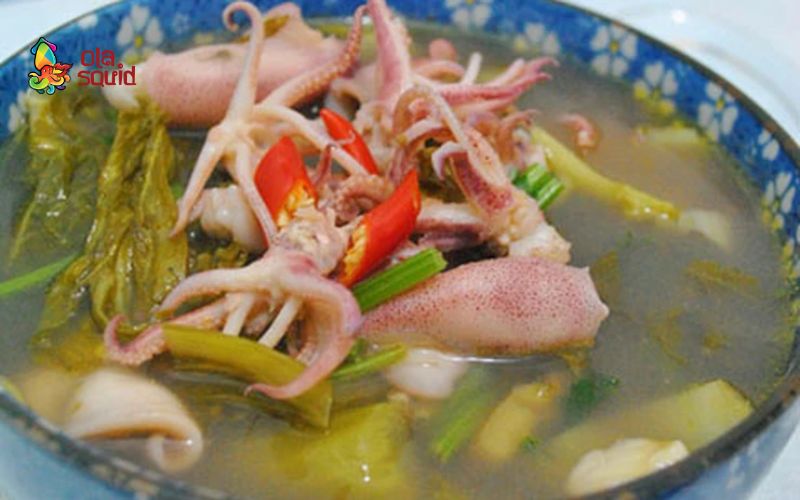
To prepare, you just need to stir-fry the pickled mustard greens with shallots and tomatoes until fragrant, then add water and bring to a boil. Then season to taste and add the squid last. This soup is best enjoyed hot with white rice; the light sourness of the pickled greens combined with the sweetness of the squid creates a very harmonious flavor.
Guide to cooking squid sour soup with lolot leaves
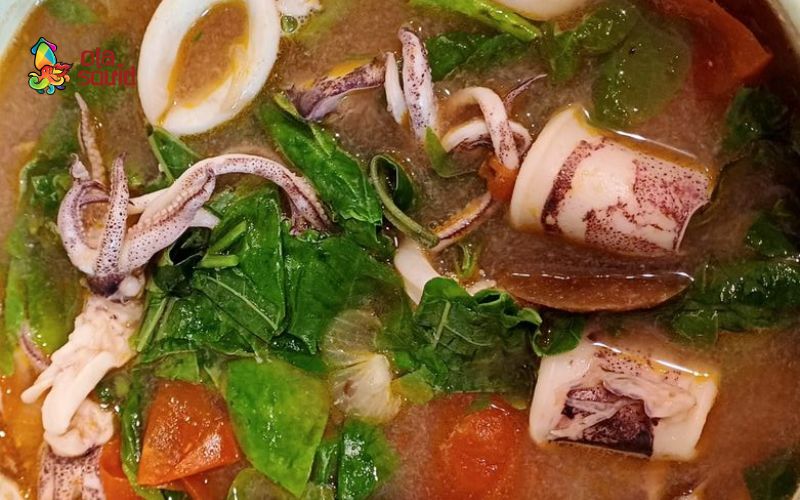
Squid sour soup with lolot leaves brings a mild fragrance and is quite unique. After the soup broth is finished, add the shredded lolot leaves at the end and then turn off the heat to preserve the natural fragrance. This dish has a refreshing taste but still highlights the characteristic scent of lolot leaves, very suitable for changing the menu for family meals.
See more: What is good to cook with squid? Top 11 easy-to-cook soups to cool down every day
Hopefully, the guide on how to cook delicious and refreshing squid sour soup above has helped you successfully make this dish to cool down family meals in the summer. If you love delicious dishes from squid and seafood, don’t forget to visit the Ola Squid blog to discover more attractive processing recipes, tips for choosing fresh seafood, and useful articles to make cooking easier every day.