
 Tiếng Việt
 ไทย
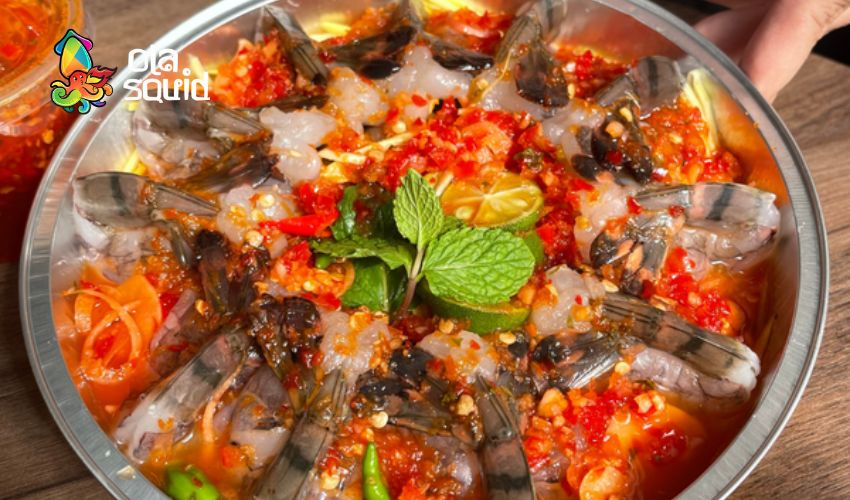
ไทยThe rich, spicy-sour flavor, combined with the natural sweetness of fresh shrimp, has made Thai-style shrimp a favorite dish especially beloved by young people and food enthusiasts. The dish is appealing due to its bold spicy-sour taste, combining succulent fresh shrimp with a smooth, spicy, yet harmonious sauce. Without needing to go out to a restaurant, you can completely make delicious spicy Thai-style shrimp right at home with the simple method below. Follow Ola Squid in this article to learn more!
1. Introduction to Thai-style shrimp
Thai-style shrimp is a signature dish of Thai cuisine, distinguished by the harmonious blend of stimulating sour, spicy, salty, and sweet flavors. The dish uses fresh or raw shrimp that have been carefully prepped, mixed with a signature Thai sauce made from kumquat or lime, chili, garlic, and fish sauce, which both removes the fishy smell and preserves the natural sweetness of the shrimp.
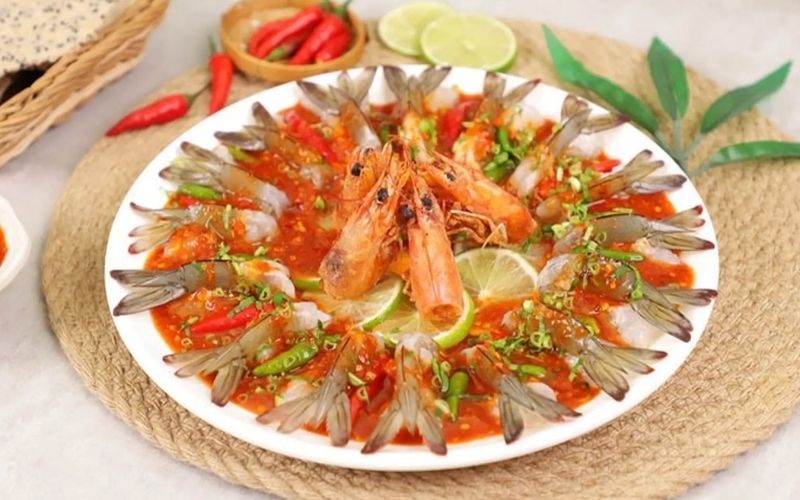
Initially popular in street food and Thai-style parties, Thai-style shrimp has gradually become a favorite dish in many Vietnamese households thanks to its exotic and easy-to-eat flavor. This dish is often served as an appetizer, a snack, or accompanied by rice paper, green mango, and cucumber, making it especially attractive on hot days or during gatherings with friends.
2. Ingredients for raw shrimp with Thai sauce
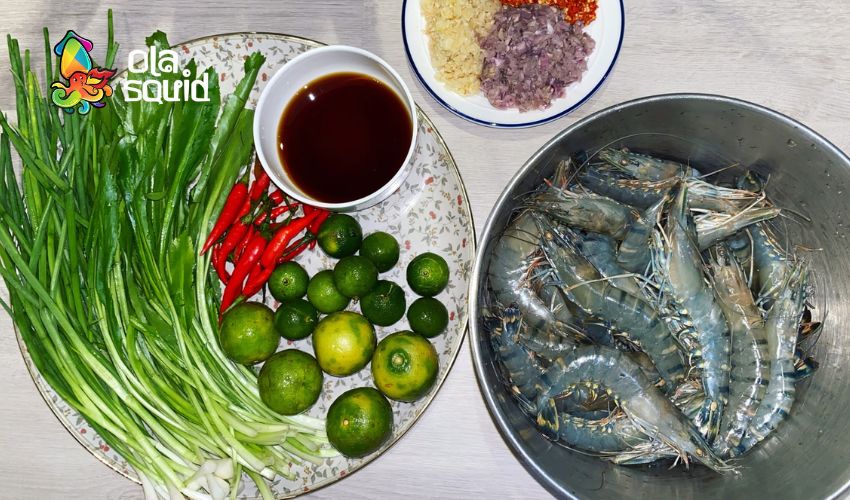
To make raw shrimp with Thai sauce with the standard appealing spicy-sour flavor, you need to prepare the following fresh and easy-to-find ingredients:
- 400g fresh shrimp
- ½ bulb of garlic, 4 shallots
- 1 stalk of lemongrass, 2 knobs of ginger
- 6 fresh chili peppers, 5 limes
- Culantro (sawtooth herb)
- 3 tablespoons sugar, 1/2 teaspoon mustard
- 4 tablespoons chili sauce, 2 tablespoons chili powder, cooking oil
- 2 tablespoons cornstarch, 4 tablespoons fish sauce
3. How to make spicy Thai-style shrimp
The method for making raw shrimp with Thai sauce is quite simple and does not take much time, but it needs to be followed in the right steps to ensure the dish reaches the perfect taste:
Step 1 – Preparing shrimp and ingredients:
- First, wash the fresh shrimp with diluted salt water to remove odors, rinse several times to clean, peel, and remove the back vein so the shrimp won’t be fishy. Make a slight slit along the shrimp body to create a beautiful shape. Keep the shrimp heads separate and coat them evenly with cornstarch.
- Wash the chili and limes; peel and slice the ginger. Peel the garlic and shallots; mince the garlic and slice the shallots. Wash the culantro, and trim, wash, and finely chop the lemongrass.
Step 2 – Making the Thai sauce: Next, crush or blend the ginger, lemongrass, shallots, garlic, and chili with sugar until fragrant. Then mix well with fish sauce, lime juice, chili powder, and chili sauce to create a sweet-salty-sour-spicy sauce mixture that is true to Thai taste.
Step 3 – Par-cooking the shrimp: Mix the lime juice and mustard, dip each shrimp for a short time so the shrimp meat becomes just firm, retaining its crunchiness, freshness, and safety when consumed.
Step 4 – Frying the shrimp heads: Next, fry the cornstarch-coated shrimp heads until golden and crispy, remove and drain the oil, then use them for decoration and to serve alongside for added appeal.
Step 5 – Completing the dish: Finally, arrange the shrimp on a plate, drizzle the Thai sauce evenly, add the crispy fried shrimp heads, and sprinkle the culantro on top. The finished product has eye-catching colors, with naturally sweet and crunchy shrimp blending with the rich, spicy-sour sauce, without any fishiness.
>>> Similar delicious dishes:
- Revealing how to make irresistibly delicious spicy Thai-style steamed squid
- 5 Ways to make fragrant and simple Thai-style steamed clams at home
4. Notes when making Thai-style shrimp
To ensure the Thai-style par-cooked shrimp achieves an appealing spicy-sour flavor, stays crunchy and sweet, and is safe to consume, you need to keep a few things in mind during preparation:
- Prioritize fresh live shrimp: You should choose shrimp that are still jumping, with transparent, firm shells, intact legs and tails, and heads tightly attached to the body. The fresher the shrimp, the sweeter and crunchier the meat, and the less fishy odor when mixed with the Thai sauce. Avoid shrimp with strange odors, splayed tails, or loose parts.
- Choosing ingredients: Fresh shrimp account for most of the dish’s flavor, and for fish sauce, you should choose a high-quality type that is thick and has a caramel-brown color to make the sauce rich and beautiful.
- Enjoy immediately after preparation: Thai-style shrimp tastes best when eaten right after it’s made. You should not leave it at room temperature for long or store it overnight as it may reduce the quality and flavor of the dish.
- Increase flavor when serving: You can use the crispy fried shrimp heads and serve with shredded green mango to make the dish even more attractive and well-rounded.
- Adjust the spice level accordingly: Thai-style shrimp usually has a characteristic spicy taste; however, you should adjust the amount of chili and satay according to your family’s taste, especially if there are children or people who cannot eat spicy food.
- Note for consumers: Because it uses raw ingredients, this dish is not suitable for people with sensitive stomachs, poor digestion, or those allergic to seafood. If you prefer cooked seafood, check out our delicious dried squid products instead.
>>> See more delicious shrimp dishes:
- What to make with shrimp? Suggestions for easy and delicious shrimp dishes
- What to make with giant river prawns? Top 10+ delicious dishes to try
- What to make with mantis shrimp? Summary of super delicious recipes
Hopefully, with the detailed instructions on how to make Thai-style shrimp above, you can easily successfully prepare this dish for your whole family to enjoy. If you love delicious seafood, standard recipes, and useful cooking tips, don’t forget to visit the Blog of Ola Squid to discover more interesting articles and culinary information updated regularly! For those who love snacking, don’t forget to visit our store for premium dried squid snacks!